Churen Trek

Confirmed Booked Group, You Can Join for 2026 & 2027 Know More

Rupina La Pass Trek - 15 Days

Duration

15 Days

Trip Difficulty

Moderate

Start/End Point

Kathmandu

Meals

Breakfast, Lunch, & Dinner

Max Altitude:

5,555m. / 18,225ft.

Group Size

2-15+ People

Best Season

Mar, Apri, May, Sep, Oct, Nov & Dec

Accommodation

3 Star Hotel in KTM / Lodge / Tea House during the Trek
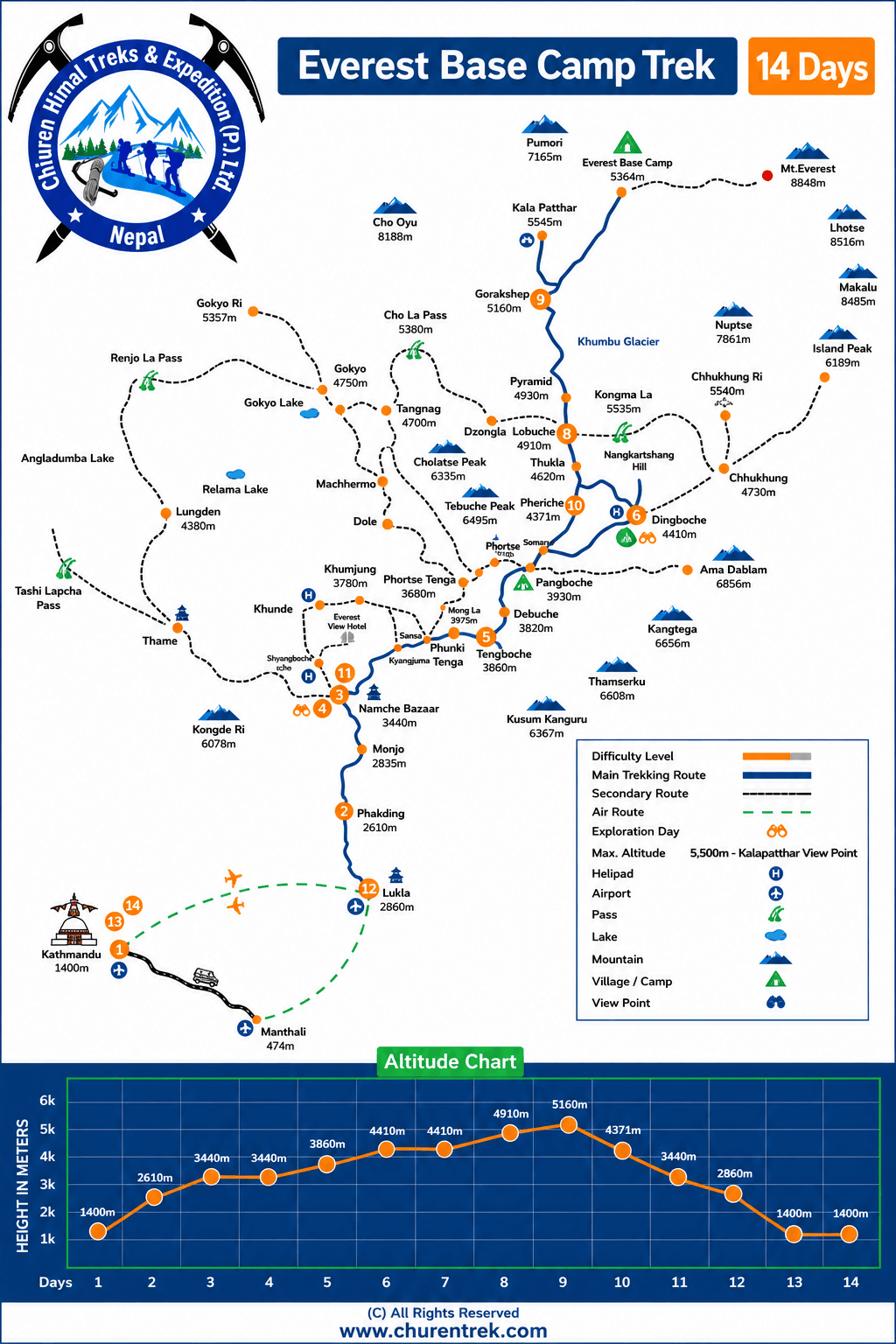
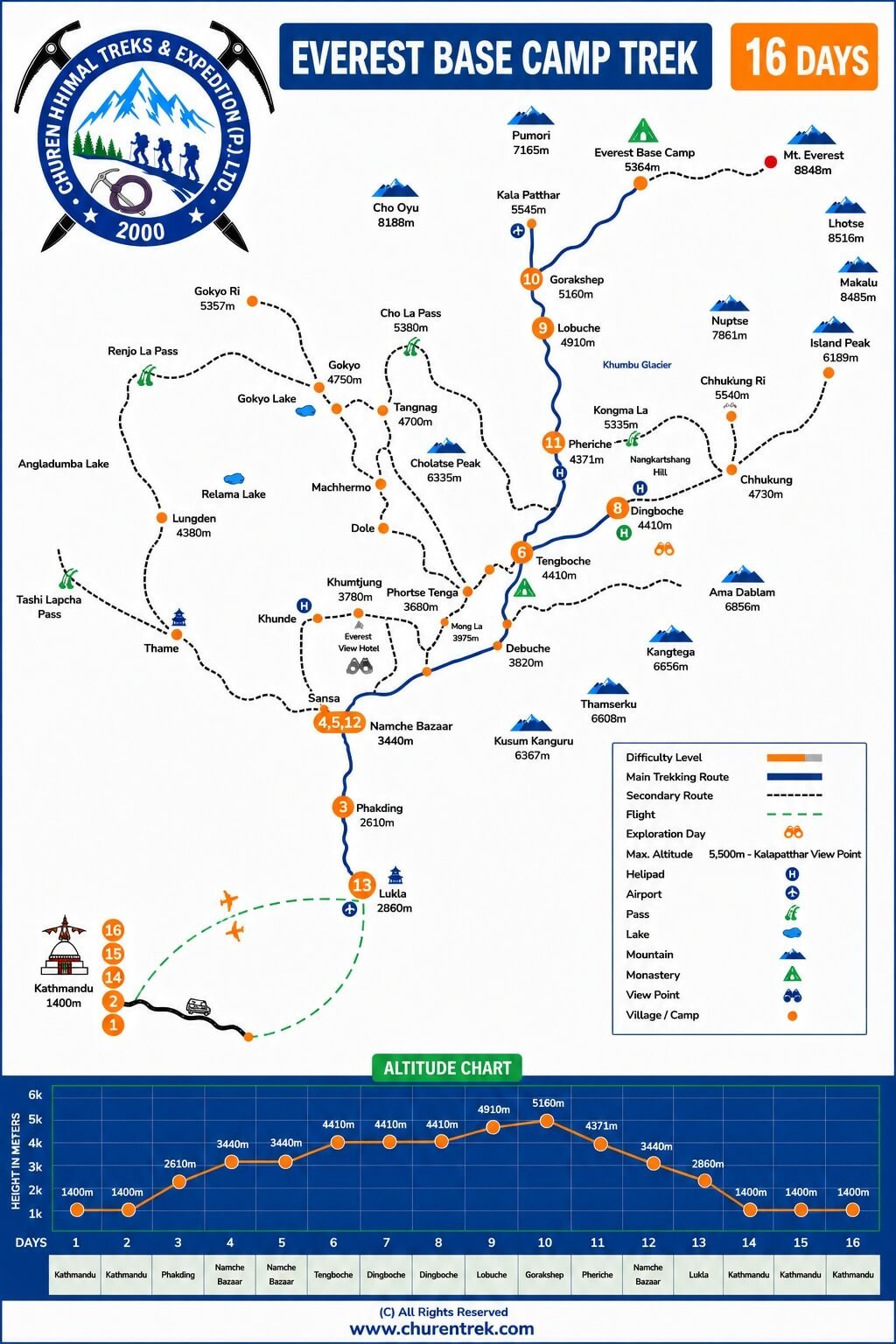
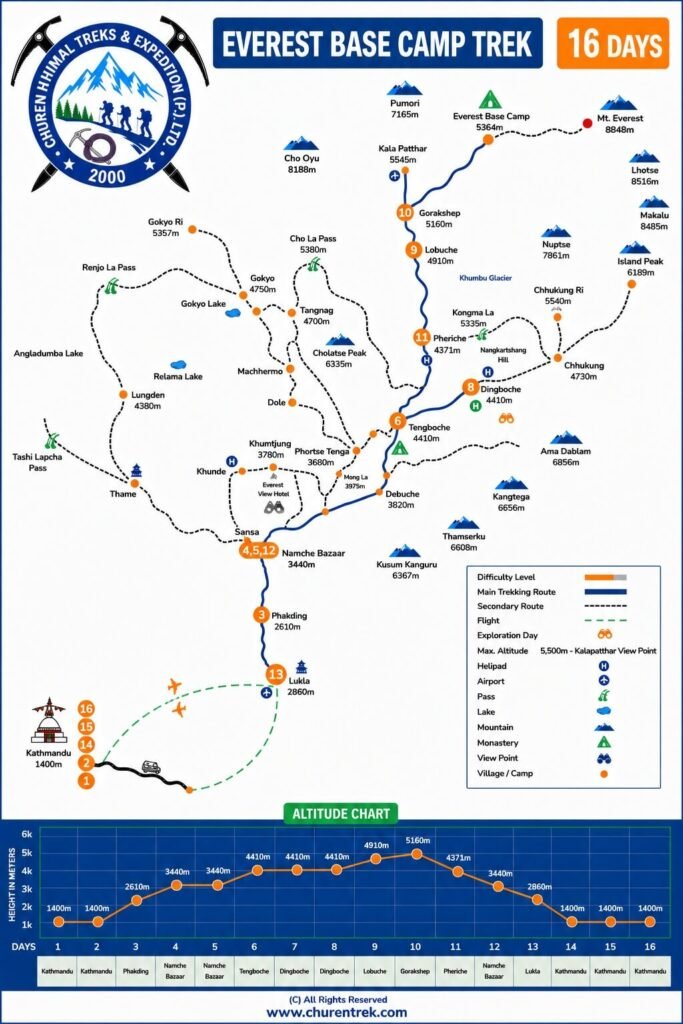
Everest Base Camp Trek Route Map
Everest Base Camp Trek – 16 Days route map
Everest Base Camp Trek Route Map Full Zoom View
Link copied to clipboard!
Price starts US$ 1720
1390 US$

We offer group discount

1 personUS$ 1590
2 peopleUS$ 1390
3 - 6 peopleUS$ 1350
7 - 10 peopleUS$ 1290
11 + peopleUS$ 1190
  • Best price guarantee
  • Secure & easy online booking
  • Flexible booking dates

Speak to an Expert

Sujan
Nepal 🇳🇵
WhatsApp +9779851233710

Rupina La Pass Trek - 15 Days Highlights

  • Cross Rupina La Pass at approximately 4,610m.
  • Explore the traditional Barpak village in Gorkha.
  • Trek through remote and less-commercialized Himalayan landscapes.
  • Experience the transition from lower mountain settlements to alpine terrain.
  • Follow trails through Gupsi Pakha, Lamro Kharka and Mishra Kharka.
  • Spend a night at a high-altitude camp before the pass crossing.
  • Descend through Meme Kharka and Zhong Kharka.
  • Experience villages including Nyak and Salleri.
  • Finish the trekking section toward Machha Khola.
  • Combine cultural sightseeing in Kathmandu with a remote mountain journey.
  • Experience changing landscapes, from forests and villages to high alpine terrain.
  • Enjoy a less conventional trekking route in the Gorkha region.
  • Travel through remote mountain communities and natural environments.
  • Experience the physical challenge of high-altitude pass trekking.
  • Trek with professional support and logistical planning from Churen Himal Treks and Expedition Pvt. Ltd.

Rupina La Pass Trek – 15 Days Overview

The Rupina La Pass Trek - 15 Days is a remote high-altitude trekking adventure in Nepal's Gorkha region, following a route through Barpak, Gupsi Pakha, Lamro Kharka, Mishra Kharka, Rupina La Pass, Meme Kharka, Zhong Kharka, Nyak and Salleri before reaching Machha Khola. The itinerary provided for this trek reaches approximately 4,610 meters at Rupina La Pass.

Unlike Nepal's highly commercialized trekking routes, the Rupina La route offers a more remote experience, combining traditional Himalayan settlements, changing mountain landscapes, forests, alpine terrain and a challenging high-pass crossing.

The 15-day program combines Kathmandu sightseeing and road transportation with several days of trekking. It is particularly suitable for trekkers looking for an off-the-beaten-path Nepal trekking experience and who are prepared for substantial elevation changes, remote trail conditions and a high-altitude pass crossing.

Quick answer: The Rupina La Pass Trek is a remote trekking route in Nepal's Gorkha region that crosses Rupina La Pass at approximately 4,610m. The supplied 15-day itinerary begins in Kathmandu, reaches Barpak by road, crosses Rupina La and finishes at Machha Khola before returning to Kathmandu.

Why Choose the Rupina La Pass Trek?

The main attraction of the Rupina La route is its combination of remote trekking, Himalayan landscapes and a demanding mountain-pass crossing.

Barpak provides a cultural and scenic beginning to the trekking journey. As the trail rises toward Gupsi Pakha, Lamro Kharka and Mishra Kharka, the environment gradually changes. Higher sections around High Camp and Rupina La demand greater preparation because of altitude, weather and trail conditions.

After crossing the pass, the route descends through Meme Kharka and Zhong Kharka toward lower settlements. This creates a varied trekking experience rather than a simple out-and-back route.

For travelers who have already experienced more established Nepal trekking trails and want something less commercialized, the Rupina La Pass Trek can provide a more remote Himalayan experience.

Rupina La Pass Trek Itinerary

  • Day 01: Arrival in Kathmandu and Hotel Transfer
    +

    Arrive at Tribhuvan International Airport in Kathmandu, where a representative from Churen Himal Treks and Expedition Pvt. Ltd. welcomes you and transfers you to your hotel. Depending on the group size, transportation may be arranged by private car, van or bus.

    After settling in, the evening can be used for rest and preparation. A welcome dinner at an authentic Nepalese restaurant provides an opportunity to experience local cuisine and cultural performance before beginning the mountain journey.

    Duration: Arrival day
    Height Difference (+/-): Approximately 0m trekking
    Walking Distance: No scheduled trekking
    Max. Altitude: Kathmandu – approx. 1,350m
    Meal: Welcome dinner
    Accommodation: Hotel in Kathmandu
  • Day 02: Kathmandu Valley Cultural Sightseeing
    +

    Spend the day exploring some of the Kathmandu Valley's major cultural landmarks. The itinerary includes Pashupatinath Temple, Boudhanath Stupa, Kathmandu Durbar Square and Swayambhunath.

    The sightseeing day provides cultural context before heading toward the mountains. It is also useful for organizing final trekking preparations, checking equipment and preparing for the road journey to Barpak.

    Duration: Full day
    Height Difference (+/-): No trekking elevation gain
    Walking Distance / Max. Altitude: Sightseeing walking only / Kathmandu Valley
    Meal: Breakfast
    Accommodation: Hotel in Kathmandu
  • Day 03: Drive from Kathmandu to Barpak
    +

    Leave Kathmandu and travel toward Barpak, a well-known mountain settlement in Gorkha. The journey transitions from the Kathmandu Valley into the hill landscapes of central Nepal.

    The road journey is an important part of the itinerary because the trek begins from Barpak. Road conditions can vary, and actual travel time may be affected by traffic, weather and local road conditions. After reaching Barpak, settle into the local accommodation and prepare for the trekking days ahead.

    Duration: Approximately 7–8 hours
    Height Difference (+/-): Road journey; approximately +600m based on supplied elevations
    Walking Distance: No scheduled trekking
    Max. Altitude: Barpak – approx. 1,950m
    Meal: Breakfast, Lunch and Dinner
    Accommodation: Guest house/tea house in Barpak
  • Day 04: Barpak to Gupsi Pakha
    +

    The trekking journey begins from Barpak as the trail climbs toward Gupsi Pakha. The elevation gain introduces you to the physical demands of the route while providing an opportunity to settle into the rhythm of Himalayan trekking.

    The landscape changes progressively as the trail gains height. Because the route is remote, facilities should be regarded as more basic than those found on heavily visited trekking routes. Overnight at Gupsi Pakha and prepare for further elevation gain.

    Duration: Approximately 5 hours
    Height Difference (+/-): Approximately +750m
    Walking Distance: Not specified in supplied itinerary
    Max. Altitude: Gupsi Pakha – approx. 2,700m
    Meal: Breakfast, Lunch and Dinner
    Accommodation: Tea house/guest house
  • Day 05: Gupsi Pakha to Lamro Kharka
    +

    Continue higher from Gupsi Pakha toward Lamro Kharka. The route increasingly enters a higher mountain environment as the elevation rises above 3,000 meters.

    Today's steady ascent makes pacing important. Trekkers should avoid rushing and pay attention to hydration, rest and how they are responding to increasing altitude. The evening at Lamro Kharka provides an opportunity to recover before the higher stages of the journey.

    Duration: Approximately 6 hours
    Height Difference (+/-): Approximately +600m
    Walking Distance: Not specified in supplied itinerary
    Max. Altitude: Lamro Kharka – approx. 3,300m
    Meal: Breakfast, Lunch and Dinner
    Accommodation: Tea house/guest house/camp depending on current route logistics
  • Day 06: Lamro Kharka to Mishra Kharka
    +

    The route continues upward from Lamro Kharka to Mishra Kharka, reaching approximately 4,000 meters. This is one of the significant altitude-gain days of the itinerary.

    The surroundings become increasingly alpine, and weather conditions can be more variable at this elevation. A controlled pace is important. The overnight stop at approximately 4,000 meters also makes altitude awareness particularly important before continuing toward High Camp and Rupina La.

    Duration: Approximately 6 hours
    Height Difference (+/-): Approximately +700m
    Walking Distance: Not specified in supplied itinerary
    Max. Altitude: Mishra Kharka – approx. 4,000m
    Meal: Breakfast, Lunch and Dinner
    Accommodation: Tea house/guest house/camp depending on current availability
  • Day 07: Mishra Kharka to High Camp
    +

    Today's trek is shorter in terms of stated walking time, but the elevation makes it an important preparation day. From Mishra Kharka, continue toward High Camp, reaching approximately 4,200 meters.

    The additional time at high altitude can be useful for rest and preparation for the Rupina La crossing. Weather at this elevation can change quickly, so the final decision to cross the pass should always consider current local conditions and the condition of the trail.

    Duration: Approximately 3 hours
    Height Difference (+/-): Approximately +200m
    Walking Distance: Not specified in supplied itinerary
    Max. Altitude: High Camp – approx. 4,200m
    Meal: Breakfast, Lunch and Dinner
    Accommodation: High-altitude camp/available local accommodation
  • Day 08: High Camp to Rupina La Pass and Meme Kharka
    +

    This is the defining day of the trek. Leave High Camp and ascend toward Rupina La Pass, the highest point of the itinerary at approximately 4,610 meters. The pass crossing combines substantial elevation with potentially challenging weather and trail conditions.

    After reaching the pass, descend toward Meme Kharka, approximately 3,300 meters according to the supplied itinerary. The descent is substantial, so trekkers should remain attentive to footing and fatigue. Actual pass-crossing duration and route conditions can vary considerably depending on snow, weather and trail conditions.

    Duration: Approximately 6 hours
    Height Difference (+/-): Approximately +410m / -1,310m based on supplied elevations
    Walking Distance: Not specified in supplied itinerary
    Max. Altitude: Rupina La Pass – approx. 4,610m
    Meal: Breakfast, Lunch and Dinner
    Accommodation: Tea house/guest house/camp depending on availability
  • Day 09: Meme Kharka to Zhong Kharka
    +

    Continue from Meme Kharka toward Zhong Kharka. The supplied itinerary lists both locations at approximately 3,300 meters, but this should not be interpreted as meaning the trail is completely level. Himalayan trails can involve repeated short ascents and descents even when overnight elevations are similar.

    Following the demanding pass-crossing day, today's route provides an opportunity to continue through the remote landscape while gradually moving toward lower elevations and settlements.

    Duration: Approximately 6 hours
    Height Difference (+/-): Approximately 0m based on supplied overnight elevations
    Walking Distance: Not specified in supplied itinerary
    Max. Altitude: Zhong Kharka – approx. 3,300m
    Meal: Breakfast, Lunch and Dinner
    Accommodation: Tea house/guest house/camp depending on availability
  • Day 10: Zhong Kharka to Nyak Village
    +

    The trail descends substantially from Zhong Kharka toward Nyak Village, listed at approximately 2,200 meters. The reduction in elevation marks a clear transition from the higher alpine environment toward lower mountain landscapes.

    The descent can place considerable stress on the legs, particularly after the pass-crossing section. A steady pace and appropriate footwear are important. Nyak provides a more settled environment for an overnight stay before the route continues toward Salleri.

    Duration: Approximately 6 hours
    Height Difference (+/-): Approximately -1,100m based on supplied elevations
    Walking Distance: Not specified in supplied itinerary
    Max. Altitude: Approximately 3,300m at the start
    Meal: Breakfast, Lunch and Dinner
    Accommodation: Guest house/tea house
  • Day 11: Nyak Village to Salleri
    +

    Continue descending from Nyak toward Salleri, with the supplied itinerary placing Salleri at approximately 1,400 meters. The lower elevation brings another noticeable change in the surrounding environment.

    After several days in high and remote terrain, the route toward Salleri represents another stage of the descent. Trail conditions can vary, and the actual walking time depends on the route used, weather and local conditions.

    Duration: Approximately 6 hours
    Height Difference (+/-): Approximately -800m
    Walking Distance: Not specified in supplied itinerary
    Max. Altitude: Approximately 2,200m at the start
    Meal: Breakfast, Lunch and Dinner
    Accommodation: Guest house/tea house
  • Day 12: Salleri to Machha Khola
    +

    Continue from Salleri toward Machha Khola, listed at approximately 869 meters. The route leaves the higher mountain environment behind and progresses toward the lower-elevation river corridor.

    This is the final major trekking day of the supplied itinerary. After reaching Machha Khola, take time to rest and recover before the following day's road journey back to Kathmandu.

    Duration: Approximately 6 hours
    Height Difference (+/-): Approximately -531m based on supplied elevations
    Walking Distance: Not specified in supplied itinerary
    Max. Altitude: Approximately 1,400m at start
    Meal: Breakfast, Lunch and Dinner
    Accommodation: Guest house/tea house
  • Day 13: Drive from Machha Khola to Kathmandu
    +

    Leave Machha Khola and travel by road toward Kathmandu. The stated journey time is approximately eight hours, but actual road travel can vary because of traffic, weather, road conditions and local transportation circumstances.

    On arrival in Kathmandu, check into the hotel and use the evening to rest after the mountain journey. The following day is deliberately kept free in the supplied itinerary.

    Duration: Approximately 8 hours
    Height Difference (+/-): Road journey; approximately +481m based on supplied elevations
    Walking Distance: No scheduled trekking
    Max. Altitude: Kathmandu – approx. 1,350m
    Meal: Breakfast and Lunch/Dinner depending on arrival time
    Accommodation: Hotel in Kathmandu
  • Day 14: Free Day in Kathmandu
    +

    Enjoy a free day in Kathmandu after completing the trek. You can use the time for relaxation, shopping, additional sightseeing or personal activities.

    Keeping a free day toward the end of the itinerary also gives travelers some flexibility following the mountain and road sections of the journey. It is an opportunity to enjoy Kathmandu at a more relaxed pace before international departure.

    Duration: Full day
    Height Difference (+/-): No scheduled trekking
    Walking Distance: Optional personal activities
    Max. Altitude: Kathmandu – approx. 1,350m
    Meal: Breakfast
    Accommodation: Hotel in Kathmandu
  • Day 15: Final Departure
    +

    Your Rupina La Pass Trek itinerary concludes with a transfer to Tribhuvan International Airport for your international flight. The transfer should be scheduled according to your confirmed departure time.

    For international travel, it is sensible to allow adequate time for airport procedures and road traffic in Kathmandu.

    Duration: Departure day
    Height Difference (+/-): No trekking
    Walking Distance: No scheduled trekking
    Max. Altitude: Kathmandu – approx. 1,350m
    Meal: Breakfast, depending on flight time
    Accommodation: None unless separately arranged

Cost Includes

  • Airport Pick-Up & Drop : Airport - Hotel transfers – Airport (Pick Up and Drop) by private Car/Van/Bus as per group size.
  • Accommodation in Kathmandu : 4 nights hotel (3-star category) in Kathmandu – Sharing twin Bedroom on BB Plan.
  • Welcome Dinner : 1 complementary Welcome dinner in a typical Nepali restaurant with a cultural program in Kathmandu.
  • Permits : All necessary paper works: Sagarmatha National Park permit, Tims Card and Pasang Lhamu Rural Municipality entry permit.
  • Insurance : Insurance for all involved Nepalese staff during the trek (Guide, Assitance guide, porter & driver).
  • Map : Everest Region Trekking map.
  • Member Transportation : (Domestic Flight) Fly from Kathmandu – Lukla and while returning Lukla – Kathmandu or Ramechhap – Lukla and while returning Lukla – Ramechhap (Private Land Trans.: Kathmandu-Ramrchhao-Kathmandu) as per itinerary.
  • Member Luggage : Up to 14 Kg per member for personal baggage during the trek carrying by porters.
  • Foods & Lodging : Food 3 meals a day (BLD; including tea and coffee) along with accessible accommodation at tea houses/lodges during the trek.
  • Guide : Local government-licensed Guide (English speaking) during the trek and sight-seeing in Kathmandu valley.
  • Porter : A Strong helpful porter with proper equipment (2 trekkers: 1 porter) during the trek.
  • Staff Salary & Allowance : All Nepalese staff & porter’s daily wages, salary, equipment, food & clothing.
  • Valley Sightseeing : Sightseeing in Kathmandu Valley [ Swoyambu (Monkey temple), Boudhanath stupa, Pasupatinath Temple and Kathmandu Durbar Square] by a professional guide.
  • Medical Kit : Comprehensive Medical kit.
  • Complimentary Services From Churen Himal : Oximeter to check your pulse, oxygen saturation, and heart rate, Daily seasonal fruits for dessert, Churen Himal Duffle Bag for the Trek, Churen Himal Trekking T-Shirt or Cap, oxygen bottle on hand in an emergency (in group) Satellite phone for emergency.
  • Certificate : Adventure certificate & Token of Love after successful trekking.

Cost Excludes

  • International Airfare : International flight airfare (from and to Kathmandu).
  • Nepal Visa Fees : 15 Days – 30 USD, 30 Days – 50 USD & 90 Days – 125 USD.
  • Lunch & Dinner : Lunch & dinner during the stay in Kathmandu & Pokhara (also in case of early return from Trekking than the scheduled itinerary).
  • Extra Nights in Kathmandu & Pokhara : Extra nights’ accommodation in Kathmandu & Pokhara. In case of early arrival or late departure, early return from Trekking (due to any reason) than the scheduled itinerary.
  • Insurance : Travel and high altitude insurance, accident, medical & emergency evacuation.
  • Rescue Evacuation : Medical Insurance and emergency rescue evacuation cost if required. (Rescue, Repatriation, Medication, Medical Tests, and Hospitalization costs.)
  • Personal Expenses : Telephone calls, Internet, Toiletries, battery recharge, hot shower, laundry, soft drinks, beer, and any alcoholic beverages.
  • Personal Equipment : Clothing, Packing Items or Bags, Personal Medical Kit, Personal Trekking Gears, etc.
  • Toiletries : Soaps, shampoos, toilet and tissue papers, toothpaste, and other items used to keep yourself clean.
  • Filming : Special Filming, Camera, and Drone permit fee.
  • Internet Service : Internet facility during the trek is not included.
  • Extra Porter : $20 USD for an extra porter per day (If an extra porter is demanded).
  • Tips : Tipping is a culture in Nepal and is expected by your staff (guides, porters, drivers).
  • Extra : Any other services or activities, which are not mentioned in the itinerary. Any other item not listed in the “Cost Includes” section.

Departure Dates

Starting Date End Date Availability Price

Trip Information

Rupina La Pass Trek Distance and Elevation

Elevation is one of the defining characteristics of this trek.

Based on the elevations supplied in the itinerary:

Section Start End Approx. Change
Barpak – Gupsi Pakha 1,950m 2,700m +750m
Gupsi Pakha – Lamro Kharka 2,700m 3,300m +600m
Lamro Kharka – Mishra Kharka 3,300m 4,000m +700m
Mishra Kharka – High Camp 4,000m 4,200m +200m
High Camp – Rupina La 4,200m 4,610m +410m
Rupina La – Meme Kharka 4,610m 3,300m -1,310m
Meme Kharka – Zhong Kharka 3,300m 3,300m Approx. 0m*
Zhong Kharka – Nyak 3,300m 2,200m -1,100m
Nyak – Salleri 2,200m 1,400m -800m
Salleri – Machha Khola 1,400m 869m -531m

Calculated cumulative ascent: approximately 2,660m

Calculated cumulative descent: approximately 3,741m

*A zero difference between overnight elevations does not mean the trail itself is flat. Intermediate climbs and descents are not represented by overnight elevation alone.

Walking Distance

A verified total trekking distance is not supplied in the source itinerary. The page should therefore avoid publishing an invented kilometer figure. A GPS-based route survey or current operational itinerary should be used before adding a precise distance.

Rupina La Pass Trek Difficulty

The Rupina La Pass Trek is best regarded as a challenging high-altitude trek because of its elevation, remote character and pass crossing.

The most demanding part is the approach to and crossing of Rupina La at approximately 4,610 meters. The itinerary also includes consecutive elevation gains from Barpak through Gupsi Pakha, Lamro Kharka, Mishra Kharka and High Camp.

Factors that make the trek challenging:

  • High-altitude trekking above 4,000m.
  • Rupina La Pass crossing at approximately 4,610m.
  • Several consecutive days of elevation gain.
  • Remote sections with comparatively limited facilities.
  • Variable mountain weather.
  • Potentially difficult trail conditions.
  • Long trekking days of approximately six hours on several stages.
  • Significant descent after the pass.
  • Limited access to services in remote areas.

Trekkers should arrive with appropriate physical preparation and should understand that altitude affects individuals differently. Anyone with health concerns should seek appropriate professional medical advice before undertaking high-altitude trekking.

Best Time for Rupina La Pass Trek

The best season depends heavily on pass conditions, snow, rainfall and trail accessibility.

  • Spring: March to May: Spring generally provides favorable trekking conditions in many parts of Nepal. Temperatures become warmer at lower elevations, while mountain landscapes can provide good visibility during suitable weather. For Rupina La, however, conditions around the high pass must still be assessed because snow and cold weather can affect the crossing.
  • Autumn: September to November: Autumn is traditionally one of Nepal's most popular trekking seasons. Following the monsoon, conditions can become drier and visibility is often favorable. This can be an attractive period for a remote high-altitude trek, although local weather and trail conditions should always be checked.
  • Monsoon: June to August: Monsoon rainfall can make roads and trails more difficult. Lower sections may become wet, muddy or affected by landslides, while cloud cover can reduce mountain visibility. A pass trek during this period should only be considered after assessing current route conditions.
  • Winter: December to February: Winter brings colder temperatures and potentially snow at higher elevations. The Rupina La crossing may become significantly more demanding depending on snow and weather conditions. The current condition of the high-pass route should be confirmed before departure.

Rupina La Pass Trek Permits

Permit requirements depend on the exact current route and Nepal's prevailing regulations.

Because trekking regulations can change, travelers should not rely on an outdated permit list or fee schedule. Churen Himal Treks should confirm the applicable permits for the exact Rupina La route before departure.

Where the route overlaps regulated trekking areas or requires specific documentation, the current requirements should be checked with the appropriate Nepal authorities and/or the authorized trekking agency.

Permit fees and requirements should therefore be confirmed at the time of booking.

Rupina La Pass Trek Cost

A verified current package price was not supplied with the itinerary, so it would be inappropriate to publish an invented price.

The total cost of a Rupina La Pass Trek normally depends on the services included in the package and may be affected by:

  • Kathmandu hotel category.
  • Trekking guide.
  • Porters.
  • Meals.
  • Trekking accommodation.
  • Transportation to Barpak.
  • Transportation from Machha Khola.
  • Applicable permits.
  • Trekking staff costs.
  • Equipment requirements.
  • Insurance.
  • Personal expenses.
  • Additional hotel nights.
  • Private versus group transportation.
  • Any itinerary customization.

For an accurate quotation, travelers should request a current itinerary and inclusions directly from Churen Himal Treks and Expedition Pvt. Ltd.

Accommodation on Rupina La Pass Trek

Accommodation varies between Kathmandu and the remote trekking section.

Kathmandu: The supplied itinerary specifies 3-star hotel accommodation in Kathmandu where applicable.

During the Trek: The itinerary identifies tea houses or guest houses during the trekking section, but facilities in remote areas should not be assumed to match those available in major trekking hubs.

Depending on the current route and availability, travelers may encounter:

  • Basic rooms.
  • Shared or limited bathroom facilities.
  • Limited electricity.
  • Charging facilities that may not always be available.
  • Intermittent or unavailable Wi-Fi.
  • Basic bedding.
  • Limited heating.
  • Shared dining spaces.

A sleeping bag appropriate for high-altitude conditions is recommended because accommodation bedding and insulation can vary.

Food and Drinks

The supplied package structure includes breakfast, lunch and dinner.

Typical trekking meals in Nepal can include: Dal bhat, rice, vegetables, noodles, soups, Tibetan/Nepalese-style dishes, tea, coffee, and simple breakfast items.

Dal bhat—rice, lentils and accompanying vegetables—is a particularly practical trekking meal because it provides a familiar combination of carbohydrates and protein.

Drink plenty of safe fluids during the trek. Travelers should plan how they will obtain and treat drinking water, especially in remote areas.

Vegetarian meals are commonly available on Nepal trekking routes, but travelers with allergies or strict dietary requirements should communicate those requirements before departure rather than assuming that every remote lodge can accommodate them.

Guides and Support Staff

A remote high-altitude trek benefits from professional trekking support.

A trekking guide can assist with: Route navigation, daily trekking coordination, accommodation arrangements, communication with local communities, weather and trail-condition awareness, group pacing, logistical coordination, and emergency response coordination when necessary.

Porters can also help carry trekking equipment and personal baggage, reducing the physical load carried by trekkers.

For a remote route such as Rupina La, travelers should discuss guide arrangements, porter responsibilities, baggage limits and emergency procedures with the trekking operator before departure.

Rupina La Pass Trek Packing List

Because this trek reaches approximately 4,610m, packing should be more appropriate for a high-altitude pass crossing than for a low-elevation village trek.

  • Clothing: Moisture-wicking base layers, trekking shirts, fleece jacket, warm/down jacket, waterproof jacket, trekking trousers, thermal layers, warm gloves, warm hat, sun hat, extra socks.
  • Footwear: Good-quality trekking boots, trekking socks, lightweight camp shoes, gaiters if current conditions warrant them.
  • Trekking Equipment: Backpack, sleeping bag suitable for expected temperatures, trekking poles, headlamp and spare batteries, water bottles or hydration system, sunglasses with adequate UV protection, sunscreen, personal first-aid supplies, personal medication, power bank, phone and charging equipment.
  • Documents: Passport, required trekking permits, travel insurance documents, emergency contact details, copies of important travel documents.
  • High-Altitude Essentials: The most important preparation is not simply carrying more equipment. Your gear should be suitable for cold, wind, possible snow and changing mountain conditions around the pass.

Safety and Responsible Trekking

Safety on the Rupina La Pass Trek requires preparation and flexibility.

  • Altitude Awareness: The route reaches approximately 4,610m. Trekkers should understand the importance of gradual acclimatization and should communicate openly with their guide about how they are feeling.
  • Weather: Mountain weather can change quickly. A pass crossing should be based on current local conditions rather than a fixed schedule alone.
  • Cold Exposure: Higher sections can become cold and windy. Proper insulation, gloves, headwear and suitable sleeping equipment are important.
  • Trail Conditions: Remote trails can change because of rain, snow, erosion or other local conditions. Actual routes may occasionally need adjustment.
  • Emergency Planning: Travel insurance appropriate for high-altitude trekking is strongly advisable. Before departure, confirm what emergency transportation and evacuation arrangements are covered by your insurance.
  • Responsible Tourism: Trekkers should carry waste to appropriate disposal points, minimize single-use plastics, respect local customs, ask permission before photographing people, avoid damaging vegetation, use established trails where appropriate, respect local communities and cultural sites, and follow local waste-management practices.

Who Should Take the Rupina La Pass Trek?

The trek is most suitable for travelers seeking a remote and physically demanding Himalayan adventure.

Suitable for: Experienced trekkers, physically fit travelers, trekkers interested in high-altitude passes, travelers with previous mountain trekking experience, adventurers seeking less-commercialized routes, trekkers comfortable with basic accommodation, travelers prepared for changing weather and trail conditions.

Additional Preparation May Be Needed For: First-time high-altitude trekkers, travelers with limited endurance, people unfamiliar with multi-day mountain trekking, anyone who has not previously spent time at high elevation.

A traveler does not necessarily need to be an elite athlete, but the combination of elevation, remote conditions and a pass crossing means adequate physical and mental preparation is important.

Why Choose Churen Himal Treks and Expedition Pvt. Ltd.?

Churen Himal Treks and Expedition Pvt. Ltd. specializes in organizing trekking and Himalayan travel experiences in Nepal.

For a route as remote as Rupina La, good planning matters. The value of a professional trekking operator lies in coordinating transportation, guides, accommodation, trekking logistics and route planning while adapting to practical conditions on the ground.

Churen Himal Treks can assist travelers with: trek planning, route and itinerary coordination, local trekking support, transportation arrangements, accommodation coordination, trekking logistics, communication before and during the trip, personalized itinerary planning, safety-conscious trip management, and responsible tourism practices.

Learn more about the company and its trekking services at Churen Himal Treks and Expedition Pvt. Ltd..

Book or Plan Your Rupina La Pass Trek

The Rupina La Pass Trek - 15 Days combines a cultural introduction in Kathmandu, a road journey to Barpak, remote Himalayan trekking, a high-altitude crossing at approximately 4,610m and a descent toward Machha Khola.

Because this is a relatively remote and challenging route, the itinerary should be confirmed against current trail conditions, accommodation availability, transportation conditions and applicable regulations before departure.

If you are interested in this route, contact Churen Himal Treks and Expedition Pvt. Ltd. to request a current itinerary, availability and a customized quotation.

Website: https://www.churentrek.com

Price starts US$ 1720
1390 US$

We offer group discount

1 personUS$ 1590
2 peopleUS$ 1390
3 - 6 peopleUS$ 1350
7 - 10 peopleUS$ 1290
11 + peopleUS$ 1190
  • Best price guarantee
  • Secure & easy online booking
  • Flexible booking dates

Speak to an Expert

Sujan
Nepal 🇳🇵
WhatsApp +9779851233710

FAQs for Everest Base Camp Trek – 16 Days

FAQs for Everest Base Camp Trek – 16 Days

ℹ️ General

+
➔
What is the Everest Base Camp Trek and why is it popular?
It is a world-famous 14-day Himalayan adventure taking you to the base of Mt. Everest through ancient Sherpa villages and stunning landscapes.
➔
How difficult is the Everest Base Camp Trek?
The trek is moderately challenging, requiring good physical stamina for multi-day walking but no technical climbing skills.
➔
How many days does the trek take in total?
The standard Everest Base Camp Trek itinerary offered by Glorious Eco Trek Nepal takes 14 days in total.
➔
Is prior trekking experience necessary for this trip?
No prior trekking experience is mandatory as long as you are healthy, motivated, and in good physical condition.
➔
Can solo travelers join a group trek?
Yes, solo travelers can join our organized group departures or trek with a dedicated personal guide.

🏋️ Preparation & Fitness

+
➔
Is the Everest Base Camp Trek physically challenging?
Yes, walking 5 to 7 hours daily over steep mountain terrain at high altitudes tests your endurance.
➔
Do I need to train before doing the Everest Base Camp Trek?
Yes, pre-trip physical conditioning makes the journey significantly more comfortable and enjoyable.
➔
How many weeks should I train before the EBC trek?
We recommend beginning cardiovascular and endurance training at least 8 to 12 weeks before your trip.
➔
What is the best way to prepare for the Everest Base Camp Trek?
Focus on aerobic workouts like running and swimming alongside stair-climbing with a weighted daypack.
➔
How can I acclimatize to high altitude faster?
Walk at a steady, slow pace, drink 3-4 liters of water daily, avoid alcohol, and strictly follow our rest day schedules.
➔
How many hours will I walk each day during the EBC trek?
You will walk an average of 5 to 7 hours each day depending on the distance between teahouses.
➔
Can first-time trekkers do the Everest Base Camp Trek?
Yes, motivated first-time trekkers with a basic fitness foundation successfully complete the trek every year.

🪪 Permits

+
➔
What permits are required for the Everest Base Camp Trek?
You need the Sagarmatha National Park Entry Permit and the Khumbu Pasang Lhamu Rural Municipality Permit.
➔
Will Glorious Eco Trek Nepal arrange all the necessary permits?
Yes, our team handles all paperwork and arranges all required permits for you.

🛂 Insurance & Visa

+
➔
Do I need travel insurance for the Everest Base Camp Trek?
Yes, travel insurance is strictly mandatory for all trekkers on this expedition.
➔
How do I get a tourist visa for Nepal?
You can fill out the online pre-visa form or apply directly upon arrival at Kathmandu Airport.
➔
Can I get a visa on arrival at the airport?
Yes, tourist visas on arrival are available at Tribhuvan International Airport for most nationalities.
➔
What should the insurance cover for trekking in Nepal?
Your policy must specifically cover high-altitude medical treatment and emergency helicopter evacuation up to 6,000 meters.

💂 Guides & Support Staff

+
➔
Will I have a guide and porter during the trek?
Yes, our standard trip package includes a licensed local guide and helpful porters.
➔
What are the qualifications of your trekking guides?
Our guides are government-certified professionals trained in wilderness first aid and emergency response.
➔
Do the guides speak English?
Yes, all of our guides speak fluent English to ensure seamless communication.
➔
Will porters carry my luggage during the trek?
Yes, porters carry your main heavy duffel bag so you only carry a small, light daypack.
➔
Is tipping guides and porters expected?
Tipping is a traditional way in Nepal to express gratitude to support staff for their hard work.
➔
Can I trek to Everest Base Camp without a guide?
No, current government regulations mandate that all foreign trekkers must be accompanied by a licensed guide.

🛏️ Accommodation and Facilities

+
➔
What kind of accommodation is provided during the trek?
You will stay in traditional, cozy mountain teahouses featuring twin-share bedrooms and a central heated dining room.
➔
Are hot showers and Wi-Fi available along the trail?
Yes, hot showers and Wi-Fi access cards are available at most teahouses for a small extra fee.
➔
Will I get a private room or have to share?
Rooms are structured as twin-sharing for two travelers, though private single rooms can be arranged upon request when available.
➔
Can I charge my phone and devices during the trek?
Yes, charging stations are available in teahouse dining rooms for a nominal hourly rate.
➔
Are toilets available throughout the trek?
Shared indoor toilets are provided in teahouses, ranging from standard Western seats to traditional squat toilets.

🍲 Food and Drinks

+
➔
What kind of food is available during the trek?
Teahouse menus offer fresh meals like traditional Nepali Dal Bhat, soups, fried rice, noodles, eggs, and pasta.
➔
Are vegetarian or vegan meals available?
Yes, vegetarian and vegan choices are widely available and recommended for optimal health at altitude.
➔
Is it safe to drink the water during the trek?
Untreated tap water is unsafe; always drink boiled teahouse water or use purification tablets/UV filters.
➔
Can I buy snacks and drinks along the way?
Yes, small village shops along the path sell bottled drinks, snacks, and chocolate bars.

🌤️ Weather & Seasons

+
➔
What is the best time to do the Everest Base Camp Trek?
Spring (March to May) and Autumn (September to November) offer clear skies and ideal temperatures.
➔
Can I trek during the monsoon or winter season?
Trekking is possible in winter or monsoon, but involves colder conditions, snow, or rain and potential flight delays.
➔
What kind of weather can I expect during the trek?
Daytime walking weather is typically pleasant, but night temperatures drop below freezing at high altitudes.

🩺 Health & Safety

+
➔
What happens if I get sick or injured during the trek?
Your guide will provide immediate first aid, arrange descent if needed, or summon a rescue helicopter for emergency transport.
➔
How do you handle altitude sickness?
We monitor oxygen levels daily, carry emergency first-aid supplies, and enforce immediate descent if severe symptoms appear.
➔
Are there health posts or clinics along the route?
Yes, basic medical posts operate at Namche Bazaar and Pheriche to assist ill or injured trekkers.
➔
Is the trek safe for solo female travelers?
Yes, Nepal is very welcoming, and trekking with our vetted licensed guides guarantees safety and security.
➔
Do I need to bring medicines for the Everest Base Camp Trek?
Yes, pack personal items like Diamox (for altitude), pain relievers, rehydration salts, and blister treatments.

🎒 Packing & Gear

+
➔
What should I pack for the Everest Base Camp Trek?
Key items include thermal clothing layers, a heavy down jacket, broken-in trekking boots, gloves, and a sleeping bag.
➔
Is a sleeping bag necessary?
Yes, a sub-zero rated sleeping bag (-10°C to -15°C) is essential as teahouse rooms are unheated at night.
➔
Where can I keep my extra luggage during the trek?
You can store non-trekking travel luggage for free at your hotel in Kathmandu before heading out.
➔
What is the luggage weight limit for the Lukla flight?
The domestic Lukla flight weight limit is 15 kg total (10 kg main bag + 5 kg hand carry).
➔
How much weight can a porter carry?
A single porter carries up to 25 kg total, usually splitting weight between two trekkers (12.5 kg per person).
➔
Where can I buy trekking clothes and gear?
You can easily buy or rent all essential gear at affordable prices in the Thamel district of Kathmandu.

💳 Booking & Payment

+
➔
What is the booking process and payment method for the Everest Base Camp Trek?
You can reserve online with an advance deposit via card or wire transfer, paying the remaining balance in Kathmandu.
➔
Is there a cancellation or refund policy?
Yes, we provide flexible cancellation policies clearly outlined in our booking agreement terms.
➔
What currency should I carry for expenses along the Everest Base Camp trek?
Carry local Nepali Rupees (NPR) cash for trail purchases as foreign currencies are rarely accepted.
➔
Can I use ATMs or credit cards during the trek?
ATMs on the trail are unreliable and cards are rarely accepted, so carrying cash from Kathmandu is mandatory.
➔
Are there money exchange services in the Everest Base Camp region?
Money exchange services are available in Namche Bazaar but offer lower rates than Kathmandu banks.
➔
How much extra money should I budget per day during the trek?
Budget roughly $15 to $25 per day for extra personal expenses like hot drinks, snacks, showers, and battery charging.
➔
Can I book the Everest Base Camp trek if I’m traveling with children?
Yes, healthy children can join provided you arrange a customized, slower-paced itinerary for safety.
➔
Should I book the trek well in advance?
Yes, booking 3 to 6 months in advance ensures guaranteed Lukla flight tickets and premium teahouse rooms.

🛫 Transportation & Flight

+
➔
Do you provide airport pick-up and drop-off services?
Yes, private airport pickup and drop-off transfers are included in our package.
➔
How do I get to the starting point of the trek?
You reach the trail's starting point via a scenic mountain flight to Lukla Airport.
➔
Is the flight to Lukla safe?
Yes, Lukla flights are operated by highly experienced mountain pilots who fly only in clear, safe weather.
➔
What happens if my Lukla flight is delayed or canceled?
Flight schedules shift to the next clear day or alternative helicopter rides can be organized if requested.
➔
What is the mode of transportation to reach Everest Base Camp?
After landing in Lukla, the remaining journey to Base Camp and back is completed entirely on foot.
Churen Trek - Mobile FAQs

ℹ️ General

+
What is the Everest Base Camp Trek and why is it popular?
It is a world-famous 14-day Himalayan adventure taking you to the base of Mt. Everest through ancient Sherpa villages and stunning landscapes.
+
How difficult is the Everest Base Camp Trek?
The trek is moderately challenging, requiring good physical stamina for multi-day walking but no technical climbing skills.
+
How many days does the trek take in total?
The standard Everest Base Camp Trek itinerary offered by Glorious Eco Trek Nepal takes 14 days in total.
+
Is prior trekking experience necessary for this trip?
No prior trekking experience is mandatory as long as you are healthy, motivated, and in good physical condition.
+
Can solo travelers join a group trek?
Yes, solo travelers can join our organized group departures or trek with a dedicated personal guide.

🏋️ Preparation & Fitness

+
Is the Everest Base Camp Trek physically challenging?
Yes, walking 5 to 7 hours daily over steep mountain terrain at high altitudes tests your endurance.
+
Do I need to train before doing the Everest Base Camp Trek?
Yes, pre-trip physical conditioning makes the journey significantly more comfortable and enjoyable.
+
How many weeks should I train before the EBC trek?
We recommend beginning cardiovascular and endurance training at least 8 to 12 weeks before your trip.
+
What is the best way to prepare for the Everest Base Camp Trek?
Focus on aerobic workouts like running and swimming alongside stair-climbing with a weighted daypack.
+
How can I acclimatize to high altitude faster?
Walk at a steady, slow pace, drink 3-4 liters of water daily, avoid alcohol, and strictly follow our rest day schedules.
+
How many hours will I walk each day during the EBC trek?
You will walk an average of 5 to 7 hours each day depending on the distance between teahouses.
+
Can first-time trekkers do the Everest Base Camp Trek?
Yes, motivated first-time trekkers with a basic fitness foundation successfully complete the trek every year.

🪪 Permits

+
What permits are required for the Everest Base Camp Trek?
You need the Sagarmatha National Park Entry Permit and the Khumbu Pasang Lhamu Rural Municipality Permit.
+
Will Glorious Eco Trek Nepal arrange all the necessary permits?
Yes, our team handles all paperwork and arranges all required permits for you.

🛂 Insurance & Visa

+
Do I need travel insurance for the Everest Base Camp Trek?
Yes, travel insurance is strictly mandatory for all trekkers on this expedition.
+
How do I get a tourist visa for Nepal?
You can fill out the online pre-visa form or apply directly upon arrival at Kathmandu Airport.
+
Can I get a visa on arrival at the airport?
Yes, tourist visas on arrival are available at Tribhuvan International Airport for most nationalities.
+
What should the insurance cover for trekking in Nepal?
Your policy must specifically cover high-altitude medical treatment and emergency helicopter evacuation up to 6,000 meters.

💂 Guides & Support Staff

+
Will I have a guide and porter during the trek?
Yes, our standard trip package includes a licensed local guide and helpful porters.
+
What are the qualifications of your trekking guides?
Our guides are government-certified professionals trained in wilderness first aid and emergency response.
+
Do the guides speak English?
Yes, all of our guides speak fluent English to ensure seamless communication.
+
Will porters carry my luggage during the trek?
Yes, porters carry your main heavy duffel bag so you only carry a small, light daypack.
+
Is tipping guides and porters expected?
Tipping is a traditional way in Nepal to express gratitude to support staff for their hard work.
+
Can I trek to Everest Base Camp without a guide?
No, current government regulations mandate that all foreign trekkers must be accompanied by a licensed guide.

🛏️ Accommodation and Facilities

+
What kind of accommodation is provided during the trek?
You will stay in traditional, cozy mountain teahouses featuring twin-share bedrooms and a central heated dining room.
+
Are hot showers and Wi-Fi available along the trail?
Yes, hot showers and Wi-Fi access cards are available at most teahouses for a small extra fee.
+
Will I get a private room or have to share?
Rooms are structured as twin-sharing for two travelers, though private single rooms can be arranged upon request when available.
+
Can I charge my phone and devices during the trek?
Yes, charging stations are available in teahouse dining rooms for a nominal hourly rate.
+
Are toilets available throughout the trek?
Shared indoor toilets are provided in teahouses, ranging from standard Western seats to traditional squat toilets.

🍲 Food and Drinks

+
What kind of food is available during the trek?
Teahouse menus offer fresh meals like traditional Nepali Dal Bhat, soups, fried rice, noodles, eggs, and pasta.
+
Are vegetarian or vegan meals available?
Yes, vegetarian and vegan choices are widely available and recommended for optimal health at altitude.
+
Is it safe to drink the water during the trek?
Untreated tap water is unsafe; always drink boiled teahouse water or use purification tablets/UV filters.
+
Can I buy snacks and drinks along the way?
Yes, small village shops along the path sell bottled drinks, snacks, and chocolate bars.

🌤️ Weather & Seasons

+
What is the best time to do the Everest Base Camp Trek?
Spring (March to May) and Autumn (September to November) offer clear skies and ideal temperatures.
+
Can I trek during the monsoon or winter season?
Trekking is possible in winter or monsoon, but involves colder conditions, snow, or rain and potential flight delays.
+
What kind of weather can I expect during the trek?
Daytime walking weather is typically pleasant, but night temperatures drop below freezing at high altitudes.

🩺 Health & Safety

+
What happens if I get sick or injured during the trek?
Your guide will provide immediate first aid, arrange descent if needed, or summon a rescue helicopter for emergency transport.
+
How do you handle altitude sickness?
We monitor oxygen levels daily, carry emergency first-aid supplies, and enforce immediate descent if severe symptoms appear.
+
Are there health posts or clinics along the route?
Yes, basic medical posts operate at Namche Bazaar and Pheriche to assist ill or injured trekkers.
+
Is the trek safe for solo female travelers?
Yes, Nepal is very welcoming, and trekking with our vetted licensed guides guarantees safety and security.
+
Do I need to bring medicines for the Everest Base Camp Trek?
Yes, pack personal items like Diamox (for altitude), pain relievers, rehydration salts, and blister treatments.

🎒 Packing & Gear

+
What should I pack for the Everest Base Camp Trek?
Key items include thermal clothing layers, a heavy down jacket, broken-in trekking boots, gloves, and a sleeping bag.
+
Is a sleeping bag necessary?
Yes, a sub-zero rated sleeping bag (-10°C to -15°C) is essential as teahouse rooms are unheated at night.
+
Where can I keep my extra luggage during the trek?
You can store non-trekking travel luggage for free at your hotel in Kathmandu before heading out.
+
What is the luggage weight limit for the Lukla flight?
The domestic Lukla flight weight limit is 15 kg total (10 kg main bag + 5 kg hand carry).
+
How much weight can a porter carry?
A single porter carries up to 25 kg total, usually splitting weight between two trekkers (12.5 kg per person).
+
Where can I buy trekking clothes and gear?
You can easily buy or rent all essential gear at affordable prices in the Thamel district of Kathmandu.

💳 Booking & Payment

+
What is the booking process and payment method for the Everest Base Camp Trek?
You can reserve online with an advance deposit via card or wire transfer, paying the remaining balance in Kathmandu.
+
Is there a cancellation or refund policy?
Yes, we provide flexible cancellation policies clearly outlined in our booking agreement terms.
+
What currency should I carry for expenses along the Everest Base Camp trek?
Carry local Nepali Rupees (NPR) cash for trail purchases as foreign currencies are rarely accepted.
+
Can I use ATMs or credit cards during the trek?
ATMs on the trail are unreliable and cards are rarely accepted, so carrying cash from Kathmandu is mandatory.
+
Are there money exchange services in the Everest Base Camp region?
Money exchange services are available in Namche Bazaar but offer lower rates than Kathmandu banks.
+
How much extra money should I budget per day during the trek?
Budget roughly $15 to $25 per day for extra personal expenses like hot drinks, snacks, showers, and battery charging.
+
Can I book the Everest Base Camp trek if I’m traveling with children?
Yes, healthy children can join provided you arrange a customized, slower-paced itinerary for safety.
+
Should I book the trek well in advance?
Yes, booking 3 to 6 months in advance ensures guaranteed Lukla flight tickets and premium teahouse rooms.

🛫 Transportation & Flight

+
Do you provide airport pick-up and drop-off services?
Yes, private airport pickup and drop-off transfers are included in our package.
+
How do I get to the starting point of the trek?
You reach the trail's starting point via a scenic mountain flight to Lukla Airport.
+
Is the flight to Lukla safe?
Yes, Lukla flights are operated by highly experienced mountain pilots who fly only in clear, safe weather.
+
What happens if my Lukla flight is delayed or canceled?
Flight schedules shift to the next clear day or alternative helicopter rides can be organized if requested.
+
What is the mode of transportation to reach Everest Base Camp?
After landing in Lukla, the remaining journey to Base Camp and back is completed entirely on foot.
💬

Reviews on Everest Base Camp Trek – 14 Days

🟢 225+ Tripadvisor Reviews 🟢🟢🟢🟢🟢
🌐 118+ Excellent Google Reviews ★★★★★
⭐ Based on 45 Reviews ★★★★★
Verified by Trustindex ⓘ
▶

Video Testimonials

Video Testimonial 1
▶
Video Testimonial 2
▶
🏔️ Churen Trek
▶
Video Testimonial 4
▶
US$ 1390 Per Person