Churen Trek

Confirmed Booked Group, You Can Join for 2026 & 2027 Know More

PIKEY PEAK TREK 04 DAYS

Duration

04 Day

Trip Difficulty

Easy

Start/End Point

Starting From: Kathmandu
Ending at: Kathmandu

Meals

Break-fast,Lunch and Diner

Max Altitude:

4,065m

Group Size

01-15 Pax

Best Season

All Seasons

Accommodation

Hotel and Tea House

Trek Route Map
Route Map
Trek Route Map Full Zoom View
Link copied to clipboard!
Price starts US$ 1720
1390 US$

We offer group discount

1 personUS$ 1590
2 peopleUS$ 1390
3 - 6 peopleUS$ 1350
7 - 10 peopleUS$ 1290
11 + peopleUS$ 1190
  • Best price guarantee
  • Secure & easy online booking
  • Flexible booking dates

Speak to an Expert

Sujan
Nepal 🇳🇵
WhatsApp +9779851233710

Pikey Peak Trek – 4 Days Highlights

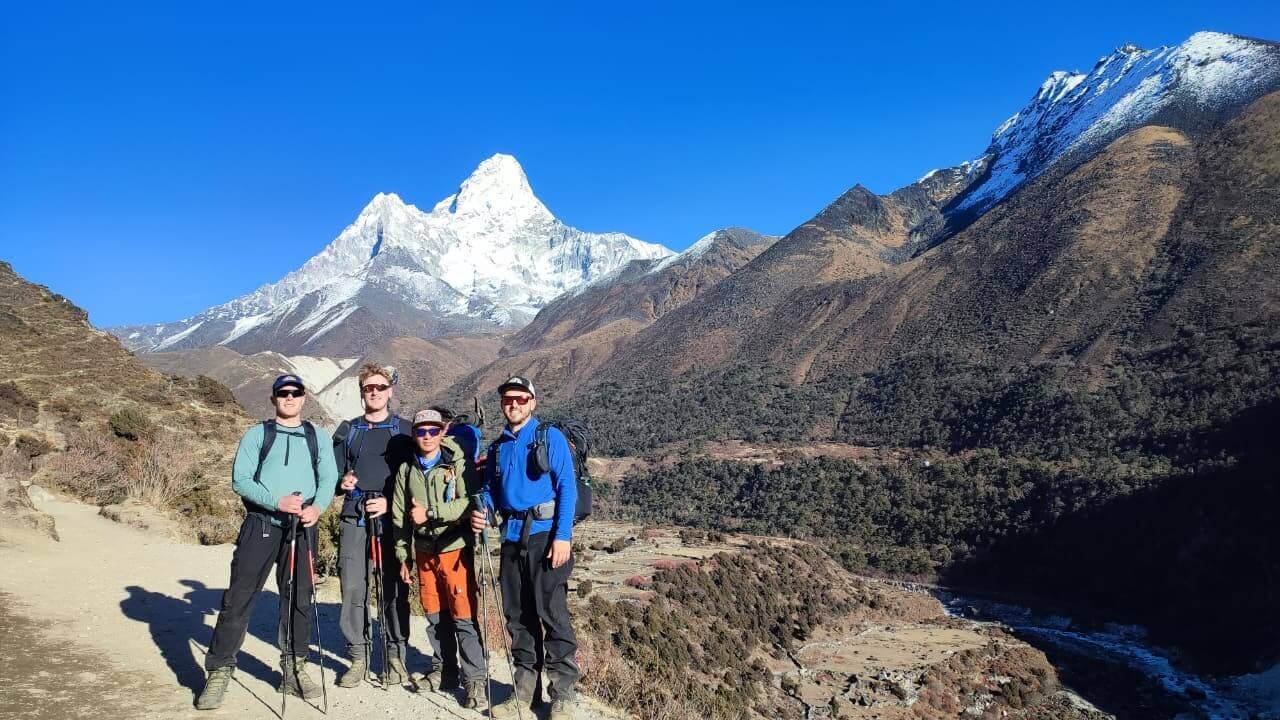
  • Short Everest View Trek: Experience jaw-dropping mountain panoramas without the long commitment of the full Everest Base Camp trek.
  • Lower Solukhumbu Region Gem: Nestled away from crowded tourist routes, offering a peaceful and authentic Himalayan atmosphere.
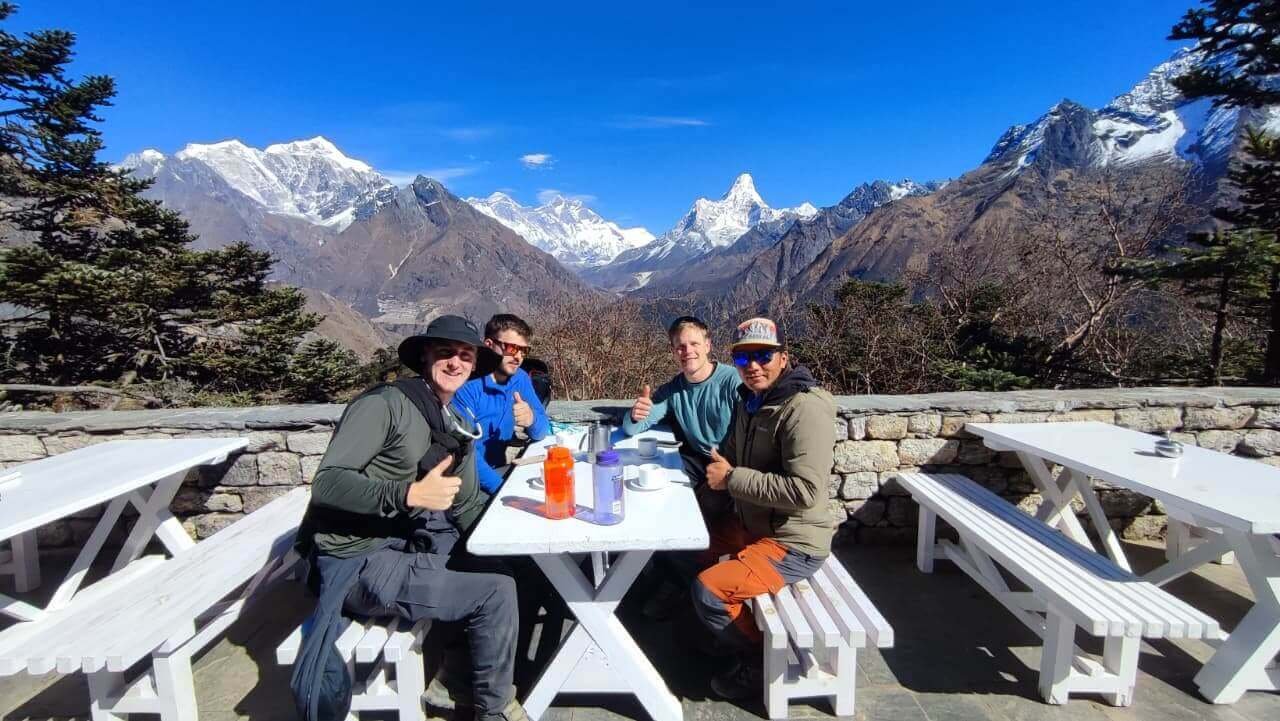
  • Breathtaking Everest Sunrise Views: Witness unforgettable morning light illuminating Mount Everest and surrounding Himalayan peaks from Pikey Peak.
  • Authentic Sherpa Culture: Immerse yourself in traditional village life, local hospitality, and rich cultural heritage.
  • Peaceful, Off-the-Beaten-Path Trails: Trek along quiet paths that allow you to experience raw Himalayan beauty in absolute tranquility.
  • Budget-Friendly Everest Alternative: Enjoy incredible value and stunning Himalayan vistas as an affordable alternative to longer treks.
  • Perfect for All Experience Levels: Whether you are a first-time trekker or a seasoned hiker, this 4-day journey provides a manageable yet rewarding adventure.

Pikey Peak Trek – 4 Days Overview

The 4-Day Pikey Peak Trek is one of the most rewarding Nepal short trekking packages available today. Located in the Lower Solukhumbu trekking route, this adventure reaches a maximum altitude of 4,065 meters and offers one of the best Everest panorama viewpoints in Nepal.

This trek is ideal for travelers who:

  • Have limited time in Nepal
  • Want an easy Everest region trek
  • Prefer less crowded trails
  • Seek authentic Sherpa village trekking experiences

The journey begins with a scenic Kathmandu to Dhap drive, followed by trekking through rhododendron forests, yak pastures, and charming mountain villages. The highlight? A breathtaking Pikey Peak sunrise view where Everest glows golden under the morning sun.

With moderate altitude gain and manageable walking hours, it’s considered a moderate altitude trek in Nepal, suitable for most fit travelers.

Pikey Peak Trek - 6 Days Details Itinerary

  • Day 01: Arrival in Kathmandu (1,400m / 4,593ft)
    +

    Arrive at Tribhuvan International Airport, where our representative welcomes you and transfers you to your hotel by private vehicle based on group size. In the evening, enjoy a traditional Nepali dinner with live cultural performances.

    Relax and prepare for the adventure ahead. Overnight stay at a hotel in Kathmandu.

    Duration: Airport transfer time
    Height Difference: Arrival day
    Walking Distance: Airport transfer
    Max. Altitude: 1,400m
    Meal: Dinner with live cultural performances
    Accommodation: Hotel in Kathmandu
    Note: Ensure you arrive on time to attend the evening welcome orientation and dinner.
  • Day 02: Drive Kathmandu to Dhap and Trek to Jhapre (2,820m)
    +

    After an early breakfast, drive 7–8 hours through scenic hills and rural landscapes to Dhap. Begin a gentle 2–3 hour trek to Jhapre, passing forests and local villages.

    Enjoy your first distant views of Everest from Jhapre Monastery. Overnight stay at a cozy lodge in Jhapre.

    Duration: 7–8 hours drive + 2–3 hours trek
    Height Difference: Approx. +1,420m
    Walking Distance: Approx. 5–7 km trek
    Max. Altitude: 2,820m
    Meal: Breakfast, Lunch, Dinner
    Accommodation: Cozy lodge in Jhapre
    Note: Road conditions during the drive can vary, so an early start is essential.
  • Day 03: Trek Jhapre to Pikey Peak Base Camp (3,640m)
    +

    Trek 5–6 hours along a gradual uphill trail through rhododendron forests and yak pastures. Walk along scenic ridgelines with expanding Himalayan views.

    Reach Pikey Peak Base Camp and soak in the peaceful mountain atmosphere. Overnight at a tea house or lodge near the base camp.

    Duration: Approximately 5–6 hours walking
    Height Difference: Approx. +820m
    Walking Distance: Approx. 9–11 km
    Max. Altitude: 3,640m
    Meal: Breakfast, Lunch, Dinner
    Accommodation: Tea house or lodge near base camp
    Note: Maintain a steady pace along the gradual uphill sections as altitude increases.
  • Day 04: Sunrise Hike Pikey Peak (4,065m) and Trek to Dhap/Jhapre (2,400m)
    +

    Wake early for a 1.5–2 hour hike to Pikey Peak summit. Witness breathtaking sunrise views over Everest and the Himalayan range.

    Descend through forests and villages on a 6–7 hour trek back toward Dhap or Jhapre. Overnight stay at the lodge.

    Duration: Approximately 7–9 hours total
    Height Difference: Approx. +425m summit hike / -1,265m descent
    Walking Distance: Approx. 12–15 km
    Max. Altitude: 4,065m (Pikey Peak summit)
    Meal: Breakfast, Lunch, Dinner
    Accommodation: Lodge in Dhap or Jhapre
    Note: Early morning temperatures at the summit can be cold, so warm layers are necessary.
  • Day 05: Drive Dhap to Kathmandu (1,350m)
    +

    After breakfast, drive back to Kathmandu (7–8 hours), enjoying scenic countryside views along the way. Upon arrival, transfer to your hotel.

    Spend the evening at leisure exploring the city or relaxing after your trek. Overnight in Kathmandu.

    Duration: Approximately 7–8 hours drive
    Height Difference: Descending to valley floor
    Walking Distance: Minimal / drive day
    Max. Altitude: 1,400m (Kathmandu)
    Meal: Breakfast, Lunch
    Accommodation: Hotel in Kathmandu
    Note: Traffic conditions upon entering Kathmandu can extend travel times in the late afternoon.
  • Day 06: Final Departure
    +

    Depending on your flight schedule, transfer to Tribhuvan International Airport for your onward journey.

    Depart with unforgettable memories of the Pikey Peak Trek and the majestic Himalayan landscapes.

    Duration: Airport transfer time
    Height Difference: N/A
    Walking Distance: Minimal airport transfer
    Max. Altitude: 1,400m (Kathmandu)
    Meal: Breakfast
    Accommodation: Not included
    Note: Please ensure you arrive at the airport at least 3 hours prior to your international flight departure.

Cost Includes

  • Airport Pick-Up & Drop : Airport - Hotel transfers – Airport (Pick Up and Drop) by private Car/Van/Bus as per group size.
  • Accommodation in Kathmandu : 4 nights hotel (3-star category) in Kathmandu – Sharing twin Bedroom on BB Plan.
  • Welcome Dinner : 1 complementary Welcome dinner in a typical Nepali restaurant with a cultural program in Kathmandu.
  • Permits : All necessary paper works: Sagarmatha National Park permit, Tims Card and Pasang Lhamu Rural Municipality entry permit.
  • Insurance : Insurance for all involved Nepalese staff during the trek (Guide, Assitance guide, porter & driver).
  • Map : Everest Region Trekking map.
  • Member Transportation : (Domestic Flight) Fly from Kathmandu – Lukla and while returning Lukla – Kathmandu or Ramechhap – Lukla and while returning Lukla – Ramechhap (Private Land Trans.: Kathmandu-Ramrchhao-Kathmandu) as per itinerary.
  • Member Luggage : Up to 14 Kg per member for personal baggage during the trek carrying by porters.
  • Foods & Lodging : Food 3 meals a day (BLD; including tea and coffee) along with accessible accommodation at tea houses/lodges during the trek.
  • Guide : Local government-licensed Guide (English speaking) during the trek and sight-seeing in Kathmandu valley.
  • Porter : A Strong helpful porter with proper equipment (2 trekkers: 1 porter) during the trek.
  • Staff Salary & Allowance : All Nepalese staff & porter’s daily wages, salary, equipment, food & clothing.
  • Valley Sightseeing : Sightseeing in Kathmandu Valley [ Swoyambu (Monkey temple), Boudhanath stupa, Pasupatinath Temple and Kathmandu Durbar Square] by a professional guide.
  • Medical Kit : Comprehensive Medical kit.
  • Complimentary Services From Churen Himal : Oximeter to check your pulse, oxygen saturation, and heart rate, Daily seasonal fruits for dessert, Churen Himal Duffle Bag for the Trek, Churen Himal Trekking T-Shirt or Cap, oxygen bottle on hand in an emergency (in group) Satellite phone for emergency.
  • Certificate : Adventure certificate & Token of Love after successful trekking.

Cost Excludes

  • International Airfare : International flight airfare (from and to Kathmandu).
  • Nepal Visa Fees : 15 Days – 30 USD, 30 Days – 50 USD & 90 Days – 125 USD.
  • Lunch & Dinner : Lunch & dinner during the stay in Kathmandu & Pokhara (also in case of early return from Trekking than the scheduled itinerary).
  • Extra Nights in Kathmandu & Pokhara : Extra nights’ accommodation in Kathmandu & Pokhara. In case of early arrival or late departure, early return from Trekking (due to any reason) than the scheduled itinerary.
  • Insurance : Travel and high altitude insurance, accident, medical & emergency evacuation.
  • Rescue Evacuation : Medical Insurance and emergency rescue evacuation cost if required. (Rescue, Repatriation, Medication, Medical Tests, and Hospitalization costs.)
  • Personal Expenses : Telephone calls, Internet, Toiletries, battery recharge, hot shower, laundry, soft drinks, beer, and any alcoholic beverages.
  • Personal Equipment : Clothing, Packing Items or Bags, Personal Medical Kit, Personal Trekking Gears, etc.
  • Toiletries : Soaps, shampoos, toilet and tissue papers, toothpaste, and other items used to keep yourself clean.
  • Filming : Special Filming, Camera, and Drone permit fee.
  • Internet Service : Internet facility during the trek is not included.
  • Extra Porter : $20 USD for an extra porter per day (If an extra porter is demanded).
  • Tips : Tipping is a culture in Nepal and is expected by your staff (guides, porters, drivers).
  • Extra : Any other services or activities, which are not mentioned in the itinerary. Any other item not listed in the “Cost Includes” section.

Departure Dates

Starting Date End Date Availability Price

Trip Information

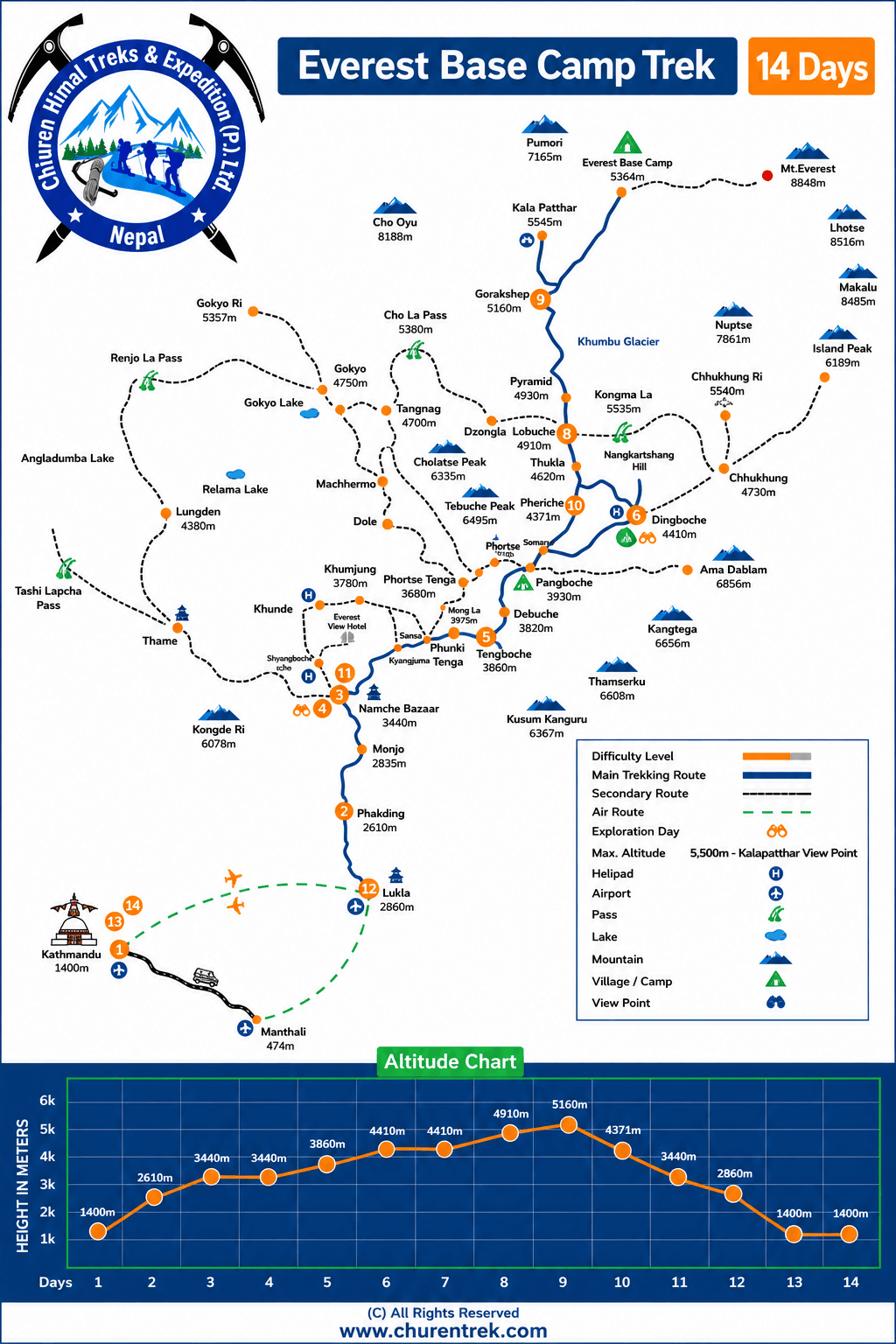
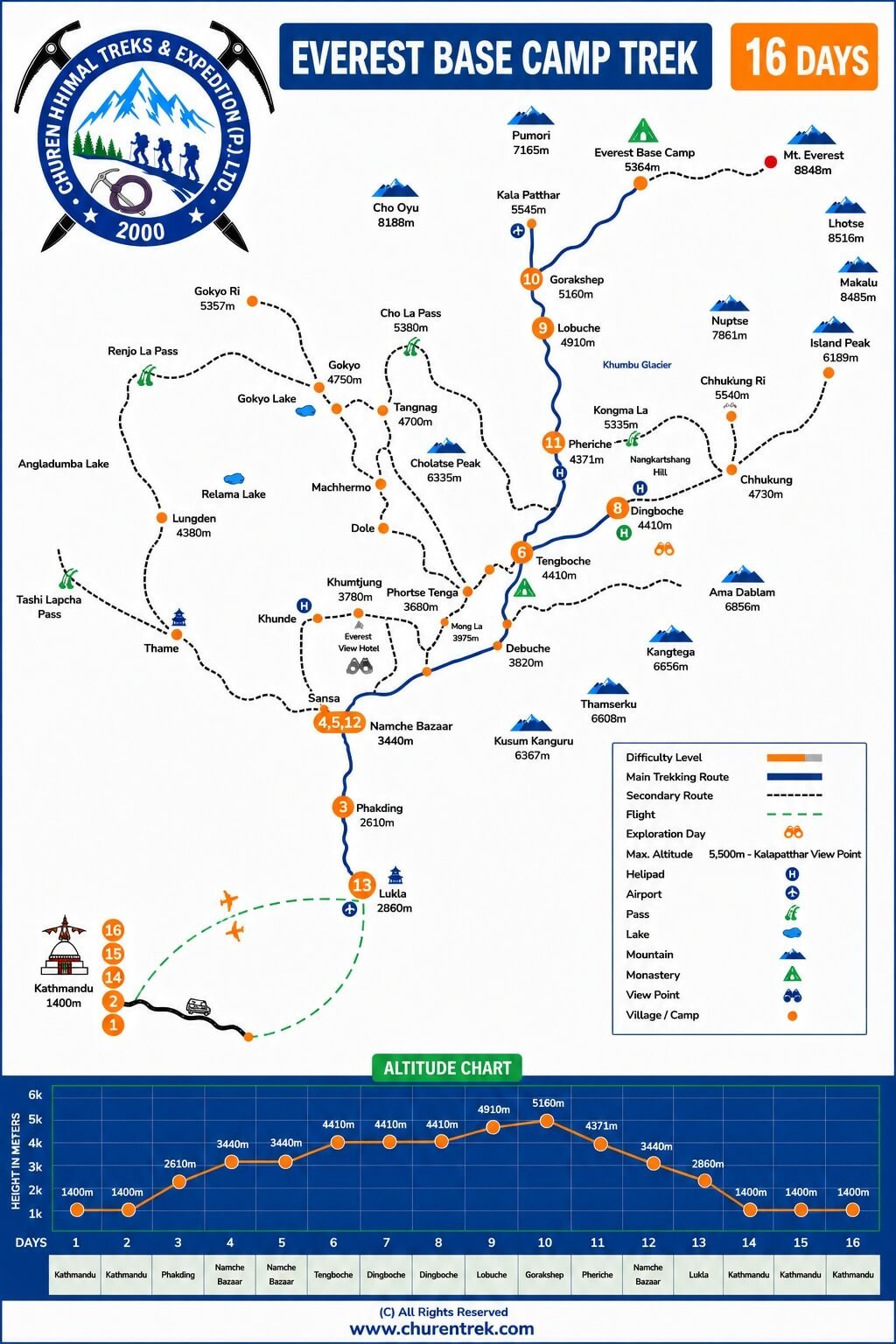
Why Choose the 16-Day Everest Base Camp Trek?

A 16-day itinerary provides time not only for reaching Everest Base Camp but also for acclimatization and recovery.

Key advantages include:

  • Two dedicated acclimatization days
  • Gradual progression toward higher elevations
  • Time in Namche Bazaar
  • A dedicated acclimatization stop at Dingboche
  • Visit to Everest Base Camp
  • Ascent of Kala Patthar
  • Return through Pheriche and Namche
  • Kathmandu sightseeing before the trek
  • A free day in Kathmandu after returning from the mountains

The itinerary is demanding because of altitude, long walking days and changing Himalayan conditions, but the staged ascent gives trekkers time to adapt progressively.

Everest Base Camp Trek Highlights

The route's main attractions are not limited to the final destination. The journey passes through several important settlements and landscapes in the Khumbu.

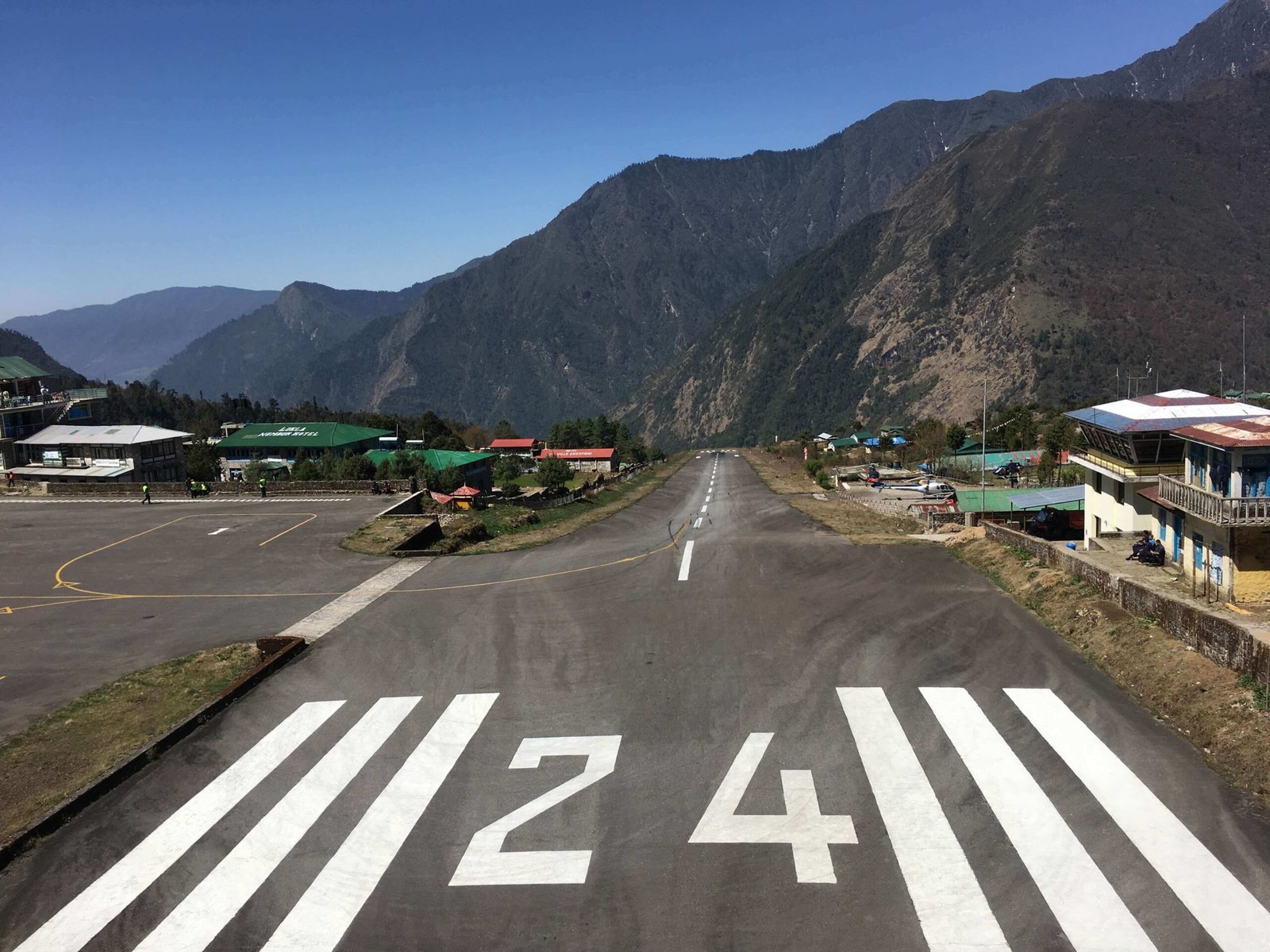
  • Lukla: The traditional gateway for the trekking route. The flight from Kathmandu provides access to the trailhead at approximately 2,828m.
  • Namche Bazaar: An important Sherpa settlement and a major acclimatization point. Trekkers spend an additional day here before continuing higher.
  • Sagarmatha National Park: The trail passes through the protected Everest region, where mountain landscapes, forests, villages and Himalayan wildlife form part of the trekking environment.
  • Tengboche: Known for its monastery and mountain setting. The trail also provides opportunities to observe the transition from lower-altitude vegetation toward a more alpine environment.
  • Dingboche: Another important acclimatization stop. Its elevation makes it a logical staging point before the trail climbs toward Lobuche and Gorakshep.
  • Everest Base Camp: Lies at approximately 5,364m on the itinerary. It is the turnaround point before the route continues toward Kala Patthar.
  • Kala Patthar: At approximately 5,545m, Kala Patthar is the highest point on this itinerary. Its elevated position makes it an important viewpoint on the Everest trekking route.

Altitude, Distance and Difficulty

The Everest Base Camp Trek is generally considered a challenging high-altitude trek rather than a technical mountaineering expedition.

The major challenges are:

  • High elevation and reduced oxygen at altitude
  • Long walking days with repeated ascents and descents
  • Rocky, uneven trails and cold conditions
  • Potential weather changes
  • Several days above 4,000m, including a demanding high-altitude section around Gorakshep, Everest Base Camp and Kala Patthar

No technical climbing skills are normally required for the standard trekking route, but physical preparation and sensible altitude management are important.

Highest altitude: The highest point on this itinerary is Kala Patthar at approximately 5,545m, while Everest Base Camp is approximately 5,364m.

Trekking distance: A reasonable planning estimate for this itinerary is approximately 110–120 km, depending on the exact trail, acclimatization walks, lodge location and route variations.

Acclimatization

Acclimatization is one of the most important components of a high-altitude Everest Base Camp itinerary. The schedule includes dedicated acclimatization days at Namche Bazaar (approximately 3,440m) and Dingboche (approximately 4,350m).

Practical altitude habits:

  • Walk at a controlled pace and avoid racing uphill.
  • Drink regularly, eat enough food, and get adequate sleep and rest.
  • Tell your guide promptly if you feel unwell or notice symptoms such as unusual headache, nausea, dizziness, unusual fatigue or breathing difficulty.
  • Follow the guide's advice regarding ascent and descent.

Note: Altitude illness can become serious. General trekking information is not a substitute for professional medical advice.

Best Time to Trek

  • Spring (March to May): Offers a useful combination of relatively stable trekking weather, improving temperatures and mountain visibility, though routes can be busy.
  • Autumn (September to November): Another major season following the monsoon when conditions favor mountain trekking, though weather remains variable.
  • Winter (December to February): Brings colder temperatures and snow, making high-altitude sections more demanding, though experienced trekkers may travel with proper preparation.
  • Monsoon (June to August): Brings rain, cloud, and unpredictable trail and flight operations.

Permits

The Everest Base Camp route involves protected-area and local entry requirements, which can include the Sagarmatha National Park entry permit and Khumbu Pasang Lhamu Rural Municipality entry requirements.

Permit regulations and fees can change. For a guided package, your trekking operator can advise which permits are required and how they will be handled.

Accommodation

Accommodation is divided between Kathmandu hotels and teahouses/guesthouses along the trekking route. Facilities vary considerably by location and altitude:

  • Twin-sharing or private rooms where available
  • Shared bathrooms and communal dining rooms
  • Limited electricity, charging options, and Wi-Fi at select lodges
  • Hot showers available at some locations for an additional charge (facilities become more basic at higher elevations)

Food and Drinks

Meals on the trekking route reflect options available in Himalayan teahouses, including dal bhat (rice, lentil soup, and vegetables), noodles, pasta, soups, Tibetan-influenced dishes, bread, and potatoes.

Vegetarian food is commonly available, though menu variety decreases at higher elevations. Regular hydration is essential; carry suitable water containers and use safe drinking-water practices.

Guides, Porters and Support Staff

A qualified local guide provides vital practical support including route guidance, pace management, accommodation coordination, monitoring group wellbeing, and handling logistics or weather disruptions.

Porters carry the main luggage group loads, allowing you to walk with a lighter daypack. Exact staff ratios and load policies are confirmed within your final package arrangement.

Packing List

  • Essential Gear: Broken-in trekking boots, trekking socks, base and insulating layers, warm/down jacket, waterproof jacket, trekking trousers, warm hat, gloves, sunglasses, and sunscreen.
  • On-Trail Items: Water bottles/hydration system, appropriate sleeping bag, backpack/daypack, trekking poles, headlamp, personal medication, basic first-aid supplies, and toiletries.
  • Documents & Electronics: Passport, required permits, travel insurance documents, power bank, phone/camera, and charging accessories.
  • Useful Extras: Buff/neck gaiter, water purification method, lightweight towel, earplugs, small personal lock, extra batteries, waterproof bags, snacks, hand sanitizer, and lip balm. Avoid overpacking!

Safety & Acclimatization

Safety depends on preparation, pacing, weather awareness, proper equipment, and responsible altitude management. Do not ignore altitude symptoms, stay hydrated, dress for changing conditions, and use trekking poles for balance on uneven terrain and descents.

Suitable travel insurance covering high-altitude trekking and emergency evacuation should be considered.

Transportation & Lukla Flights

The itinerary uses a Kathmandu–Lukla flight at the beginning and a Lukla–Kathmandu flight at the end. Operations are weather-dependent and can be influenced by visibility, wind, and air traffic restrictions.

Always build flexibility into your travel plan, and avoid scheduling international connections too tightly around your planned return from Lukla.

Cost, Inclusions & Exclusions

What's Included: General itinerary components typically include the 16-day schedule, specified Kathmandu accommodation and valley sightseeing, Kathmandu–Lukla/Lukla–Kathmandu domestic flights, teahouse accommodation during the trek, and specified daily meals.

What's Not Included: International flights, travel insurance, personal expenses, tips, personal trekking equipment, extra accommodation or meals caused by delays, and emergency evacuation.

Contact Churen Himal Treks and Expedition Pvt. Ltd. directly for current package pricing and a finalized inclusion list.

Responsible Trekking & Sustainability

Help protect the Khumbu environment and local communities:

  • Carry rubbish until it can be disposed of appropriately and avoid single-use plastics.
  • Respect local customs, religious sites, monastery rules, and local wildlife.
  • Ask before photographing people and stay on designated trails.
  • Use water responsibly and treat local support staff fairly and respectfully.

Why Trek with Churen Himal Treks and Expedition Pvt. Ltd.?

Churen Himal Treks and Expedition Pvt. Ltd. provides Nepal trekking and expedition services through its website at www.churentrek.com. When evaluating your trip, confirm your exact itinerary, current price, guide/porter arrangements, accommodation standards, flight details, permit handling, and safety protocols.

Booking Your Everest Base Camp Trek - 16 Days

Ready to plan your Khumbu journey? Contact Churen Himal Treks and Expedition Pvt. Ltd. to check current availability, request the latest 16-day package details, and finalize your booking terms.
Price starts US$ 1720
1390 US$

We offer group discount

1 personUS$ 1590
2 peopleUS$ 1390
3 - 6 peopleUS$ 1350
7 - 10 peopleUS$ 1290
11 + peopleUS$ 1190
  • Best price guarantee
  • Secure & easy online booking
  • Flexible booking dates

Speak to an Expert

Sujan
Nepal 🇳🇵
WhatsApp +9779851233710

FAQs for Everest Base Camp Trek – 16 Days

FAQs for Everest Base Camp Trek – 16 Days

ℹ️ General

+
➔
What is the Everest Base Camp Trek and why is it popular?
It is a world-famous 14-day Himalayan adventure taking you to the base of Mt. Everest through ancient Sherpa villages and stunning landscapes.
➔
How difficult is the Everest Base Camp Trek?
The trek is moderately challenging, requiring good physical stamina for multi-day walking but no technical climbing skills.
➔
How many days does the trek take in total?
The standard Everest Base Camp Trek itinerary offered by Glorious Eco Trek Nepal takes 14 days in total.
➔
Is prior trekking experience necessary for this trip?
No prior trekking experience is mandatory as long as you are healthy, motivated, and in good physical condition.
➔
Can solo travelers join a group trek?
Yes, solo travelers can join our organized group departures or trek with a dedicated personal guide.

🏋️ Preparation & Fitness

+
➔
Is the Everest Base Camp Trek physically challenging?
Yes, walking 5 to 7 hours daily over steep mountain terrain at high altitudes tests your endurance.
➔
Do I need to train before doing the Everest Base Camp Trek?
Yes, pre-trip physical conditioning makes the journey significantly more comfortable and enjoyable.
➔
How many weeks should I train before the EBC trek?
We recommend beginning cardiovascular and endurance training at least 8 to 12 weeks before your trip.
➔
What is the best way to prepare for the Everest Base Camp Trek?
Focus on aerobic workouts like running and swimming alongside stair-climbing with a weighted daypack.
➔
How can I acclimatize to high altitude faster?
Walk at a steady, slow pace, drink 3-4 liters of water daily, avoid alcohol, and strictly follow our rest day schedules.
➔
How many hours will I walk each day during the EBC trek?
You will walk an average of 5 to 7 hours each day depending on the distance between teahouses.
➔
Can first-time trekkers do the Everest Base Camp Trek?
Yes, motivated first-time trekkers with a basic fitness foundation successfully complete the trek every year.

🪪 Permits

+
➔
What permits are required for the Everest Base Camp Trek?
You need the Sagarmatha National Park Entry Permit and the Khumbu Pasang Lhamu Rural Municipality Permit.
➔
Will Glorious Eco Trek Nepal arrange all the necessary permits?
Yes, our team handles all paperwork and arranges all required permits for you.

🛂 Insurance & Visa

+
➔
Do I need travel insurance for the Everest Base Camp Trek?
Yes, travel insurance is strictly mandatory for all trekkers on this expedition.
➔
How do I get a tourist visa for Nepal?
You can fill out the online pre-visa form or apply directly upon arrival at Kathmandu Airport.
➔
Can I get a visa on arrival at the airport?
Yes, tourist visas on arrival are available at Tribhuvan International Airport for most nationalities.
➔
What should the insurance cover for trekking in Nepal?
Your policy must specifically cover high-altitude medical treatment and emergency helicopter evacuation up to 6,000 meters.

💂 Guides & Support Staff

+
➔
Will I have a guide and porter during the trek?
Yes, our standard trip package includes a licensed local guide and helpful porters.
➔
What are the qualifications of your trekking guides?
Our guides are government-certified professionals trained in wilderness first aid and emergency response.
➔
Do the guides speak English?
Yes, all of our guides speak fluent English to ensure seamless communication.
➔
Will porters carry my luggage during the trek?
Yes, porters carry your main heavy duffel bag so you only carry a small, light daypack.
➔
Is tipping guides and porters expected?
Tipping is a traditional way in Nepal to express gratitude to support staff for their hard work.
➔
Can I trek to Everest Base Camp without a guide?
No, current government regulations mandate that all foreign trekkers must be accompanied by a licensed guide.

🛏️ Accommodation and Facilities

+
➔
What kind of accommodation is provided during the trek?
You will stay in traditional, cozy mountain teahouses featuring twin-share bedrooms and a central heated dining room.
➔
Are hot showers and Wi-Fi available along the trail?
Yes, hot showers and Wi-Fi access cards are available at most teahouses for a small extra fee.
➔
Will I get a private room or have to share?
Rooms are structured as twin-sharing for two travelers, though private single rooms can be arranged upon request when available.
➔
Can I charge my phone and devices during the trek?
Yes, charging stations are available in teahouse dining rooms for a nominal hourly rate.
➔
Are toilets available throughout the trek?
Shared indoor toilets are provided in teahouses, ranging from standard Western seats to traditional squat toilets.

🍲 Food and Drinks

+
➔
What kind of food is available during the trek?
Teahouse menus offer fresh meals like traditional Nepali Dal Bhat, soups, fried rice, noodles, eggs, and pasta.
➔
Are vegetarian or vegan meals available?
Yes, vegetarian and vegan choices are widely available and recommended for optimal health at altitude.
➔
Is it safe to drink the water during the trek?
Untreated tap water is unsafe; always drink boiled teahouse water or use purification tablets/UV filters.
➔
Can I buy snacks and drinks along the way?
Yes, small village shops along the path sell bottled drinks, snacks, and chocolate bars.

🌤️ Weather & Seasons

+
➔
What is the best time to do the Everest Base Camp Trek?
Spring (March to May) and Autumn (September to November) offer clear skies and ideal temperatures.
➔
Can I trek during the monsoon or winter season?
Trekking is possible in winter or monsoon, but involves colder conditions, snow, or rain and potential flight delays.
➔
What kind of weather can I expect during the trek?
Daytime walking weather is typically pleasant, but night temperatures drop below freezing at high altitudes.

🩺 Health & Safety

+
➔
What happens if I get sick or injured during the trek?
Your guide will provide immediate first aid, arrange descent if needed, or summon a rescue helicopter for emergency transport.
➔
How do you handle altitude sickness?
We monitor oxygen levels daily, carry emergency first-aid supplies, and enforce immediate descent if severe symptoms appear.
➔
Are there health posts or clinics along the route?
Yes, basic medical posts operate at Namche Bazaar and Pheriche to assist ill or injured trekkers.
➔
Is the trek safe for solo female travelers?
Yes, Nepal is very welcoming, and trekking with our vetted licensed guides guarantees safety and security.
➔
Do I need to bring medicines for the Everest Base Camp Trek?
Yes, pack personal items like Diamox (for altitude), pain relievers, rehydration salts, and blister treatments.

🎒 Packing & Gear

+
➔
What should I pack for the Everest Base Camp Trek?
Key items include thermal clothing layers, a heavy down jacket, broken-in trekking boots, gloves, and a sleeping bag.
➔
Is a sleeping bag necessary?
Yes, a sub-zero rated sleeping bag (-10°C to -15°C) is essential as teahouse rooms are unheated at night.
➔
Where can I keep my extra luggage during the trek?
You can store non-trekking travel luggage for free at your hotel in Kathmandu before heading out.
➔
What is the luggage weight limit for the Lukla flight?
The domestic Lukla flight weight limit is 15 kg total (10 kg main bag + 5 kg hand carry).
➔
How much weight can a porter carry?
A single porter carries up to 25 kg total, usually splitting weight between two trekkers (12.5 kg per person).
➔
Where can I buy trekking clothes and gear?
You can easily buy or rent all essential gear at affordable prices in the Thamel district of Kathmandu.

💳 Booking & Payment

+
➔
What is the booking process and payment method for the Everest Base Camp Trek?
You can reserve online with an advance deposit via card or wire transfer, paying the remaining balance in Kathmandu.
➔
Is there a cancellation or refund policy?
Yes, we provide flexible cancellation policies clearly outlined in our booking agreement terms.
➔
What currency should I carry for expenses along the Everest Base Camp trek?
Carry local Nepali Rupees (NPR) cash for trail purchases as foreign currencies are rarely accepted.
➔
Can I use ATMs or credit cards during the trek?
ATMs on the trail are unreliable and cards are rarely accepted, so carrying cash from Kathmandu is mandatory.
➔
Are there money exchange services in the Everest Base Camp region?
Money exchange services are available in Namche Bazaar but offer lower rates than Kathmandu banks.
➔
How much extra money should I budget per day during the trek?
Budget roughly $15 to $25 per day for extra personal expenses like hot drinks, snacks, showers, and battery charging.
➔
Can I book the Everest Base Camp trek if I’m traveling with children?
Yes, healthy children can join provided you arrange a customized, slower-paced itinerary for safety.
➔
Should I book the trek well in advance?
Yes, booking 3 to 6 months in advance ensures guaranteed Lukla flight tickets and premium teahouse rooms.

🛫 Transportation & Flight

+
➔
Do you provide airport pick-up and drop-off services?
Yes, private airport pickup and drop-off transfers are included in our package.
➔
How do I get to the starting point of the trek?
You reach the trail's starting point via a scenic mountain flight to Lukla Airport.
➔
Is the flight to Lukla safe?
Yes, Lukla flights are operated by highly experienced mountain pilots who fly only in clear, safe weather.
➔
What happens if my Lukla flight is delayed or canceled?
Flight schedules shift to the next clear day or alternative helicopter rides can be organized if requested.
➔
What is the mode of transportation to reach Everest Base Camp?
After landing in Lukla, the remaining journey to Base Camp and back is completed entirely on foot.
Churen Trek - Mobile FAQs

ℹ️ General

+
What is the Everest Base Camp Trek and why is it popular?
It is a world-famous 14-day Himalayan adventure taking you to the base of Mt. Everest through ancient Sherpa villages and stunning landscapes.
+
How difficult is the Everest Base Camp Trek?
The trek is moderately challenging, requiring good physical stamina for multi-day walking but no technical climbing skills.
+
How many days does the trek take in total?
The standard Everest Base Camp Trek itinerary offered by Glorious Eco Trek Nepal takes 14 days in total.
+
Is prior trekking experience necessary for this trip?
No prior trekking experience is mandatory as long as you are healthy, motivated, and in good physical condition.
+
Can solo travelers join a group trek?
Yes, solo travelers can join our organized group departures or trek with a dedicated personal guide.

🏋️ Preparation & Fitness

+
Is the Everest Base Camp Trek physically challenging?
Yes, walking 5 to 7 hours daily over steep mountain terrain at high altitudes tests your endurance.
+
Do I need to train before doing the Everest Base Camp Trek?
Yes, pre-trip physical conditioning makes the journey significantly more comfortable and enjoyable.
+
How many weeks should I train before the EBC trek?
We recommend beginning cardiovascular and endurance training at least 8 to 12 weeks before your trip.
+
What is the best way to prepare for the Everest Base Camp Trek?
Focus on aerobic workouts like running and swimming alongside stair-climbing with a weighted daypack.
+
How can I acclimatize to high altitude faster?
Walk at a steady, slow pace, drink 3-4 liters of water daily, avoid alcohol, and strictly follow our rest day schedules.
+
How many hours will I walk each day during the EBC trek?
You will walk an average of 5 to 7 hours each day depending on the distance between teahouses.
+
Can first-time trekkers do the Everest Base Camp Trek?
Yes, motivated first-time trekkers with a basic fitness foundation successfully complete the trek every year.

🪪 Permits

+
What permits are required for the Everest Base Camp Trek?
You need the Sagarmatha National Park Entry Permit and the Khumbu Pasang Lhamu Rural Municipality Permit.
+
Will Glorious Eco Trek Nepal arrange all the necessary permits?
Yes, our team handles all paperwork and arranges all required permits for you.

🛂 Insurance & Visa

+
Do I need travel insurance for the Everest Base Camp Trek?
Yes, travel insurance is strictly mandatory for all trekkers on this expedition.
+
How do I get a tourist visa for Nepal?
You can fill out the online pre-visa form or apply directly upon arrival at Kathmandu Airport.
+
Can I get a visa on arrival at the airport?
Yes, tourist visas on arrival are available at Tribhuvan International Airport for most nationalities.
+
What should the insurance cover for trekking in Nepal?
Your policy must specifically cover high-altitude medical treatment and emergency helicopter evacuation up to 6,000 meters.

💂 Guides & Support Staff

+
Will I have a guide and porter during the trek?
Yes, our standard trip package includes a licensed local guide and helpful porters.
+
What are the qualifications of your trekking guides?
Our guides are government-certified professionals trained in wilderness first aid and emergency response.
+
Do the guides speak English?
Yes, all of our guides speak fluent English to ensure seamless communication.
+
Will porters carry my luggage during the trek?
Yes, porters carry your main heavy duffel bag so you only carry a small, light daypack.
+
Is tipping guides and porters expected?
Tipping is a traditional way in Nepal to express gratitude to support staff for their hard work.
+
Can I trek to Everest Base Camp without a guide?
No, current government regulations mandate that all foreign trekkers must be accompanied by a licensed guide.

🛏️ Accommodation and Facilities

+
What kind of accommodation is provided during the trek?
You will stay in traditional, cozy mountain teahouses featuring twin-share bedrooms and a central heated dining room.
+
Are hot showers and Wi-Fi available along the trail?
Yes, hot showers and Wi-Fi access cards are available at most teahouses for a small extra fee.
+
Will I get a private room or have to share?
Rooms are structured as twin-sharing for two travelers, though private single rooms can be arranged upon request when available.
+
Can I charge my phone and devices during the trek?
Yes, charging stations are available in teahouse dining rooms for a nominal hourly rate.
+
Are toilets available throughout the trek?
Shared indoor toilets are provided in teahouses, ranging from standard Western seats to traditional squat toilets.

🍲 Food and Drinks

+
What kind of food is available during the trek?
Teahouse menus offer fresh meals like traditional Nepali Dal Bhat, soups, fried rice, noodles, eggs, and pasta.
+
Are vegetarian or vegan meals available?
Yes, vegetarian and vegan choices are widely available and recommended for optimal health at altitude.
+
Is it safe to drink the water during the trek?
Untreated tap water is unsafe; always drink boiled teahouse water or use purification tablets/UV filters.
+
Can I buy snacks and drinks along the way?
Yes, small village shops along the path sell bottled drinks, snacks, and chocolate bars.

🌤️ Weather & Seasons

+
What is the best time to do the Everest Base Camp Trek?
Spring (March to May) and Autumn (September to November) offer clear skies and ideal temperatures.
+
Can I trek during the monsoon or winter season?
Trekking is possible in winter or monsoon, but involves colder conditions, snow, or rain and potential flight delays.
+
What kind of weather can I expect during the trek?
Daytime walking weather is typically pleasant, but night temperatures drop below freezing at high altitudes.

🩺 Health & Safety

+
What happens if I get sick or injured during the trek?
Your guide will provide immediate first aid, arrange descent if needed, or summon a rescue helicopter for emergency transport.
+
How do you handle altitude sickness?
We monitor oxygen levels daily, carry emergency first-aid supplies, and enforce immediate descent if severe symptoms appear.
+
Are there health posts or clinics along the route?
Yes, basic medical posts operate at Namche Bazaar and Pheriche to assist ill or injured trekkers.
+
Is the trek safe for solo female travelers?
Yes, Nepal is very welcoming, and trekking with our vetted licensed guides guarantees safety and security.
+
Do I need to bring medicines for the Everest Base Camp Trek?
Yes, pack personal items like Diamox (for altitude), pain relievers, rehydration salts, and blister treatments.

🎒 Packing & Gear

+
What should I pack for the Everest Base Camp Trek?
Key items include thermal clothing layers, a heavy down jacket, broken-in trekking boots, gloves, and a sleeping bag.
+
Is a sleeping bag necessary?
Yes, a sub-zero rated sleeping bag (-10°C to -15°C) is essential as teahouse rooms are unheated at night.
+
Where can I keep my extra luggage during the trek?
You can store non-trekking travel luggage for free at your hotel in Kathmandu before heading out.
+
What is the luggage weight limit for the Lukla flight?
The domestic Lukla flight weight limit is 15 kg total (10 kg main bag + 5 kg hand carry).
+
How much weight can a porter carry?
A single porter carries up to 25 kg total, usually splitting weight between two trekkers (12.5 kg per person).
+
Where can I buy trekking clothes and gear?
You can easily buy or rent all essential gear at affordable prices in the Thamel district of Kathmandu.

💳 Booking & Payment

+
What is the booking process and payment method for the Everest Base Camp Trek?
You can reserve online with an advance deposit via card or wire transfer, paying the remaining balance in Kathmandu.
+
Is there a cancellation or refund policy?
Yes, we provide flexible cancellation policies clearly outlined in our booking agreement terms.
+
What currency should I carry for expenses along the Everest Base Camp trek?
Carry local Nepali Rupees (NPR) cash for trail purchases as foreign currencies are rarely accepted.
+
Can I use ATMs or credit cards during the trek?
ATMs on the trail are unreliable and cards are rarely accepted, so carrying cash from Kathmandu is mandatory.
+
Are there money exchange services in the Everest Base Camp region?
Money exchange services are available in Namche Bazaar but offer lower rates than Kathmandu banks.
+
How much extra money should I budget per day during the trek?
Budget roughly $15 to $25 per day for extra personal expenses like hot drinks, snacks, showers, and battery charging.
+
Can I book the Everest Base Camp trek if I’m traveling with children?
Yes, healthy children can join provided you arrange a customized, slower-paced itinerary for safety.
+
Should I book the trek well in advance?
Yes, booking 3 to 6 months in advance ensures guaranteed Lukla flight tickets and premium teahouse rooms.

🛫 Transportation & Flight

+
Do you provide airport pick-up and drop-off services?
Yes, private airport pickup and drop-off transfers are included in our package.
+
How do I get to the starting point of the trek?
You reach the trail's starting point via a scenic mountain flight to Lukla Airport.
+
Is the flight to Lukla safe?
Yes, Lukla flights are operated by highly experienced mountain pilots who fly only in clear, safe weather.
+
What happens if my Lukla flight is delayed or canceled?
Flight schedules shift to the next clear day or alternative helicopter rides can be organized if requested.
+
What is the mode of transportation to reach Everest Base Camp?
After landing in Lukla, the remaining journey to Base Camp and back is completed entirely on foot.
💬

Reviews on Everest Base Camp Trek – 14 Days

🟢 225+ Tripadvisor Reviews 🟢🟢🟢🟢🟢
🌐 118+ Excellent Google Reviews ★★★★★
⭐ Based on 45 Reviews ★★★★★
Verified by Trustindex ⓘ
▶

Video Testimonials

Video Testimonial 1
▶
Video Testimonial 2
▶
🏔️ Churen Trek
▶
Video Testimonial 4
▶
US$ 1390 Per Person