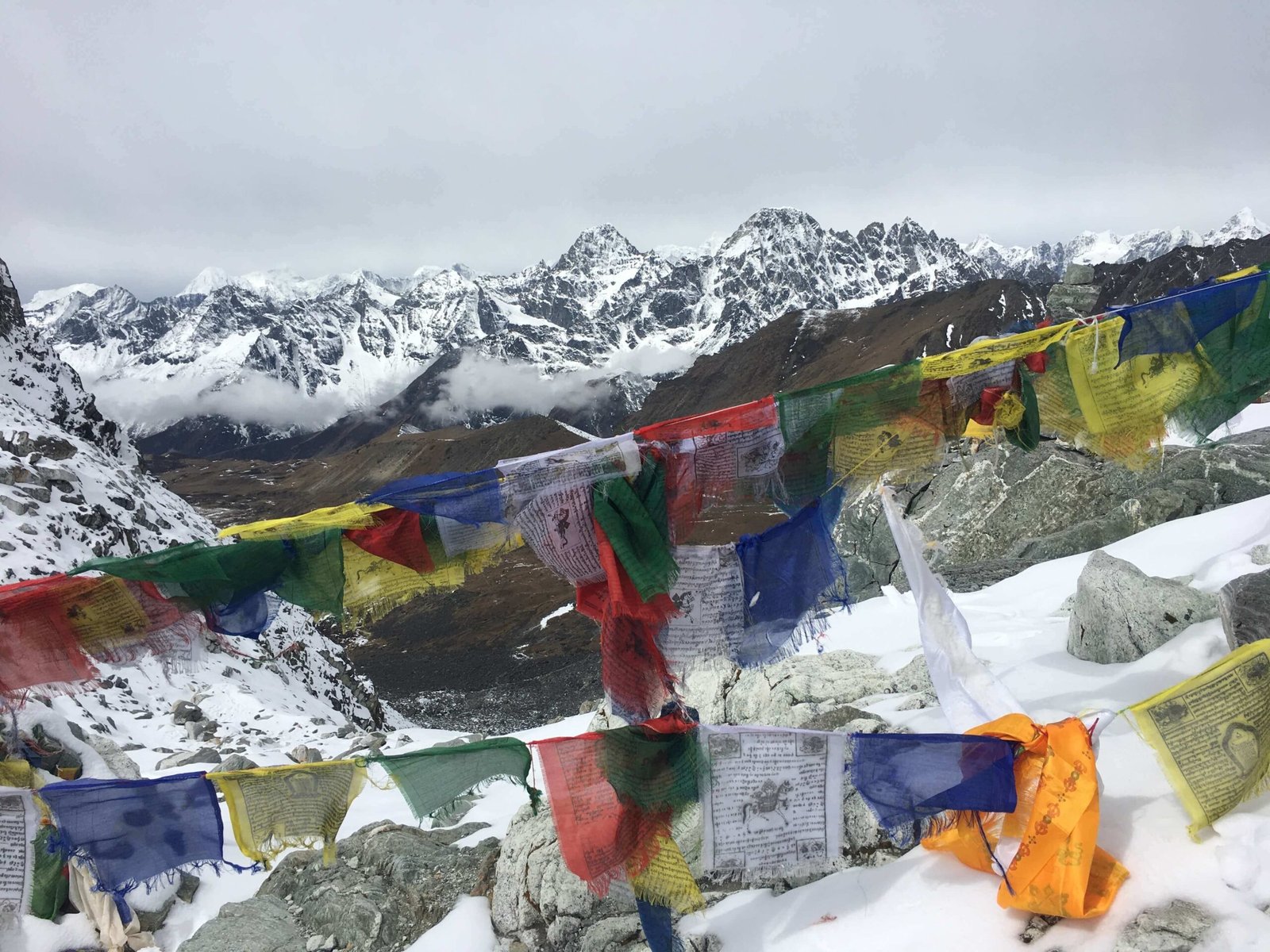
Gokyo EBC Trek via Kala Patthar – 17 Days
Duration
16 Days
Trip Difficulty
Moderate
Start/End Point
Kathmandu
Meals
Breakfast, Lunch, & Dinner
Max Altitude:
5,555m. / 18,225ft.
Group Size
2-15+ People
Best Season
Mar, Apri, May, Sep, Oct, Nov & Dec
Accommodation
3 Star Hotel in KTM / Lodge / Tea House during the Trek
We offer group discount
| 1 person | US$ 1590 |
| 2 people | US$ 1390 |
| 3 - 6 people | US$ 1350 |
| 7 - 10 people | US$ 1290 |
| 11 + people | US$ 1190 |
- Best price guarantee
- Secure & easy online booking
- Flexible booking dates
Speak to an Expert
Gokyo EBC Trek via Kala Patthar Highlights
-
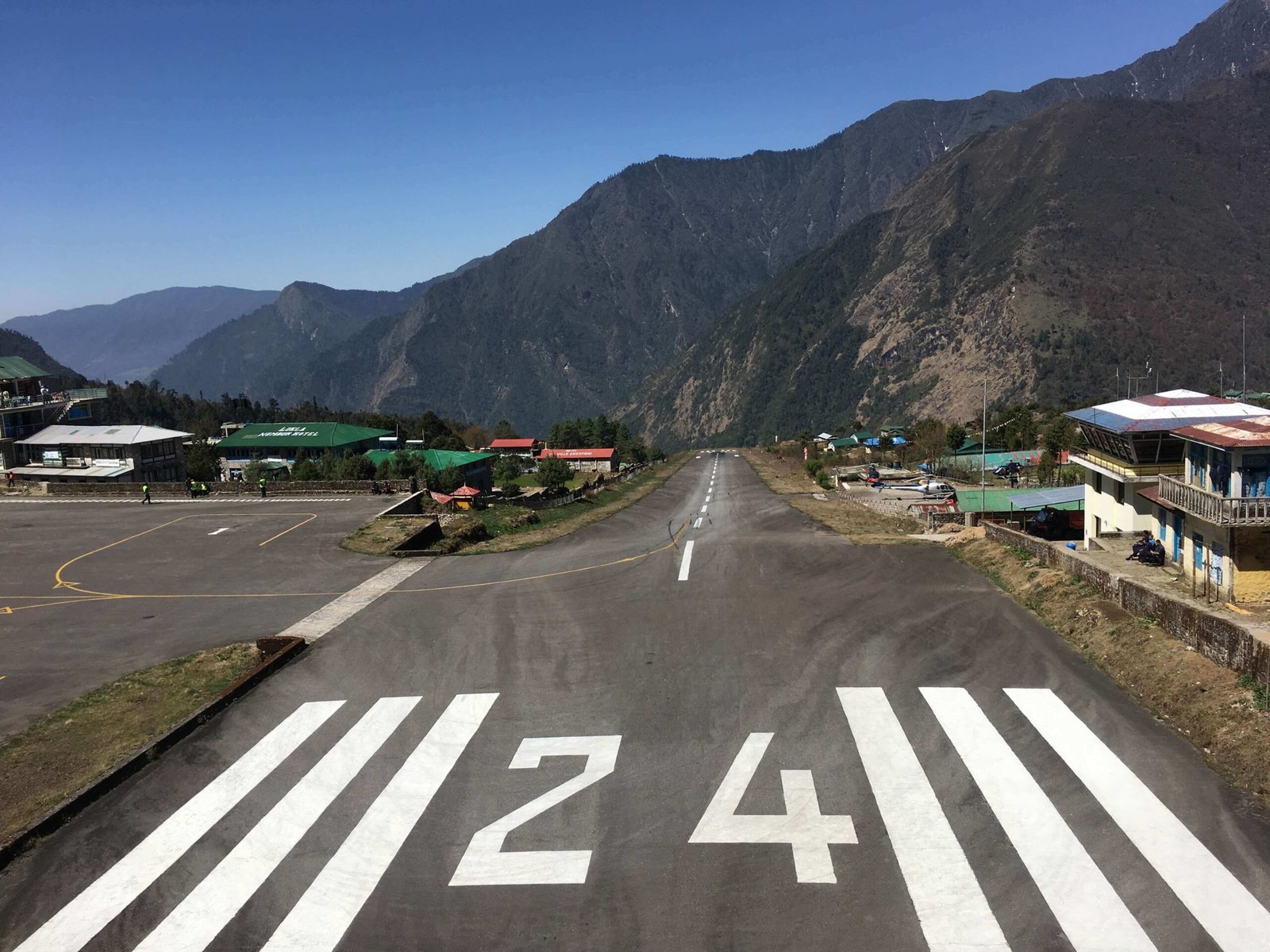
Fly into Lukla, the principal gateway for trekking in the Everest region.
-
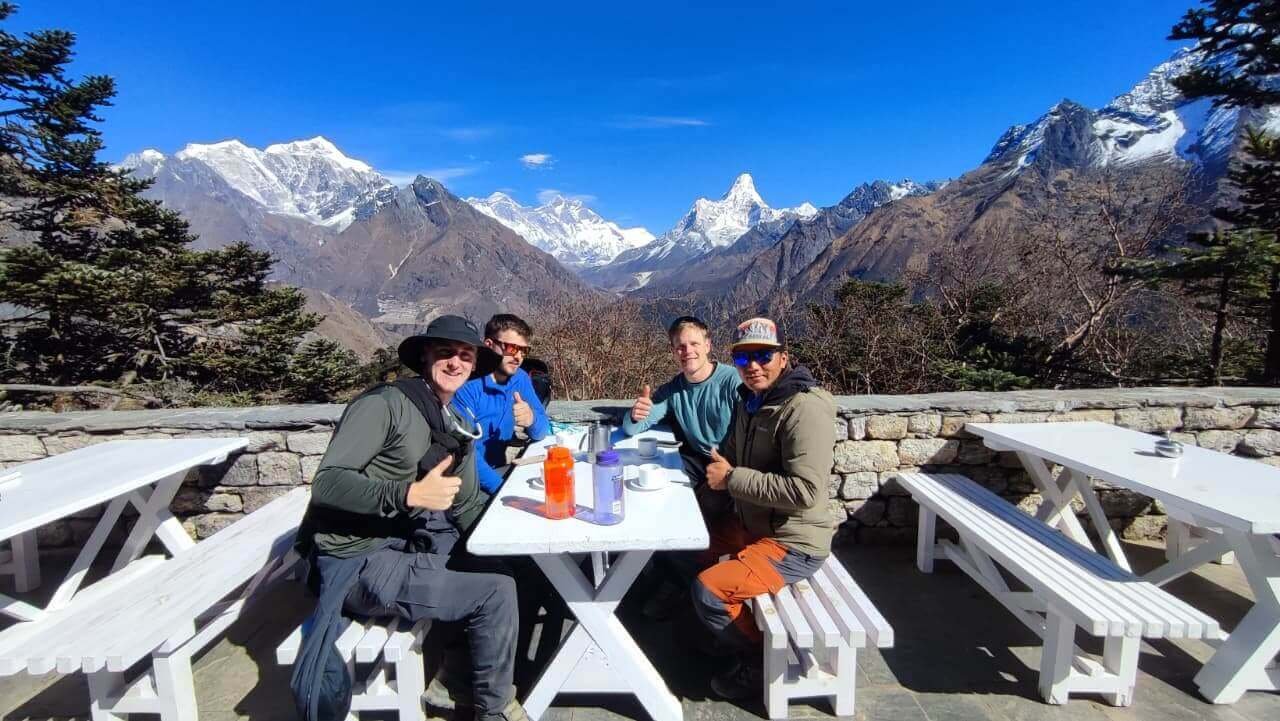
Explore Namche Bazaar, the major Sherpa trading and trekking center.
-
Use an acclimatization day around Namche to adjust to increasing altitude.
-
Trek into the spectacular Gokyo Valley.
-
Visit the interconnected Gokyo Lakes, surrounded by high Himalayan peaks.
-
Climb Gokyo Ri for a panoramic Everest-region viewpoint.
-
Cross the demanding Cho La Pass, one of the defining challenges of the route.
-
Continue toward Lobuche and Everest Base Camp.
-
Experience the high-altitude landscape surrounding the Khumbu Glacier and Everest Base Camp.
-
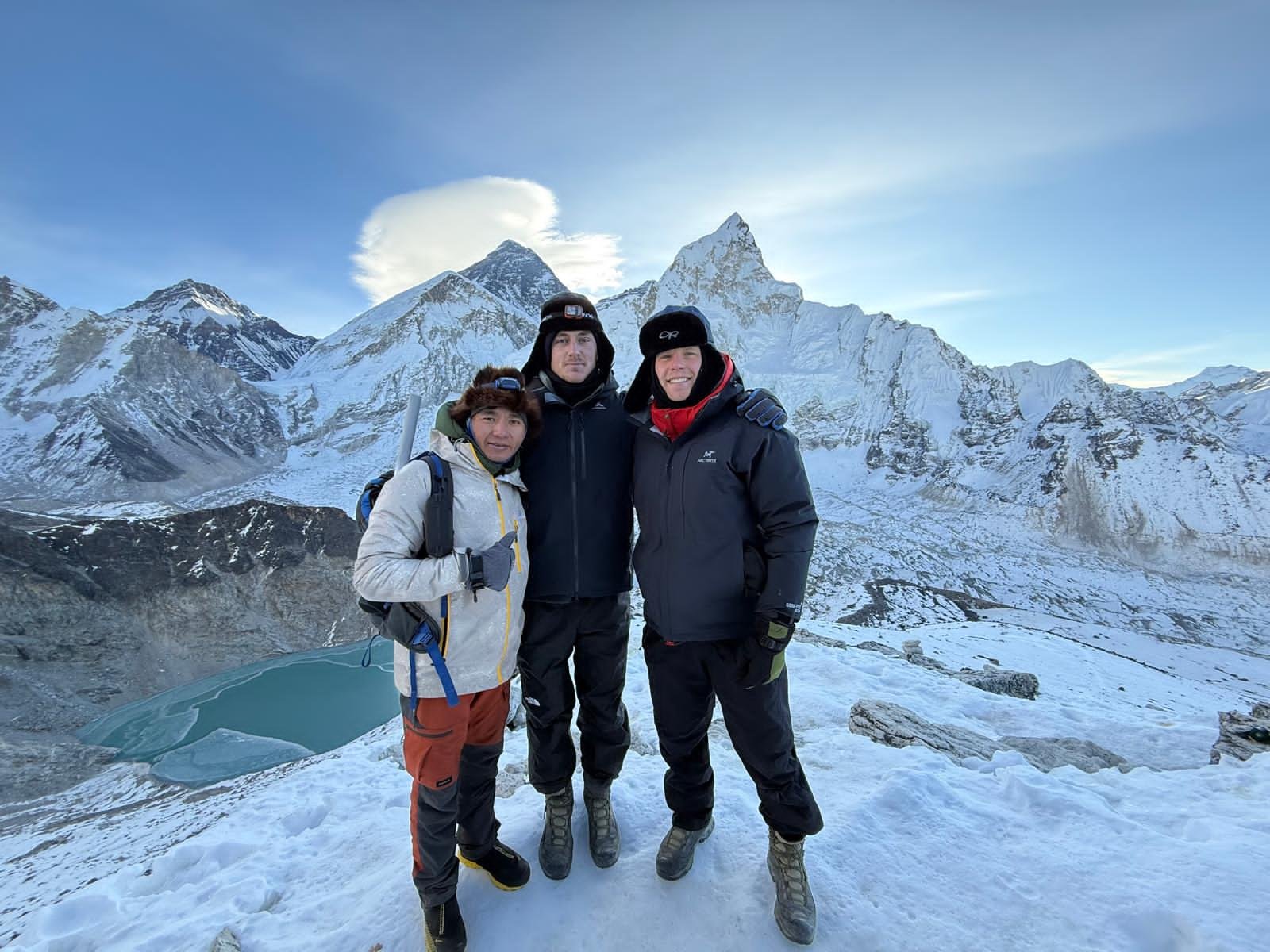
Climb Kala Patthar for one of the classic close views of Everest.
-
Descend through traditional Sherpa villages of the Khumbu Valley.
-
Experience Sagarmatha National Park and its distinctive Himalayan landscapes.
-
Combine two major Everest-region trekking objectives—Gokyo and EBC—in one journey.
-
Experience a route that includes both glacial lakes and high mountain passes.
-
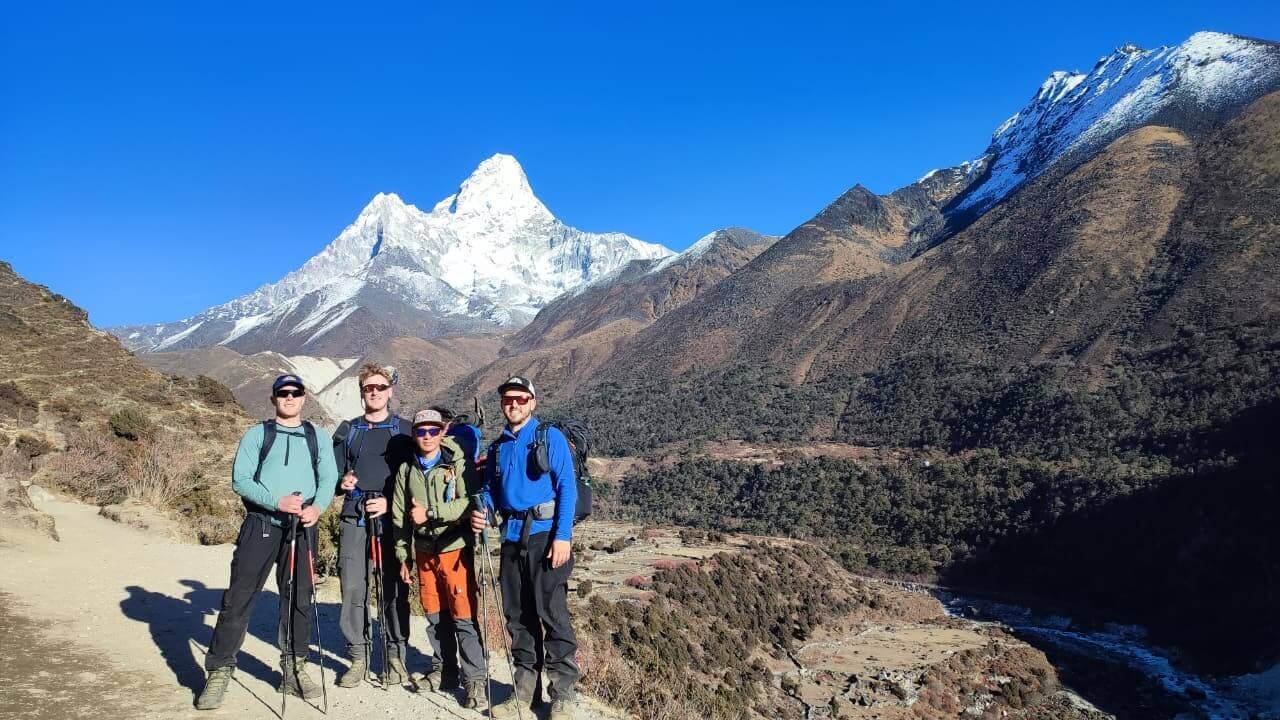
Trek through changing landscapes from forested lower valleys to alpine and glacial terrain.
Gokyo EBC Trek via Kala Patthar – 17 Days Overview
The Gokyo EBC Trek via Kala Patthar – 17 Days is a demanding high-altitude journey through the Everest region that combines the turquoise Gokyo Lakes, Gokyo Ri, the challenging Cho La Pass, Everest Base Camp and the iconic Kala Patthar viewpoint.
Unlike the classic Everest Base Camp route, this itinerary approaches the Everest region through the Gokyo Valley before crossing the high Cho La Pass toward Lobuche and Everest Base Camp. The route then continues to Kala Patthar before descending through the Khumbu Valley.
The trek includes substantial altitude gain and several demanding walking days. Gokyo Ri, Cho La and Kala Patthar each require careful pacing and acclimatization. The reward is a broader cross-section of the Khumbu, including glacial lakes, high mountain passes, Sherpa settlements, glaciers and close views of Everest and surrounding peaks.
The itinerary is designed around approximately 17 days, with Kathmandu, Lukla and the major Gokyo–EBC route forming the framework. Exact walking distances and daily elevation changes should be confirmed against the final operating itinerary before publication
Gokyo EBC Trek via Cho La & Kala Patthar - 17 Days Details Itinerary
-
Day 01: Arrival in Kathmandu and Trek Preparation+
Arrive at Tribhuvan International Airport and transfer to your Kathmandu hotel. After check-in, there is time to rest and become familiar with the trekking schedule.
A trek briefing can be arranged before departure, covering equipment, permits, flight arrangements, altitude considerations and the route ahead. Kathmandu also provides an opportunity to organize any last-minute trekking equipment.
Duration: Arrival dayHeight Difference (+/-): Minimal city transferWalking Distance: Not applicableMax. Altitude: Approximately 1,350 mMeal: Welcome dinner / according to package inclusionAccommodation: 3-star hotel in KathmanduNote: Use the remaining time to rest, review the trekking schedule and prepare any last-minute trekking equipment. -
Day 02: Fly to Lukla and Trek to Phakding+
A short mountain flight takes you toward Lukla, subject to weather and operational conditions. After meeting the trekking support team, begin walking north through the Dudh Koshi Valley.
The trail passes through small settlements and forested terrain before reaching Phakding. This relatively short first walking day allows the body to begin adjusting to the altitude.
Duration: Flight plus approximately 3–4 hours walkingHeight Difference (+/-): Approx. +100 m net, with rolling trail sectionsWalking Distance: Approximately 7–8 kmMax. Altitude: Approximately 2,610 mMeal: Breakfast, Lunch and DinnerAccommodation: Tea house / guesthouseNote: Lukla flights are subject to weather and operational conditions. -
Day 03: Phakding to Namche Bazaar+
The trail follows the Dudh Koshi and crosses several suspension bridges before entering Sagarmatha National Park. Forests of pine and other Himalayan vegetation surround sections of the trail.
The route becomes progressively steeper as it approaches Namche Bazaar. After crossing the final major suspension bridges and climbing the trail toward the amphitheater-shaped settlement, arrive in Namche for the night.
Duration: Approximately 5–6 hoursHeight Difference (+/-): Approx. +600 m netWalking Distance: Approximately 10–12 kmMax. Altitude: Approximately 3,440 mMeal: Breakfast, Lunch and DinnerAccommodation: Tea house / guesthouse -
Day 04: Acclimatization Day in Namche Bazaar+
Today is designed to help your body adapt to the increasing elevation. Rather than remaining completely inactive, a gradual acclimatization hike is useful.
Possible viewpoints and local attractions around Namche provide an introduction to the surrounding mountains and Sherpa culture. The exact acclimatization route should be selected according to weather, group condition and guide advice.
Duration: Approximately 4–5 hours of optional acclimatization walkingHeight Difference (+/-): Variable depending on hikeWalking Distance: Approximately 4–6 kmMax. Altitude: Approximately 3,800–3,900 mMeal: Breakfast, Lunch and DinnerAccommodation: Tea house / guesthouseNote: The acclimatization route should be selected according to weather, group condition and guide advice. -
Day 05: Namche Bazaar to Phortse Tenga / Dole Area+
Leave Namche and follow the trail toward the Gokyo Valley. The route gradually moves away from the main Everest Base Camp corridor and into quieter Himalayan terrain.
The trail passes through alpine woodland and hillside settlements. As the altitude increases, vegetation becomes thinner and the landscape takes on a more rugged character.
Duration: Approximately 5–6 hoursHeight Difference (+/-): Approx. +400–600 m net, depending on overnight locationWalking Distance: Approximately 10–12 kmMax. Altitude: Approximately 4,000–4,200 mMeal: Breakfast, Lunch and DinnerAccommodation: Tea house / guesthouse -
Day 06: Trek to Machhermo+
Continue north through the Gokyo Valley toward Machhermo. The landscape becomes increasingly open, with mountain slopes and high-altitude terrain replacing the lower forests.
Machhermo is an important stopping point before Gokyo. Because the elevation is now considerable, maintaining a steady pace, drinking adequately and following acclimatization guidance become increasingly important.
Duration: Approximately 5–6 hoursHeight Difference (+/-): Approx. +400–500 m netWalking Distance: Approximately 8–10 kmMax. Altitude: Approximately 4,470 mMeal: Breakfast, Lunch and DinnerAccommodation: Tea house / guesthouse -
Day 07: Machhermo to Gokyo Lakes+
The trail continues toward the Gokyo Lakes, following the upper Dudh Koshi valley. The terrain becomes more barren as you approach the glacial environment.
Arriving at Gokyo is one of the major highlights of the trek. The settlement sits beside the turquoise glacial lakes with dramatic peaks rising around the valley. Spend the night at Gokyo and prepare for the following day's viewpoint hike.
Duration: Approximately 4–5 hoursHeight Difference (+/-): Approx. +400 m netWalking Distance: Approximately 8 kmMax. Altitude: Approximately 4,790 mMeal: Breakfast, Lunch and DinnerAccommodation: Tea house / guesthouse -
Day 08: Gokyo Ri and Acclimatization in Gokyo+
An early climb of Gokyo Ri provides an extensive panorama across the Everest region. The ascent is steep and demanding, particularly because of the altitude, so a slow and controlled pace is essential.
From the viewpoint, weather permitting, the panorama includes Everest and other major Himalayan peaks. Return to Gokyo for rest and further acclimatization.
Duration: Approximately 4–5 hoursHeight Difference (+/-): Approximately +550–600 m ascentWalking Distance: Approximately 5–7 kmMax. Altitude: Approximately 5,357 m at Gokyo RiMeal: Breakfast, Lunch and DinnerAccommodation: Tea house / guesthouseNote: The Gokyo Ri ascent is steep and demanding because of the altitude. Maintain a slow and controlled pace. -
Day 09: Gokyo to Dragnag+
Today is deliberately shorter before the demanding Cho La crossing. The trail leaves Gokyo and follows the route toward Dragnag, also known as Thangnak.
Although the distance is relatively short, the altitude remains significant. Use the afternoon to rest, hydrate and prepare clothing and equipment for the following day's high pass crossing.
Duration: Approximately 3–4 hoursHeight Difference (+/-): Mostly modest net change, with rolling terrainWalking Distance: Approximately 4–6 kmMax. Altitude: Approximately 4,700 mMeal: Breakfast, Lunch and DinnerAccommodation: Tea house / guesthouseNote: Use the afternoon to rest, hydrate and prepare for the Cho La crossing. -
Day 10: Cross Cho La Pass and Trek toward Dzongla+
This is one of the most challenging days of the trek. The trail climbs toward Cho La over increasingly rocky and potentially icy terrain. Conditions can vary considerably with season and recent weather.
After reaching the pass, descend carefully toward the Dzongla side. The day combines high altitude, a steep crossing and difficult terrain, making an early start and careful pacing important.
Duration: Approximately 7–9 hoursHeight Difference (+/-): Approximately +700 m / -500 m or more depending on exact routeWalking Distance: Approximately 8–10 kmMax. Altitude: Approximately 5,420–5,430 m at Cho LaMeal: Breakfast, Lunch and DinnerAccommodation: Tea house / guesthouseNote: Conditions at Cho La can vary considerably with season and recent weather. An early start and careful pacing are important. -
Day 11: Dzongla to Lobuche+
After the demanding Cho La crossing, today's walk is shorter. The trail traverses rugged high-altitude terrain toward Lobuche.
The surrounding landscape is dominated by rocky slopes, glaciers and towering Himalayan peaks. Lobuche provides a useful stopping point before the following day's journey toward Everest Base Camp.
Duration: Approximately 3–4 hoursHeight Difference (+/-): Generally gradual gain with some undulationWalking Distance: Approximately 7–8 kmMax. Altitude: Approximately 4,940 mMeal: Breakfast, Lunch and DinnerAccommodation: Tea house / guesthouse -
Day 12: Lobuche to Everest Base Camp and Gorakshep+
Walk toward Gorakshep and continue to Everest Base Camp. The trail crosses rugged glacial terrain and follows the famous approach toward the foot of the Khumbu Icefall.
At Everest Base Camp, conditions can be busy during expedition seasons, and the landscape changes according to the time of year. After spending time at the base camp area, return to Gorakshep for the night.
Duration: Approximately 7–8 hoursHeight Difference (+/-): Significant cumulative ascent and descent due to the EBC excursionWalking Distance: Approximately 12–14 kmMax. Altitude: Approximately 5,364 m at Everest Base CampMeal: Breakfast, Lunch and DinnerAccommodation: Tea house / guesthouse in Gorakshep -
Day 13: Kala Patthar Sunrise and Trek to Pheriche+
An early start allows you to climb Kala Patthar, one of the most recognized viewpoints in the Everest region. The ascent is physically demanding because of the altitude, but the viewpoint provides a close perspective toward Everest and the surrounding peaks.
After returning to Gorakshep, continue downhill toward Pheriche. The descent provides welcome relief from the highest elevations and takes you back into a somewhat more sheltered part of the Khumbu.
Duration: Approximately 7–8 hours including viewpoint hikeHeight Difference (+/-): Major ascent to Kala Patthar followed by substantial descentWalking Distance: Approximately 10–12 kmMax. Altitude: Approximately 5,643 m at Kala PattharMeal: Breakfast, Lunch and DinnerAccommodation: Tea house / guesthouse -
Day 14: Pheriche to Namche Bazaar+
Continue down the Khumbu Valley through familiar villages and changing vegetation. As altitude decreases, the trail becomes greener and the air generally feels less demanding.
The journey eventually reconnects with the main route toward Namche. Overnight in Namche allows the group to enjoy the town's facilities before the final walk toward Lukla.
Duration: Approximately 6–7 hoursHeight Difference (+/-): Predominantly descent, followed by rolling sectionsWalking Distance: Approximately 14–16 kmMax. Altitude: Approximately 3,440 mMeal: Breakfast, Lunch and DinnerAccommodation: Tea house / guesthouse -
Day 15: Namche Bazaar to Lukla+
Follow the Dudh Koshi valley downhill toward Lukla. Although the overall direction is descending, the trail contains numerous short climbs and can feel demanding after the preceding days.
Reach Lukla and settle into the lodge. This final trekking evening provides an opportunity to reflect on the Gokyo–Cho La–EBC–Kala Patthar journey.
Duration: Approximately 6–8 hoursHeight Difference (+/-): Predominantly descent with several uphill sectionsWalking Distance: Approximately 17–20 kmMax. Altitude: Approximately 2,860 mMeal: Breakfast, Lunch and DinnerAccommodation: Tea house / guesthouse -
Day 16: Fly from Lukla to Kathmandu+
Take the return flight from Lukla to Kathmandu, subject to weather and operational conditions. Mountain flights can be delayed or cancelled, so maintaining flexibility is important.
After reaching Kathmandu, transfer to your hotel and enjoy free time for rest, shopping or exploring the city.
Duration: Flight day; timing subject to airline and weather operationsHeight Difference (+/-): Approximately -1,500 mWalking Distance: MinimalMax. Altitude: Approximately 1,350 m in KathmanduMeal: BreakfastAccommodation: 3-star hotel in KathmanduNote: Mountain flights can be delayed or cancelled due to weather and operational conditions. -
Day 17: Final Departure from Nepal+
After breakfast, transfer to Tribhuvan International Airport for your onward journey.
Your Gokyo EBC Trek via Kala Patthar concludes after experiencing the Gokyo Lakes, Gokyo Ri, Cho La Pass, Everest Base Camp and Kala Patthar.
Duration: Departure dayHeight Difference (+/-): Not applicableWalking Distance: Not applicableMax. Altitude: Approximately 1,350 mMeal: Breakfast, according to package inclusionAccommodation: Not applicableNote: Airport transfer will be arranged according to your international departure schedule.
Cost Includes
- AIRPORT PICK-UP & DROP : Airport - Hotel transfers – Airport (Pick Up and Drop) by private Car/Van/Bus as per group size.
- ACCOMMODATION IN KATHMANDU : 4 nights hotel (3-star category) in Kathmandu – Sharing twin Bedroom on BB Plan.
- WELCOME DINNER : 1 complementary Welcome dinner in a typical Nepali restaurant with a cultural program in Kathmandu.
- PERMITS : All necessary paper works: Sagarmatha National Park permit, Tims Card and Pasang Lhamu Rural Municipality entry permit.
- INSURANCE : Insurance for all involved Nepalese staff during the trek (Guide,Assitance guide,porter & driver).
- MAP : Everest Region Trekking map.
- MEMBER TRANSPORTATION : (Domestic Flight) Fly from Kathmandu – Lukla and while returning Lukla – Kathmandu or Ramechhap – Lukla and while returning Lukla – Ramechhap (Private Land Trans.: Kathmandu-Ramrchhao-Kathmandu) as per itinerary.
- MEMBER LUGGAGE : Up to 14 Kg per member for personal baggage during the trek carrying by porters.
- FOODS & LODGING : Food 3 meals a day (BLD; including tea and coffee) along with accessible accommodation at tea houses/lodges during the trek.
- GUIDE : Local government-licensed Guide (English speaking) during the trek and sight-seeing in Kathmandu valley.
- PORTER : A Strong helpful porter with proper equipment (2 trekkers: 1 porter) during the trek.
- STAFF SALARY & ALLOWANCE : All Nepalese staff & porter’s daily wages, salary, equipment, food & clothing.
- VALLEY SIGHTSEEING : Sightseeing in Kathmandu Valley [ Swoyambu (Monkey temple),Boudhanath stupa ,Pasupatinath Temple and Kathmandu Durbar Square] by a professional guide.
- MEDICAL KIT : Comprehensive Medical kit.
- COMPLIMENTARY SERVICES FROM CHUREN HIMAL : Oximeter to check your pulse, oxygen saturation, and heart rate,Daily seasonal fruits for dessert,Churen Himal Duffle Bag for the Trek ,Churen Himal Trekking T-Shirt or Cap, oxygen bottle on hand in an emergency (in group) Satellite phone for emergency.
- CERTIFICATE : Adventure certificate & Token of Love after successful trekking
Cost Excludes
- INTERNATIONAL AIRFARE : International flight airfare (from and to Kathmandu).
- NEPAL VISA FEES : 15 Days – 30 USD,30 Days – 50 USD & 90 Days – 125 USD
- LUNCH & DINNER : Lunch & dinner during the stay in Kathmandu & Pokhara (also in case of early return from Trekking than the scheduled itinerary).
- EXTRA NIGHTS IN KATHMANDU & POKHARA : Extra nights’ accommodation in Kathmandu & Pokhara. In case of early arrival or late departure, early return from Trekking (due to any reason) than the scheduled itinerary.
- INSURANCE : Travel and high altitude insurance, accident, medical & emergency evacuation.
- RESCUE EVACUATION : Medical Insurance and emergency rescue evacuation cost if required. (Rescue, Repatriation, Medication, Medical Tests, and Hospitalization costs.)
- PERSONAL EXPENSES : Telephone calls, Internet, Toiletries, battery recharge, hot shower, laundry, soft drinks, beer, and any alcoholic beverages.
- PERSONAL EQUIPMENT : Clothing, Packing Items or Bags, Personal Medical Kit, Personal Trekking Gears, etc.
- TOILETRIES : Soaps, shampoos, toilet and tissue papers, toothpaste, and other items used to keep yourself clean.
- FILMING : Special Filming, Camera, and Drone permit fee.
- INTERNET SERVICE : Internet facility during the trek is not included.
- EXTRA PORTER : $20 USD for an extra porter per day (If an extra porter is demanded).
- TIPS : Tipping is a culture in Nepal and is expected by your staff (guides, porters, drivers)
- EXTRA : Any other services or activities, which are not mentioned in the itinerary. Any other item not listed in the “Cost Includes” section.
Departure Dates
Note:
If you have a private group and prefer a personalized experience, we can organize a custom trip tailored to your requirements and group size, running it any day you choose.

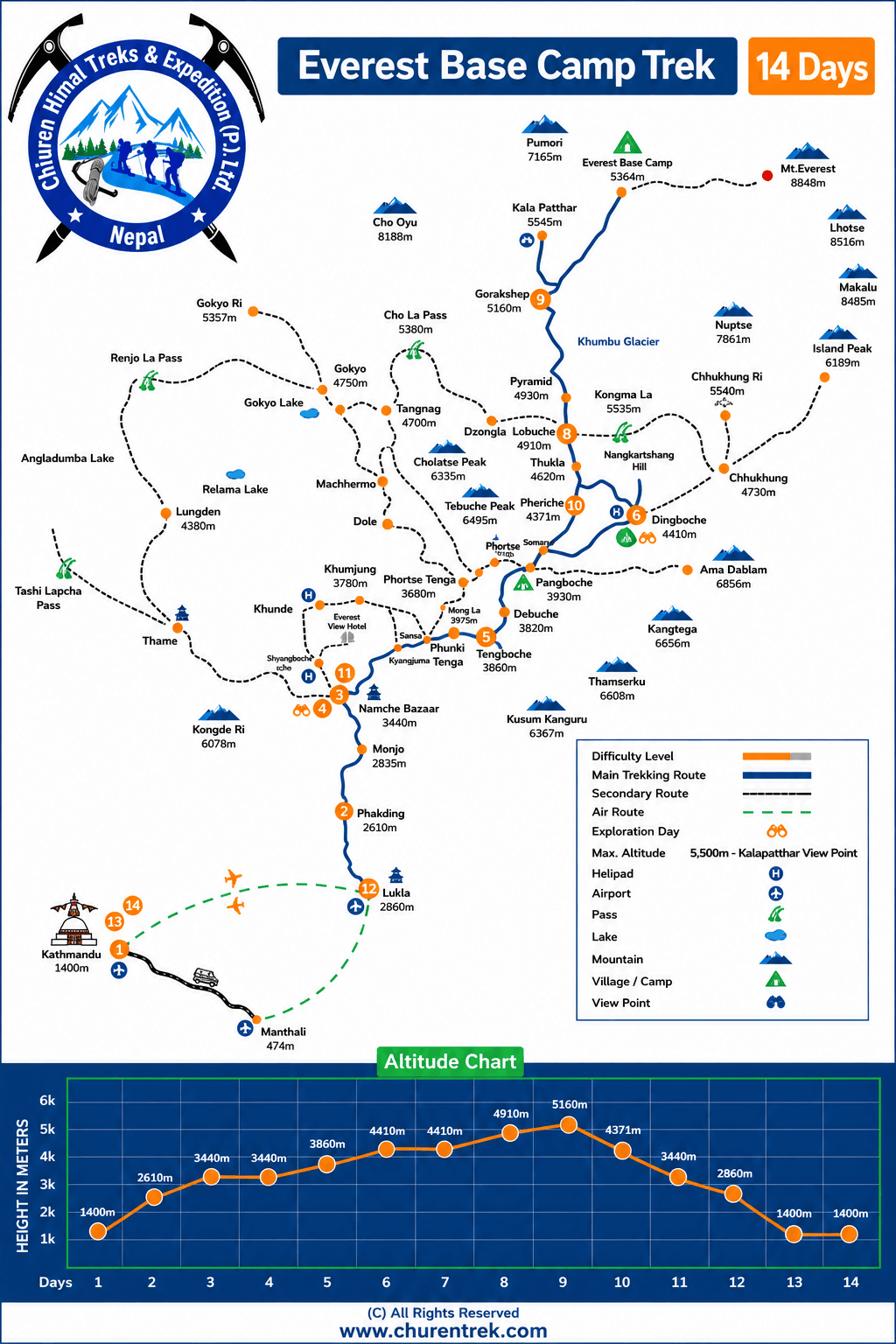
Everest Base Camp Trek – 14 Days
Duration: 14 Days
Kathmandu - Lukla Helicopter Flight
SUMMARY
Payment Details


Trip Information
Why Choose This Route?
The biggest advantage of this itinerary is route diversity.
A standard Everest Base Camp trek follows the main Khumbu Valley toward EBC. The Gokyo route adds another dimension by first entering the Gokyo Valley, visiting its lakes and climbing Gokyo Ri before crossing Cho La.
This means trekkers experience:
- Gokyo Lakes
- Gokyo Ri
- Cho La
- Everest Base Camp
- Kala Patthar
The route is therefore particularly attractive to trekkers who want a more comprehensive Everest-region experience and are prepared for additional physical demands.
The trade-off is difficulty. Cho La introduces steep, rocky and potentially icy terrain, while the overall itinerary involves repeated climbing and descending at high altitude.
Difficulty & Fitness
The Gokyo EBC Trek via Kala Patthar is a challenging high-altitude trek and is considerably more demanding than a short lower-altitude Nepal trek.
The principal challenges are:
- Extended trekking duration
- High maximum altitude
- Gokyo Ri ascent
- Cho La Pass crossing
- Kala Patthar ascent
- Long walking days
- Repeated ascents and descents
- Rocky and uneven terrain
- Possible snow and ice around Cho La
- Cold temperatures
- Limited facilities at higher elevations
Fitness preparation:
Trekkers should ideally develop:
- Cardiovascular endurance
- Leg strength
- Core stability
- Uphill walking ability
- Downhill walking tolerance
- Ability to walk several consecutive days
Training hikes with elevation gain are particularly useful.
A previous high-altitude trekking background is beneficial, although first-time high-altitude trekkers can undertake the route if they are properly prepared, medically suitable and supported by an experienced trekking team.
Altitude & Acclimatization
Altitude is one of the most important considerations on this trek.
The route gradually rises from Lukla through Namche, the Gokyo Valley and eventually above 5,000 m. The itinerary includes acclimatization around Namche and a relatively short day before Cho La to help manage the increasing elevation.
Important altitude principles:
- Ascend gradually.
- Walk at a controlled pace.
- Drink regularly.
- Avoid treating severe symptoms as normal tiredness.
- Follow guide recommendations.
- Inform your guide immediately if you feel unwell.
- Descend if serious altitude-related symptoms develop.
Possible altitude-related symptoms can include headache, nausea, dizziness, unusual fatigue and sleep disturbance. Serious symptoms require prompt attention and descent rather than simply continuing upward.
This information is general trekking guidance and does not replace medical advice.
Best Time to Trek
- Spring (March–May): Generally one of the most popular periods for trekking in the Everest region. Advantages can include increasingly stable weather, good mountain visibility, longer daylight, warmer conditions compared with winter, and rhododendron landscapes at lower elevations. Cho La conditions still need to be checked before crossing.
- Autumn (September–November): Another major trekking season. Generally favorable characteristics include good visibility, stable post-monsoon conditions, clear mountain views, and comfortable daytime trekking temperatures. It can also be a busy season on popular Everest trails.
- Winter (December–February): Brings colder temperatures and greater potential for snow and ice at high elevations. Cho La can become particularly challenging. Shorter daylight and cold overnight temperatures require appropriate equipment and flexibility.
- Monsoon (June–August): Brings rain, cloud, wet trails and reduced mountain visibility in lower sections. Flight operations can also be affected by weather. Conditions at high elevations can vary, and Cho La should only be crossed when conditions are considered appropriate by the trekking team.
Permits
The Gokyo EBC route passes through the Everest/Khumbu region and requires the applicable entry permissions and local fees.
Potential requirements include:
- Sagarmatha National Park entry permit
- Khumbu Pasang Lhamu Rural Municipality fee
- Passport/identification documents
- Any other current requirement applicable to the route
The exact permit system and fees can change. The final page should therefore display current requirements and fees after verification with the relevant authorities or the company's current permit process rather than publishing an unverified amount.
Churen Himal Treks can explain the applicable permit process as part of trip preparation.
Accommodation
Accommodation follows the normal pattern of hotel accommodation in Kathmandu and tea-house/guesthouse accommodation during the trek.
At trekking lodges, travelers can generally expect:
- Twin/shared rooms
- Basic beds
- Blankets where available
- Shared or private bathrooms depending on lodge
- Hot water availability varying by location
- Wi-Fi availability varying by village
- Charging availability varying by lodge
- More basic facilities at higher elevations
Facilities should not be assumed to be identical at every lodge.
Pokhara is not part of this itinerary and should not be listed as an overnight destination unless the package is specifically modified.
Food & Drinks
Tea houses generally serve a mixture of Nepali, Tibetan-influenced and international-style trekking food.
Common options can include:
- Dal bhat, rice, noodles, pasta, and soup
- Momos, potatoes, and eggs
- Tibetan-style bread
- Tea, coffee, and other hot drinks
Food selection becomes more limited as altitude increases.
Hydration: Drink regularly throughout the trek. Safe drinking-water practices are important, particularly at higher elevations. Trekkers can use treated, filtered or otherwise appropriately purified water. Water-purification tablets or a suitable filtration system can be useful additions to the packing list.
Guides & Porters
A guide is particularly valuable on the Gokyo–Cho La–EBC route because of the altitude, changing terrain and route complexity.
A professional guide can assist with:
- Route navigation and daily pacing
- Altitude awareness and weather/trail assessment
- Accommodation coordination and local cultural interpretation
- Trek logistics and communication within the group
Porters can carry the main trekking baggage, allowing trekkers to walk with a lighter daypack.
Porter loads should be managed responsibly, and travelers should confirm baggage limits and porter arrangements with the trekking company before departure.
Packing List
- Essential clothing: Trekking boots, trekking trousers, base layers, insulating layers, down jacket, waterproof jacket, warm hat, gloves, sun hat, and warm socks.
- Trekking equipment: Backpack/daypack, duffel bag, trekking poles, sleeping bag, headlamp, water bottles, and water-purification system.
- Protection: Sunglasses, sunscreen, and lip protection.
- Personal & Documents: Personal medication, basic first-aid supplies, toiletries, passport, permits/documents, insurance documents, snacks, and a small amount of cash.
- Electronics: Phone, camera (if required), power bank, and charging cables.
Transportation & Lukla Flights
The Kathmandu–Lukla flight is an important part of the traditional Everest trekking experience, but Lukla flights are weather- and operation-dependent.
Travelers should allow flexibility because:
- Weather can change quickly.
- Flights can be delayed or cancelled.
- Operational arrangements can change seasonally.
- Airport and airline conditions can affect schedules.
Flight duration should therefore not be presented as guaranteed. Travelers should avoid scheduling an important international connection immediately after a Lukla flight without allowing reasonable contingency time.
Safety & Responsible Trekking
High-altitude trekking requires conservative decision-making.
Safety principles:
- Acclimatize gradually and tell your guide about health problems promptly.
- Do not ignore worsening altitude symptoms.
- Follow guide instructions on Cho La conditions.
- Use appropriate footwear/clothing, carry adequate water, and protect yourself from strong UV exposure.
- Keep emergency contacts/documents accessible and maintain flexibility for disruptions.
Responsible trekking:
- Carry waste to appropriate disposal points and minimize single-use plastic.
- Respect local customs, ask before photographing people, and avoid damaging plants or wildlife habitat.
- Use established trails and respect monasteries/religious sites.
- Support local tea houses and businesses responsibly.
Why Trek with Churen Himal Treks and Expedition Pvt. Ltd.?
Churen Himal Treks and Expedition Pvt. Ltd. provides the trip-planning framework for travelers interested in exploring the Everest region through a more comprehensive Gokyo–EBC itinerary.
Potential service advantages include:
- Local trekking coordination and personalized itinerary support
- Guide, porter, permit, and logistics assistance
- Pre-trek preparation, route planning, and communication throughout the trip
- Safety-focused trekking practices
The company website is: https://www.churentrek.com
The page should avoid publishing unsupported claims about awards, years of operation, trek success rates, number of trekkers or certifications unless the company provides verifiable evidence.
Booking Your Gokyo EBC Trek
Ready to plan your Khumbu journey? Contact Churen Himal Treks and Expedition Pvt. Ltd. to check current availability, request the latest package details, and finalize your booking terms.
We offer group discount
| 1 person | US$ 1590 |
| 2 people | US$ 1390 |
| 3 - 6 people | US$ 1350 |
| 7 - 10 people | US$ 1290 |
| 11 + people | US$ 1190 |
- Best price guarantee
- Secure & easy online booking
- Flexible booking dates
Speak to an Expert
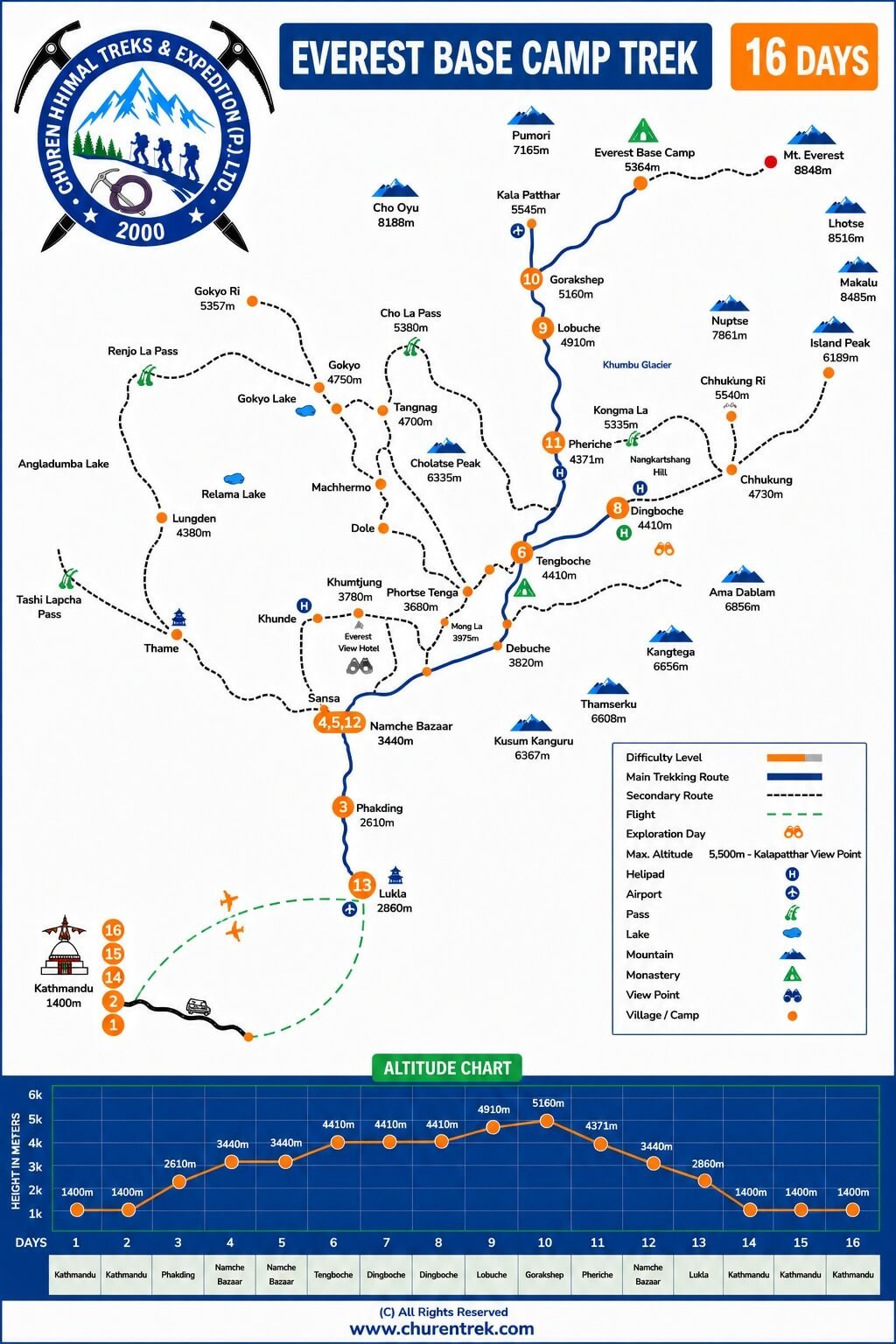
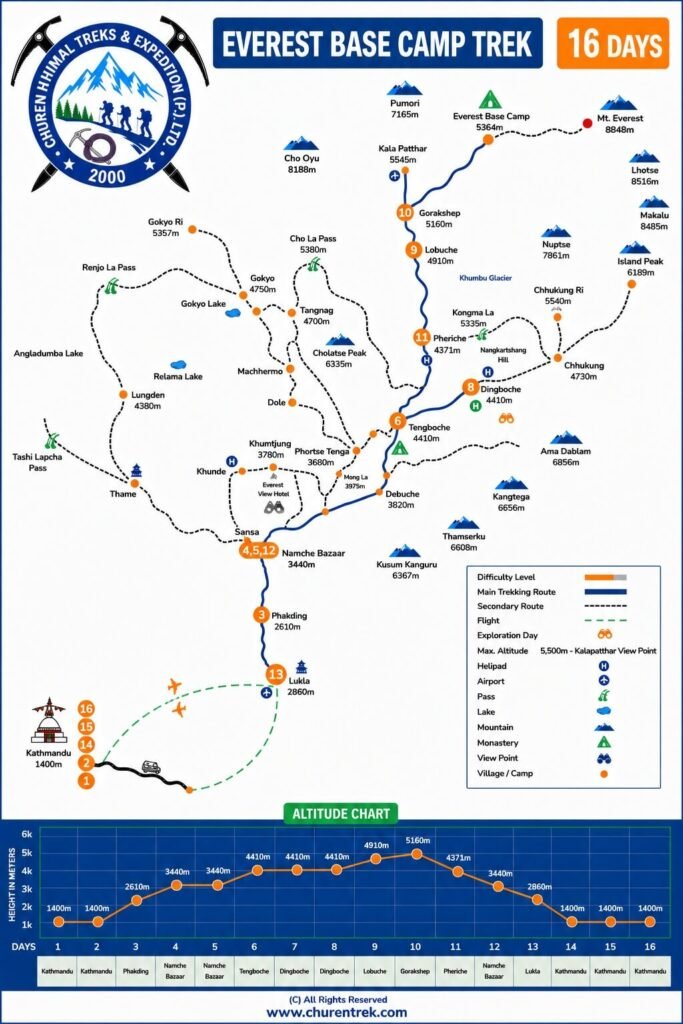
FAQs for Everest Base Camp Trek – 16 Days
FAQs for Everest Base Camp Trek – 16 Days
ℹ️ General
➔ What is the Everest Base Camp Trek and why is it popular?
➔ How difficult is the Everest Base Camp Trek?
➔ How many days does the trek take in total?
➔ Is prior trekking experience necessary for this trip?
➔ Can solo travelers join a group trek?
🏋️ Preparation & Fitness
➔ Is the Everest Base Camp Trek physically challenging?
➔ Do I need to train before doing the Everest Base Camp Trek?
➔ How many weeks should I train before the EBC trek?
➔ What is the best way to prepare for the Everest Base Camp Trek?
➔ How can I acclimatize to high altitude faster?
➔ How many hours will I walk each day during the EBC trek?
➔ Can first-time trekkers do the Everest Base Camp Trek?
🪪 Permits
➔ What permits are required for the Everest Base Camp Trek?
➔ Will Glorious Eco Trek Nepal arrange all the necessary permits?
🛂 Insurance & Visa
➔ Do I need travel insurance for the Everest Base Camp Trek?
➔ How do I get a tourist visa for Nepal?
➔ Can I get a visa on arrival at the airport?
➔ What should the insurance cover for trekking in Nepal?
💂 Guides & Support Staff
➔ Will I have a guide and porter during the trek?
➔ What are the qualifications of your trekking guides?
➔ Do the guides speak English?
➔ Will porters carry my luggage during the trek?
➔ Is tipping guides and porters expected?
➔ Can I trek to Everest Base Camp without a guide?
🛏️ Accommodation and Facilities
➔ What kind of accommodation is provided during the trek?
➔ Are hot showers and Wi-Fi available along the trail?
➔ Will I get a private room or have to share?
➔ Can I charge my phone and devices during the trek?
➔ Are toilets available throughout the trek?
🍲 Food and Drinks
➔ What kind of food is available during the trek?
➔ Are vegetarian or vegan meals available?
➔ Is it safe to drink the water during the trek?
➔ Can I buy snacks and drinks along the way?
🌤️ Weather & Seasons
➔ What is the best time to do the Everest Base Camp Trek?
➔ Can I trek during the monsoon or winter season?
➔ What kind of weather can I expect during the trek?
🩺 Health & Safety
➔ What happens if I get sick or injured during the trek?
➔ How do you handle altitude sickness?
➔ Are there health posts or clinics along the route?
➔ Is the trek safe for solo female travelers?
➔ Do I need to bring medicines for the Everest Base Camp Trek?
🎒 Packing & Gear
➔ What should I pack for the Everest Base Camp Trek?
➔ Is a sleeping bag necessary?
➔ Where can I keep my extra luggage during the trek?
➔ What is the luggage weight limit for the Lukla flight?
➔ How much weight can a porter carry?
➔ Where can I buy trekking clothes and gear?
💳 Booking & Payment
➔ What is the booking process and payment method for the Everest Base Camp Trek?
➔ Is there a cancellation or refund policy?
➔ What currency should I carry for expenses along the Everest Base Camp trek?
➔ Can I use ATMs or credit cards during the trek?
➔ Are there money exchange services in the Everest Base Camp region?
➔ How much extra money should I budget per day during the trek?
➔ Can I book the Everest Base Camp trek if I’m traveling with children?
➔ Should I book the trek well in advance?
🛫 Transportation & Flight
➔ Do you provide airport pick-up and drop-off services?
➔ How do I get to the starting point of the trek?
➔ Is the flight to Lukla safe?
➔ What happens if my Lukla flight is delayed or canceled?
➔ What is the mode of transportation to reach Everest Base Camp?
ℹ️ General
+ What is the Everest Base Camp Trek and why is it popular?
+ How difficult is the Everest Base Camp Trek?
+ How many days does the trek take in total?
+ Is prior trekking experience necessary for this trip?
+ Can solo travelers join a group trek?
🏋️ Preparation & Fitness
+ Is the Everest Base Camp Trek physically challenging?
+ Do I need to train before doing the Everest Base Camp Trek?
+ How many weeks should I train before the EBC trek?
+ What is the best way to prepare for the Everest Base Camp Trek?
+ How can I acclimatize to high altitude faster?
+ How many hours will I walk each day during the EBC trek?
+ Can first-time trekkers do the Everest Base Camp Trek?
🪪 Permits
+ What permits are required for the Everest Base Camp Trek?
+ Will Glorious Eco Trek Nepal arrange all the necessary permits?
🛂 Insurance & Visa
+ Do I need travel insurance for the Everest Base Camp Trek?
+ How do I get a tourist visa for Nepal?
+ Can I get a visa on arrival at the airport?
+ What should the insurance cover for trekking in Nepal?
💂 Guides & Support Staff
+ Will I have a guide and porter during the trek?
+ What are the qualifications of your trekking guides?
+ Do the guides speak English?
+ Will porters carry my luggage during the trek?
+ Is tipping guides and porters expected?
+ Can I trek to Everest Base Camp without a guide?
🛏️ Accommodation and Facilities
+ What kind of accommodation is provided during the trek?
+ Are hot showers and Wi-Fi available along the trail?
+ Will I get a private room or have to share?
+ Can I charge my phone and devices during the trek?
+ Are toilets available throughout the trek?
🍲 Food and Drinks
+ What kind of food is available during the trek?
+ Are vegetarian or vegan meals available?
+ Is it safe to drink the water during the trek?
+ Can I buy snacks and drinks along the way?
🌤️ Weather & Seasons
+ What is the best time to do the Everest Base Camp Trek?
+ Can I trek during the monsoon or winter season?
+ What kind of weather can I expect during the trek?
🩺 Health & Safety
+ What happens if I get sick or injured during the trek?
+ How do you handle altitude sickness?
+ Are there health posts or clinics along the route?
+ Is the trek safe for solo female travelers?
+ Do I need to bring medicines for the Everest Base Camp Trek?
🎒 Packing & Gear
+ What should I pack for the Everest Base Camp Trek?
+ Is a sleeping bag necessary?
+ Where can I keep my extra luggage during the trek?
+ What is the luggage weight limit for the Lukla flight?
+ How much weight can a porter carry?
+ Where can I buy trekking clothes and gear?
💳 Booking & Payment
+ What is the booking process and payment method for the Everest Base Camp Trek?
+ Is there a cancellation or refund policy?
+ What currency should I carry for expenses along the Everest Base Camp trek?
+ Can I use ATMs or credit cards during the trek?
+ Are there money exchange services in the Everest Base Camp region?
+ How much extra money should I budget per day during the trek?
+ Can I book the Everest Base Camp trek if I’m traveling with children?
+ Should I book the trek well in advance?
🛫 Transportation & Flight
+ Do you provide airport pick-up and drop-off services?
+ How do I get to the starting point of the trek?
+ Is the flight to Lukla safe?
+ What happens if my Lukla flight is delayed or canceled?
+ What is the mode of transportation to reach Everest Base Camp?
Reviews on Everest Base Camp Trek – 14 Days
Publish Your Review
Video Testimonials