Duration
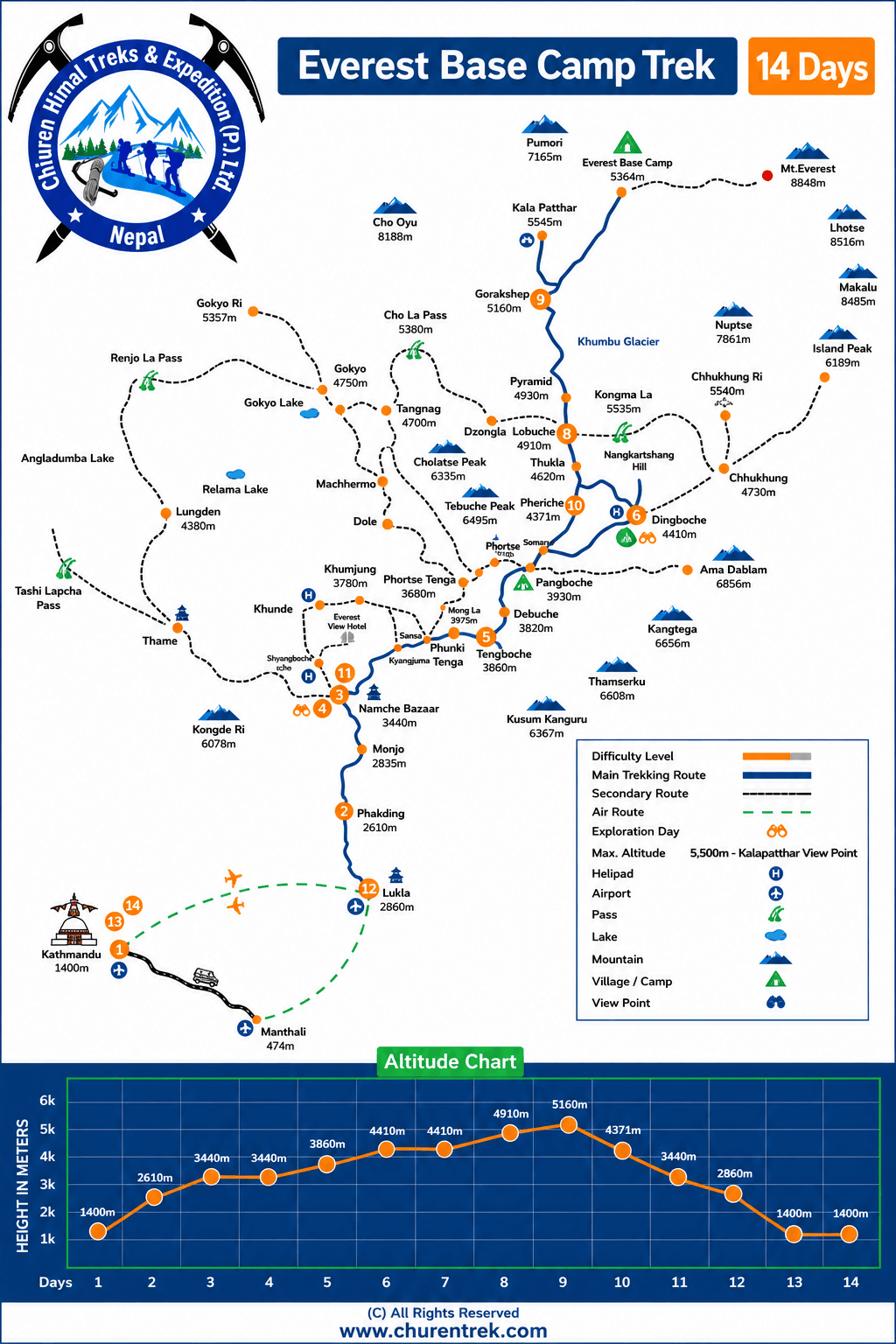
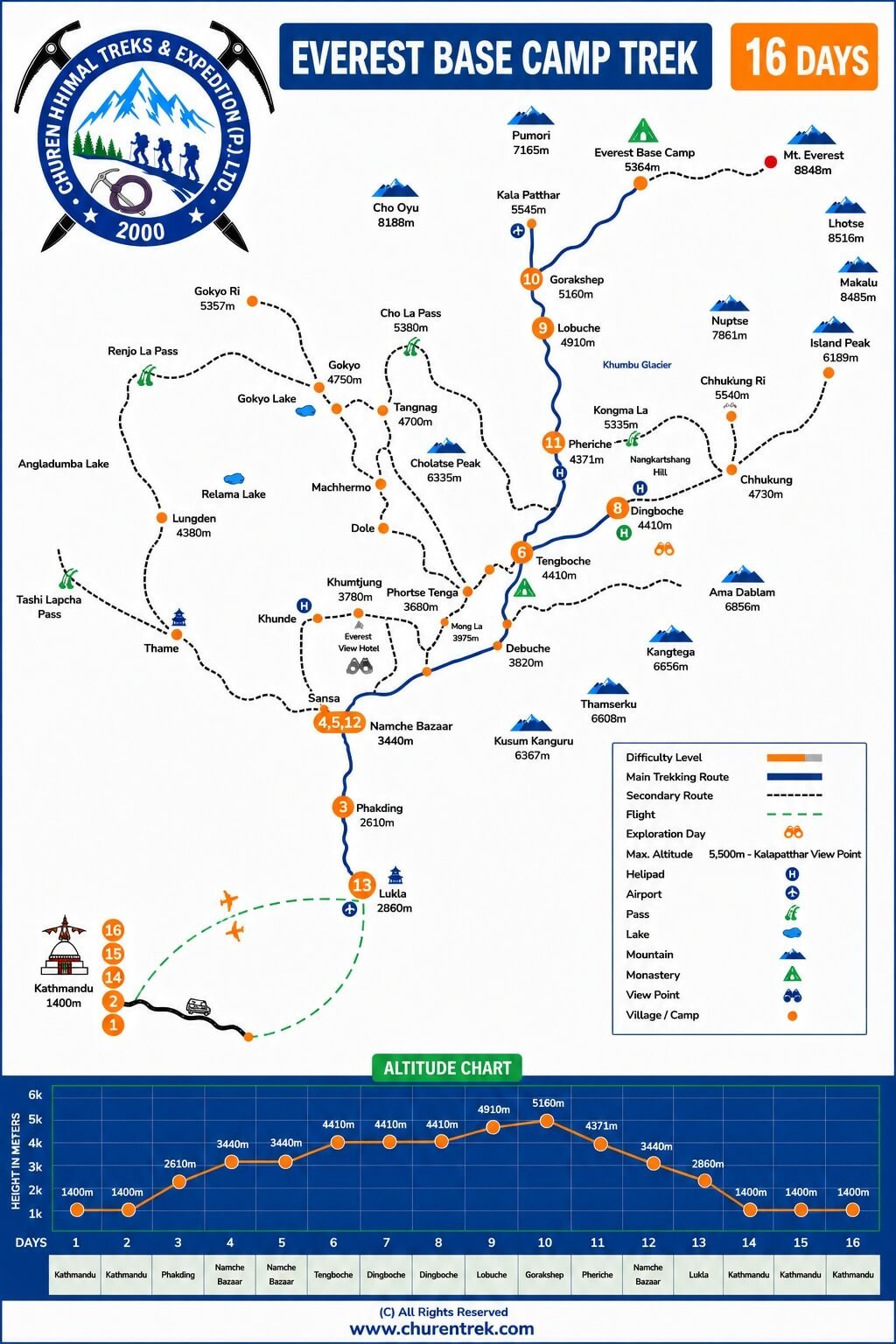
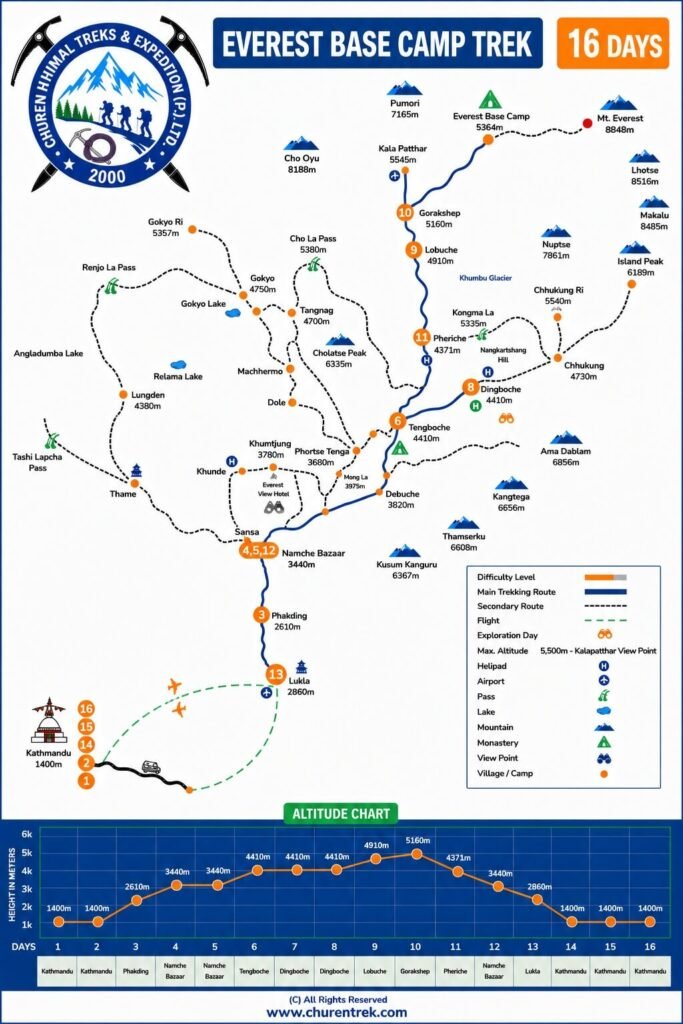
16 Days
Trip Difficulty
Moderate
Start/End Point
Kathmandu
Meals
Breakfast, Lunch, & Dinner
Max Altitude:
5,555m. / 18,225ft.
Group Size
2-15+ People
Best Season
Mar, Apri, May, Sep, Oct, Nov & Dec
Accommodation
3 Star Hotel in KTM / Lodge / Tea House during the Trek
We offer group discount
| 1 person | US$ 1590 |
| 2 people | US$ 1390 |
| 3 - 6 people | US$ 1350 |
| 7 - 10 people | US$ 1290 |
| 11 + people | US$ 1190 |
- Best price guarantee
- Secure & easy online booking
- Flexible booking dates
Speak to an Expert
Everest Three High Passes Trek - 22 Days Details Itinerary
-
Day 01: Arrival in Kathmandu and Welcome to Nepal
Arrive in Kathmandu and meet the Churen Himal Treks and Expedition team for airport transfer to your hotel. After check-in and some time to recover from the journey, there is an opportunity to receive a briefing about the trek, equipment and upcoming mountain flight.
In the evening, the itinerary includes a welcome dinner accompanied by a traditional Nepalese cultural performance. It is a relaxed introduction to Nepal before the high-altitude adventure begins.
Route: Tribhuvan International Airport → Kathmandu hotel
Altitude: 1,350 mWalking Duration: Not applicable
Walking Distance: No scheduled trekkingElevation Gain (+): —
Elevation Loss (-): —Meals: Dinner
Accommodation: Hotel -
Day 02: Kathmandu Valley Cultural Sightseeing
Use the second day to explore some of Kathmandu Valley's important cultural and religious landmarks. The sightseeing program includes Pashupatinath Temple, Boudhanath Stupa, Kathmandu Durbar Square and Swayambhunath.
The day provides a cultural contrast to the Himalayan environment ahead. It is also useful for final preparation, equipment checks and ensuring that everything needed for the mountain journey is ready before departure for Lukla.
Route: Kathmandu → Pashupatinath → Boudhanath → Kathmandu Durbar Square → Swayambhunath
Altitude: ~1,350 mWalking Duration: Sightseeing walking
Walking Distance: Variable; not counted in trek totalElevation Gain (+): Not calculated
Elevation Loss (-): Not calculatedMeals: Breakfast
Accommodation: Hotel -
Day 03: Fly to Lukla and Trek to Phakding
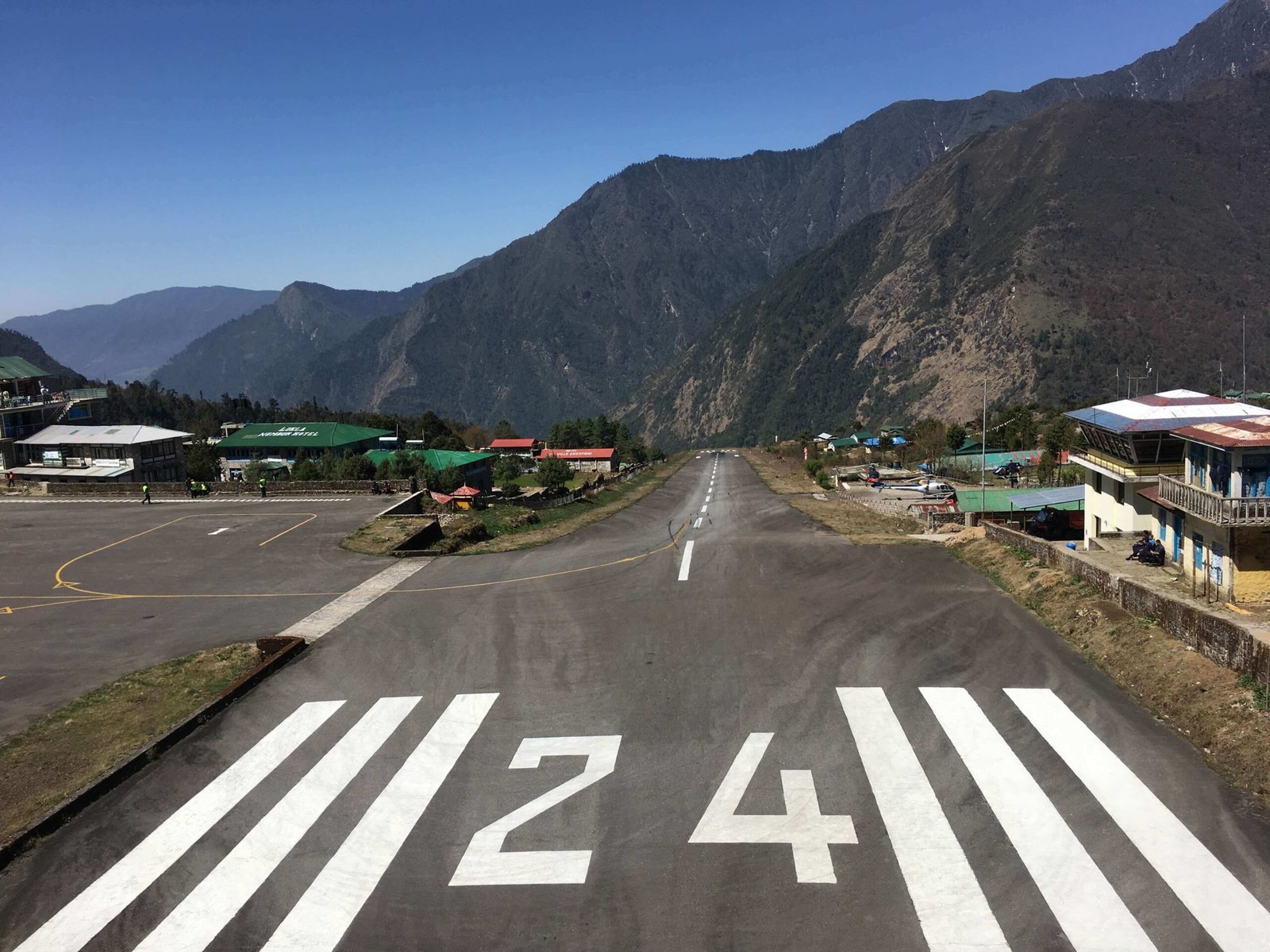
The Himalayan adventure begins with a flight toward Lukla, the principal gateway for trekking in the Everest region. Flight schedules are subject to weather and operational conditions.
After arriving in Lukla, the trail descends gradually through villages and woodland toward Phakding. The first walking day is intentionally moderate, allowing trekkers to begin adapting to the altitude without an immediate long ascent.
Route: Kathmandu → Lukla → Phakding
Altitude: Lukla 2,860 m; Phakding ~2,610 mWalking Duration: Approximately 3–4 hours
Walking Distance: Approximately 8 kmElevation Gain (+): Minimal overall
Elevation Loss (-): Approximately 250 m netMeals: Breakfast, Lunch, Dinner
Accommodation: Tea house -
Day 04: Trek from Phakding to Namche Bazaar
The trail follows the Dudh Koshi valley toward Monjo, where the route enters Sagarmatha National Park. Suspension bridges, pine forests and Sherpa settlements characterize much of the journey.
After crossing the river and climbing steadily, the trail reaches Namche Bazaar. The final ascent is demanding because of the rapid elevation gain, but the arrival in Namche marks an important stage of the trek. The bustling mountain settlement becomes the base for acclimatization.
Route: Phakding → Monjo → Sagarmatha National Park → Namche Bazaar
Altitude: Namche Bazaar ~3,440 mWalking Duration: Approximately 5–6 hours
Walking Distance: Approximately 10–11 kmElevation Gain (+): Approximately 800–850 m
Elevation Loss (-): Approximately 100 mMeals: Breakfast, Lunch, Dinner
Accommodation: Tea house -
Day 05: Acclimatization Day in Namche Bazaar
Today is dedicated to acclimatization rather than progressing to another overnight destination. A short hike above Namche can help the body adapt while providing views across the Khumbu landscape.
The exact acclimatization walk can be adjusted according to weather, fitness and the group's condition. Spending the night again at Namche is an important part of preparing for the increasingly high elevations ahead.
Route: Namche Bazaar → acclimatization hike → Namche Bazaar
Altitude: Namche Bazaar ~3,440 mWalking Duration: Approximately 3–5 hours depending on hike
Walking Distance: Optional; approximately 4–7 km depending on routeElevation Gain (+): Optional
Elevation Loss (-): OptionalMeals: Breakfast, Lunch, Dinner
Accommodation: Tea house -
Day 06: Namche Bazaar to Tengboche
The trail leaves Namche along a scenic contour route with expansive views of the Himalayan peaks. The route passes through woodland and descends toward the Dudh Koshi valley before climbing again toward Tengboche.
Tengboche Monastery is one of the cultural highlights of the Everest region. Its elevated setting provides a dramatic mountain backdrop, while the surrounding forest and Himalayan peaks create a distinct atmosphere after the busy Namche section.
Route: Namche Bazaar → Kyangjuma → Phunki Tenga → Tengboche
Altitude: Tengboche ~3,860 mWalking Duration: Approximately 5–6 hours
Walking Distance: Approximately 10 kmElevation Gain (+): Approximately 400–500 m
Elevation Loss (-): Approximately 100–150 mMeals: Breakfast, Lunch, Dinner
Accommodation: Tea house -
Day 07: Tengboche to Dingboche
The trail descends through woodland toward Deboche before continuing through traditional settlements including Pangboche. As the route moves higher, vegetation becomes increasingly sparse and the surrounding landscape opens into a broad alpine environment.
Dingboche is an important high-altitude settlement and a strategic stopping point before Chhukung and the first major pass. The increasingly thin air makes pacing and hydration more important.
Route: Tengboche → Deboche → Pangboche → Dingboche
Altitude: Dingboche ~4,410 mWalking Duration: Approximately 5–6 hours
Walking Distance: Approximately 10–11 kmElevation Gain (+): Approximately 550 m
Elevation Loss (-): Approximately 100 mMeals: Breakfast, Lunch, Dinner
Accommodation: Tea house -
Day 08: Dingboche to Chhukung
A relatively short walking day takes the route deeper into the Imja Valley toward Chhukung. The shorter distance is valuable because the itinerary is entering the high-altitude section where the body needs time to adapt.
Chhukung sits beneath an impressive mountain amphitheater and serves as the staging point for the Chhukung Ri hike and the subsequent Kongma La crossing. The surrounding peaks and rugged valley terrain make the transition from lower Khumbu to high Himalayan country particularly evident.
Route: Dingboche → Chhukung
Altitude: Chhukung ~4,730–4,750 mWalking Duration: Approximately 2–3 hours
Walking Distance: Approximately 5 kmElevation Gain (+): Approximately 300–350 m
Elevation Loss (-): MinimalMeals: Breakfast, Lunch, Dinner
Accommodation: Tea house -
Day 09: Chhukung Ri Acclimatization Hike
The day is devoted to an ascent of Chhukung Ri, one of the itinerary's important acclimatization and mountain-view hikes. The climb is steep and should be approached at a controlled pace, particularly because the route reaches above 5,500 m.
From higher points on the ridge, the surrounding peaks and glacial valleys create a dramatic Himalayan panorama. Returning to Chhukung for another night allows the body to recover before the first major high-pass crossing.
Route: Chhukung → Chhukung Ri → Chhukung
Altitude: Chhukung ~4,730–4,750 m; Chhukung Ri ~5,500–5,550 mWalking Duration: Approximately 5–7 hours
Walking Distance: Approximately 6–7 kmElevation Gain (+): Approximately 800 m
Elevation Loss (-): Approximately 800 mMeals: Breakfast, Lunch, Dinner
Accommodation: Tea house -
Day 10: Cross Kongma La to Lobuche
The first major pass crossing begins early as the trail climbs away from Chhukung toward Kongma La. The ascent is demanding, with steep terrain and potentially snow-covered sections depending on conditions.
After reaching the pass, the route descends toward the Lobuche area. The dramatic change from high pass to glacial valley makes this one of the trek's most memorable days. Conditions can be demanding, so the crossing should always be assessed according to weather, snow and the group's physical condition.
Route: Chhukung → Kongma La → Lobuche
Altitude: Kongma La ~5,535 m; Lobuche ~4,940 mWalking Duration: Approximately 7–9 hours
Walking Distance: Approximately 10–11 kmElevation Gain (+): Approximately 800–850 m
Elevation Loss (-): Approximately 600–700 mMeals: Breakfast, Lunch, Dinner
Accommodation: Tea house -
Day 11: Everest Base Camp and Return to Gorak Shep
The trail continues toward Gorak Shep and then follows the rugged route toward Everest Base Camp. The landscape becomes increasingly stark, with moraine, rock and glacial terrain replacing the greener environments of the lower valleys.
At Everest Base Camp, trekkers can experience one of the defining destinations of the Khumbu. The route then returns to Gorak Shep for the night. Because of the elevation and demanding terrain, steady pacing is particularly important.
Route: Lobuche → Gorak Shep → Everest Base Camp → Gorak Shep
Altitude: Gorak Shep ~5,164 m; Everest Base Camp ~5,364 mWalking Duration: Approximately 7–9 hours
Walking Distance: Approximately 11–12 kmElevation Gain (+): Approximately 400–450 m cumulative
Elevation Loss (-): Approximately 400–450 m cumulativeMeals: Breakfast, Lunch, Dinner
Accommodation: Tea house -
Day 12: Kala Patthar Sunrise and Trek to Dzongla
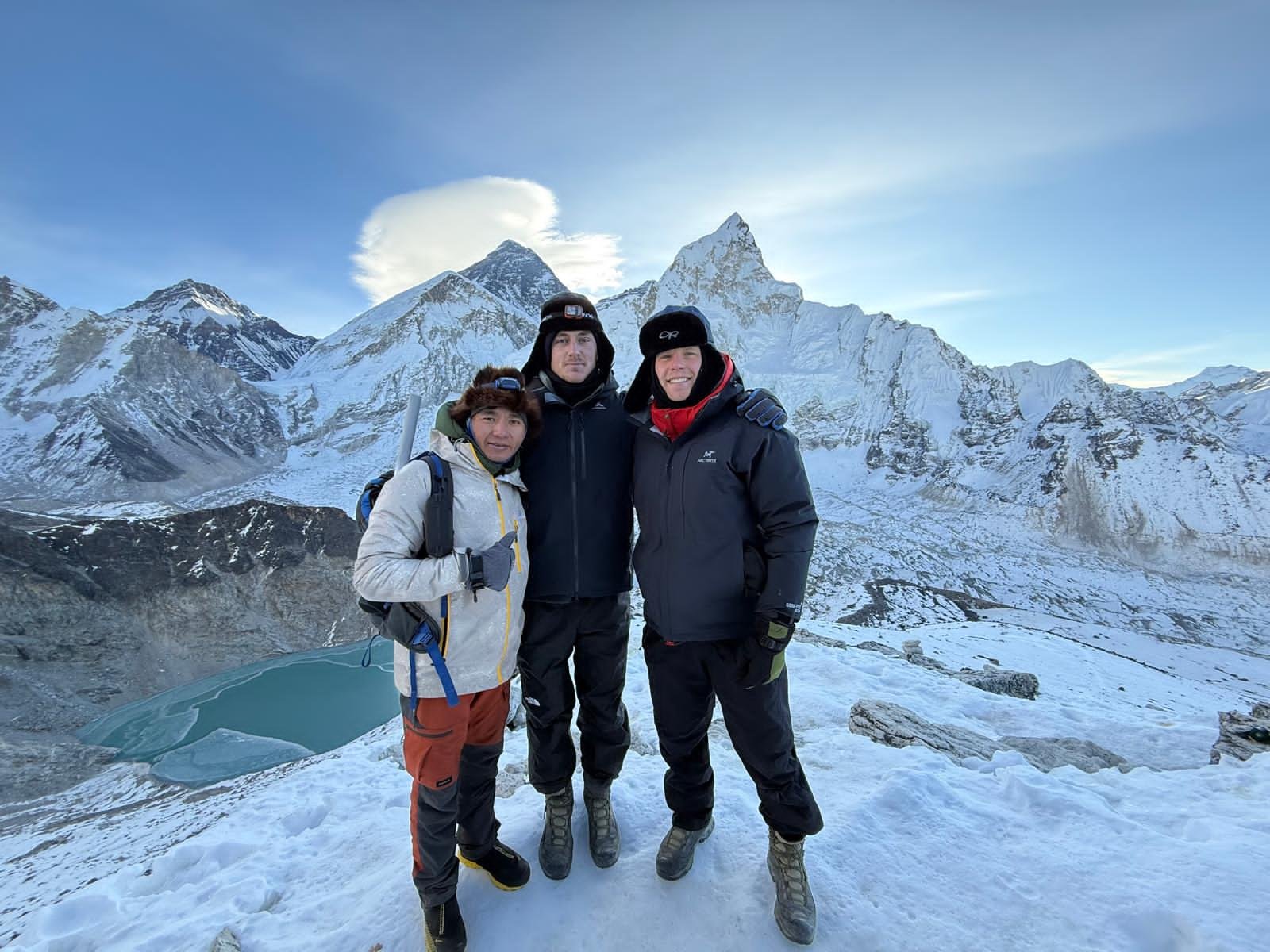
An early start takes trekkers toward Kala Patthar, one of the best-known viewpoints on the Everest trekking circuit. The climb is steep at altitude, but clear conditions can reveal an extraordinary panorama of Everest and surrounding Himalayan peaks.
After returning toward Gorak Shep, the route branches away from the standard Everest Base Camp return path and heads toward Dzongla. The descent provides some recovery from the extreme elevation before the next high-pass challenge.
Route: Gorak Shep → Kala Patthar → Gorak Shep → Dzongla
Altitude: Kala Patthar ~5,550–5,650 m; Dzongla ~4,830 mWalking Duration: Approximately 7–9 hours
Walking Distance: Approximately 11–12 kmElevation Gain (+): Approximately 450–500 m
Elevation Loss (-): Approximately 750–850 mMeals: Breakfast, Lunch, Dinner
Accommodation: Tea house -
Day 13: Cross Cho La to Thangnak
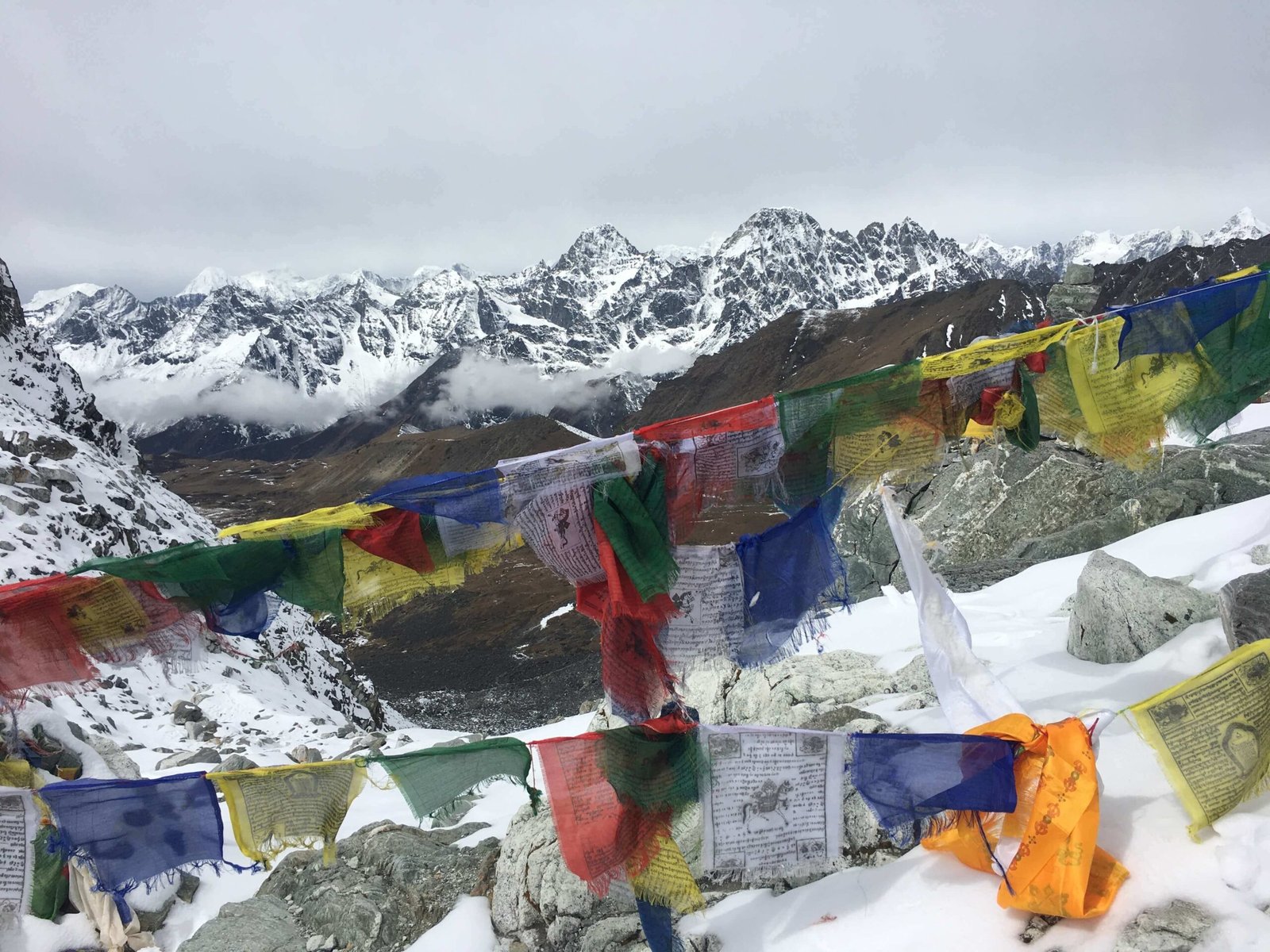
The second major crossing, Cho La, connects the Everest Base Camp side of the Khumbu with the Gokyo Valley. The trail climbs steeply from Dzongla and may involve snow or icy terrain depending on the season.
The pass crossing is physically demanding, particularly after the previous days around Everest Base Camp and Kala Patthar. Once across the pass, the route descends toward Thangnak/Dragnag, where a lower overnight elevation provides an important opportunity to recover.
Route: Dzongla → Cho La → Thangnak/Dragnag
Altitude: Cho La ~5,420 m; Thangnak ~4,700 mWalking Duration: Approximately 6–8 hours
Walking Distance: Approximately 8–10 kmElevation Gain (+): Approximately 600 m
Elevation Loss (-): Approximately 700 mMeals: Breakfast, Lunch, Dinner
Accommodation: Tea house -
Day 14: Thangnak to Gokyo Village
After the demanding Cho La crossing, today's route is comparatively short. The trail follows the high Himalayan landscape toward Gokyo, one of the most spectacular settlements in the Khumbu.
Gokyo sits beside the famous Gokyo Lakes and beneath a dramatic ring of mountains. The quieter atmosphere contrasts with the busier Everest Base Camp corridor and gives trekkers time to appreciate the high-altitude lake environment.
Route: Thangnak/Dragnag → Gokyo
Altitude: Gokyo ~4,790 mWalking Duration: Approximately 3–4 hours
Walking Distance: Approximately 4–5 kmElevation Gain (+): Approximately 100 m
Elevation Loss (-): MinimalMeals: Breakfast, Lunch, Dinner
Accommodation: Tea house -
Day 15: Gokyo Ri and Gokyo Lakes Exploration
An ascent of Gokyo Ri provides a major panoramic highlight of the circuit. From the viewpoint, trekkers can appreciate the surrounding high Himalayan landscape and the chain of glacial lakes below.
The remainder of the day can be used to explore the Gokyo Lakes area according to weather and group energy. This combination of a high viewpoint and alpine lakes makes Gokyo one of the defining destinations on the Three Passes circuit.
Route: Gokyo → Gokyo Ri → Gokyo Lakes → Gokyo
Altitude: Gokyo ~4,790 m; Gokyo Ri ~5,350–5,360 mWalking Duration: Approximately 4–6 hours
Walking Distance: Approximately 5–7 kmElevation Gain (+): Approximately 550–600 m
Elevation Loss (-): Approximately 550–600 mMeals: Breakfast, Lunch, Dinner
Accommodation: Tea house -
Day 16: Cross Renjo La to Lungden
The final major pass of the itinerary is Renjo La. The trail climbs steadily away from Gokyo and reaches another high Himalayan crossing above 5,000 m.
After crossing Renjo La, the route descends substantially toward Lungden. The change in elevation and landscape is significant, and the descent can be demanding on the legs after the steep ascent to the pass. Completing Renjo La marks the achievement of all three major high passes.
Route: Gokyo → Renjo La → Lungden
Altitude: Renjo La ~5,360 m; Lungden ~4,380 mWalking Duration: Approximately 7–9 hours
Walking Distance: Approximately 10–12 kmElevation Gain (+): Approximately 550–600 m
Elevation Loss (-): Approximately 950–1,000 mMeals: Breakfast, Lunch, Dinner
Accommodation: Tea house -
Day 17: Lungden to Thame
The trail continues down the Bhote Koshi valley toward Thame, a historic Sherpa settlement away from the main Everest Base Camp route. After several consecutive days above 4,000 m, the lower elevation provides a welcome change.
Thame has strong connections with Sherpa mountaineering history and offers a different cultural perspective on the Khumbu. The landscape also feels quieter than the main Everest trekking corridor.
Route: Lungden → Thame
Altitude: Thame ~3,820 mWalking Duration: Approximately 4–5 hours
Walking Distance: Approximately 9–11 kmElevation Gain (+): Minimal
Elevation Loss (-): Approximately 550–600 mMeals: Breakfast, Lunch, Dinner
Accommodation: Tea house -
Day 18: Thame to Namche Bazaar
The trail leaves Thame and gradually reconnects with the main Khumbu trekking network before reaching Namche Bazaar. The route passes through familiar Himalayan landscapes as the trek begins its final descent toward Lukla.
Returning to Namche offers an opportunity to rest, enjoy the settlement's facilities and reflect on the three-pass circuit. The hardest high-altitude sections are now behind the group.
Route: Thame → Namche Bazaar
Altitude: Namche Bazaar ~3,440 mWalking Duration: Approximately 5–6 hours
Walking Distance: Approximately 10–11 kmElevation Gain (+): Approximately 150–250 m
Elevation Loss (-): Approximately 500–600 mMeals: Breakfast, Lunch, Dinner
Accommodation: Tea house -
Day 19: Namche Bazaar to Lukla
The final trekking day follows the route back toward Lukla. The trail descends through the Dudh Koshi valley, passing familiar villages and suspension bridges before the final climb toward Lukla.
Although the altitude is considerably lower, this is a relatively long walking day. Reaching Lukla completes the trekking portion of the Three High Passes circuit and provides time to prepare for the flight back to Kathmandu.
Route: Namche Bazaar → Phakding → Lukla
Altitude: Lukla ~2,860 mWalking Duration: Approximately 6–8 hours
Walking Distance: Approximately 18–20 kmElevation Gain (+): Limited overall
Elevation Loss (-): Approximately 1,500–1,600 m netMeals: Breakfast, Lunch, Dinner
Accommodation: Tea house -
Day 20: Fly from Lukla to Kathmandu
After completing the circuit, take the scheduled flight from Lukla toward Kathmandu, subject to weather and operational conditions.
The flight provides a final aerial perspective of the Himalayan region before returning to Nepal's capital. Once in Kathmandu, the remainder of the day can be spent resting, shopping or relaxing at the hotel.
Route: Lukla → Kathmandu
Altitude: Kathmandu ~1,350 mWalking Duration: Not applicable
Walking Distance: No scheduled trekkingElevation Gain (+): —
Elevation Loss (-): —Meals: Breakfast
Accommodation: Hotel -
Day 21: Kathmandu Free Day and Flight Contingency
Day 21 is intentionally kept flexible. The supplied itinerary identifies it as a free day in Kathmandu and a contingency day for possible flight delays, which is particularly useful on an itinerary involving Lukla flights.
If the return flight operated as planned, the day can be used for additional Kathmandu exploration, shopping or relaxation. Keeping this day uncommitted also reduces the risk of connecting an international departure immediately after a potentially weather-affected mountain flight.
Route: Kathmandu
Altitude: ~1,350 mWalking Duration: Optional
Walking Distance: Not included in trekking totalElevation Gain (+): —
Elevation Loss (-): —Meals: Breakfast
Accommodation: Hotel -
Day 22: Final Departure from Kathmandu
Your Everest Three High Passes adventure concludes with transfer to Tribhuvan International Airport for your onward flight.
Depending on your departure schedule, there may be time for a final breakfast or last-minute shopping before leaving Nepal. The supplied itinerary concludes with final departure from Kathmandu.
Route: Kathmandu hotel → Tribhuvan International Airport
Altitude: Kathmandu ~1,350 mWalking Duration: Not applicable
Walking Distance: No scheduled trekkingElevation Gain (+): —
Elevation Loss (-): —Meals: Breakfast
Accommodation: Not applicable


Departure Dates

Everest Base Camp Trek – 14 Days
Duration: 14 Days
Kathmandu - Lukla Helicopter Flight
Payment Details


We offer group discount
| 1 person | US$ 1590 |
| 2 people | US$ 1390 |
| 3 - 6 people | US$ 1350 |
| 7 - 10 people | US$ 1290 |
| 11 + people | US$ 1190 |
- Best price guarantee
- Secure & easy online booking
- Flexible booking dates