Churen Trek

Confirmed Booked Group, You Can Join for 2026 & 2027 Know More

Annapurna Base Camp Trek – 10 Days

Duration

11 Days

Trip Difficulty

Moderate

Start/End Point

Kathmandu

Meals

Breakfast, Lunch, & Dinner

Max Altitude:

4,130m. / 13,550ft.

Group Size

2-15+ People

Best Season

Mar, Apri, May, Sep, Oct, Nov & Dec

Accommodation

3 Star Hotel in KTM / Lodge / Tea House during the Trek
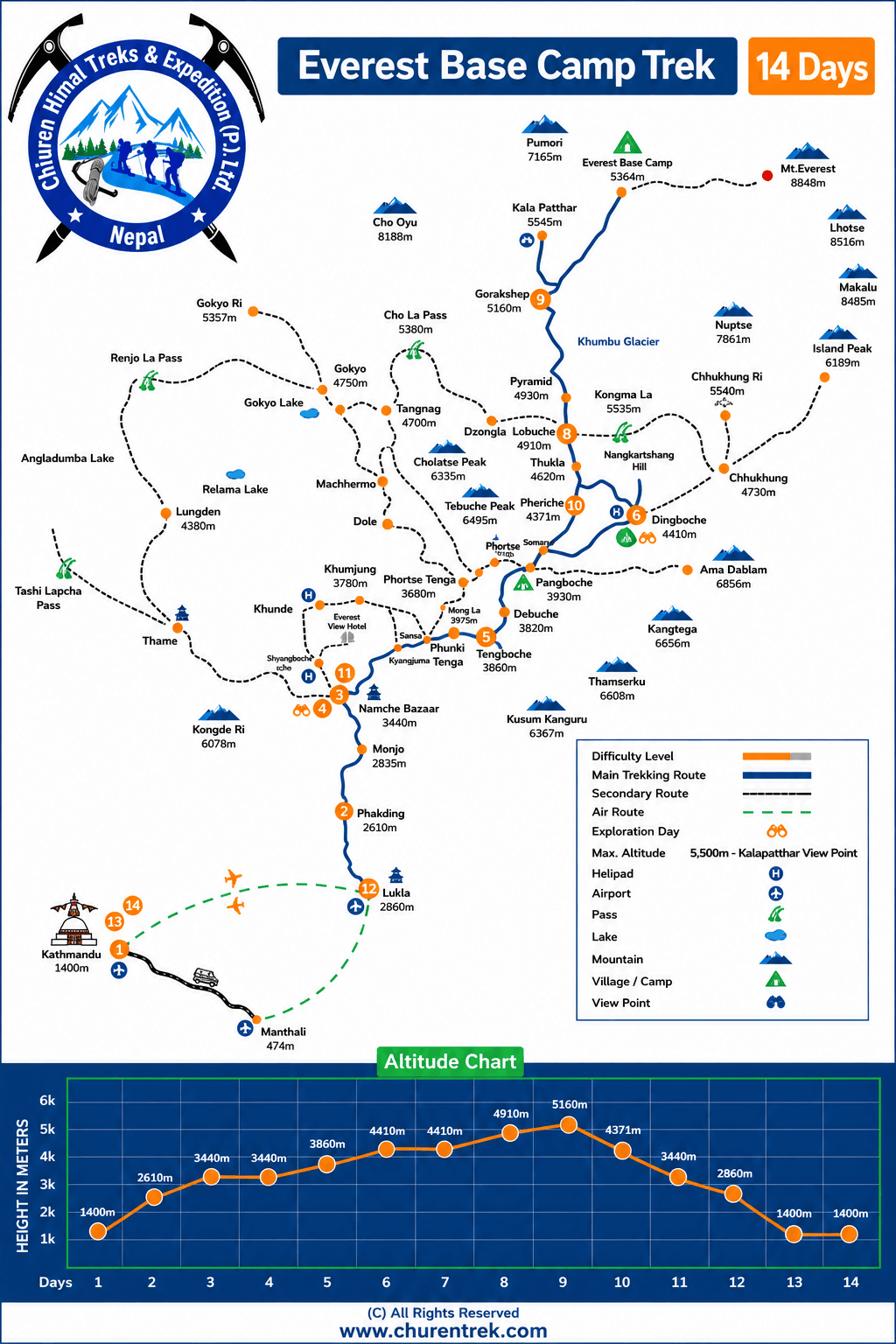
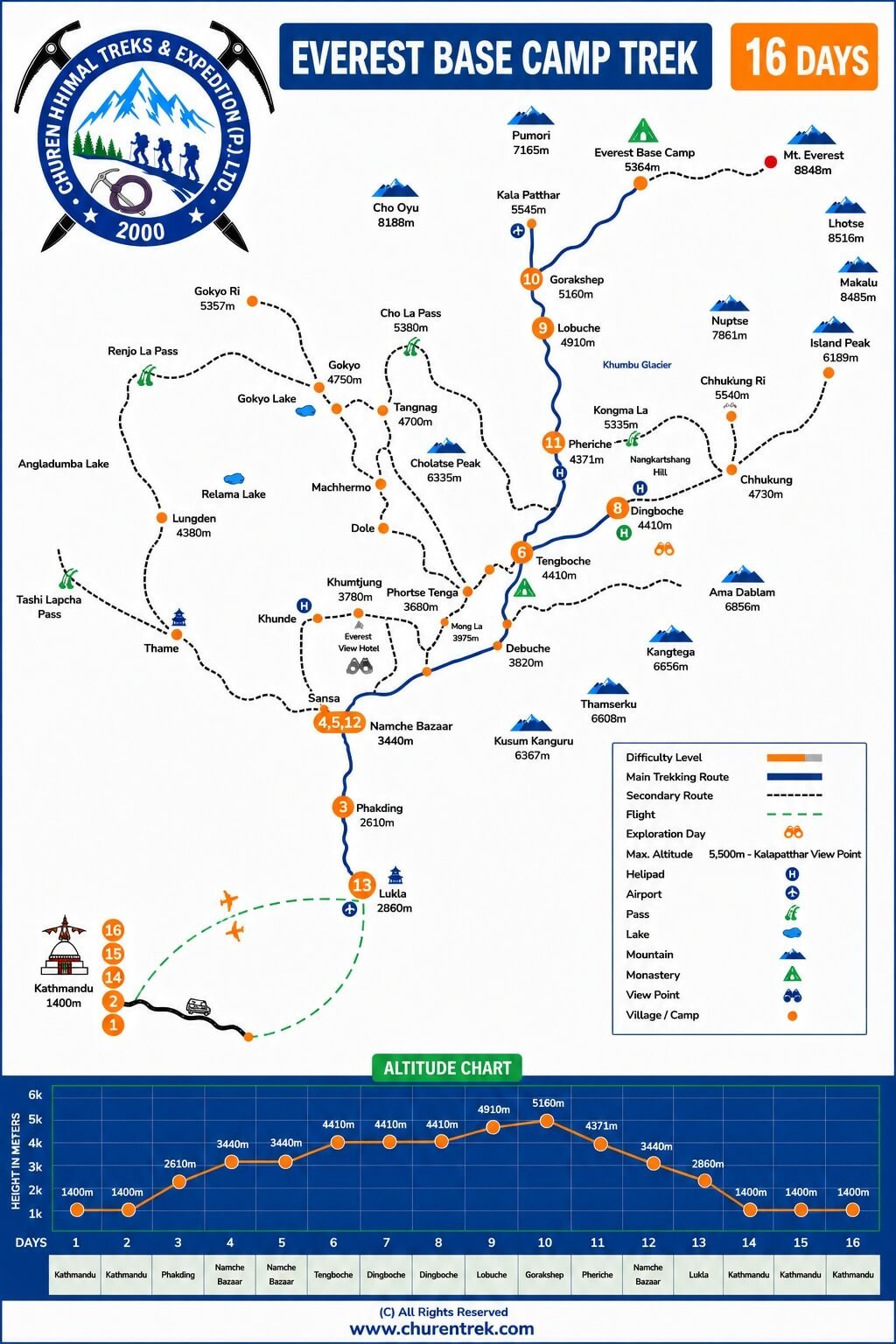
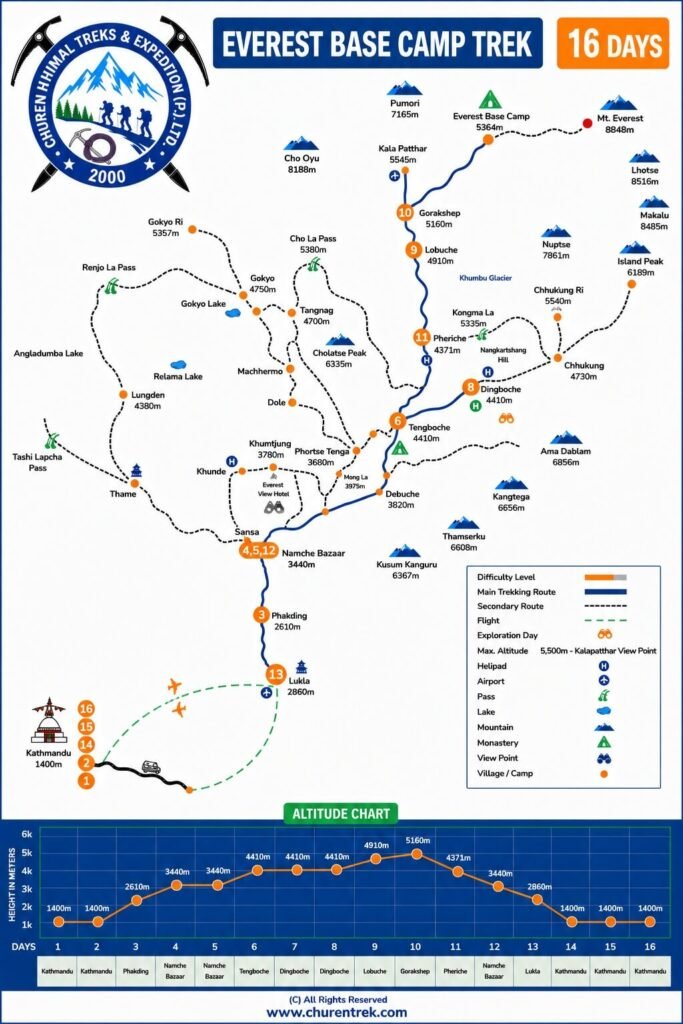
Everest Base Camp Trek Route Map
Everest Base Camp Trek – 16 Days route map
Everest Base Camp Trek Route Map Full Zoom View
Link copied to clipboard!
Price starts US$ 1720
1390 US$

We offer group discount

1 personUS$ 1590
2 peopleUS$ 1390
3 - 6 peopleUS$ 1350
7 - 10 peopleUS$ 1290
11 + peopleUS$ 1190
  • Best price guarantee
  • Secure & easy online booking
  • Flexible booking dates

Speak to an Expert

Sujan
Nepal 🇳🇵
WhatsApp +9779851233710

Annapurna Base Camp Trek Highlights

  • Reach Annapurna Base Camp at approximately 4,130m: Stand at the heart of the magnificent mountain basin surrounded by towering peaks.
  • Enter the Spectacular Annapurna Sanctuary: Walk into this high-glacial basin surrounded by a ring of majestic Himalayan mountains.
  • Close Views of Annapurna and Machhapuchhre: Enjoy breathtaking, close-up vistas of the Annapurna mountain range and the iconic Fishtail peak.
  • Trek Through Lush Forests: Journey along scenic paths lined with dense forests of rhododendron, oak, and other diverse Himalayan vegetation.
  • Experience Traditional Mountain Villages: Immerse yourself in local Himalayan culture by visiting authentic settlements along the foothills.
  • Walk Through Important Trail Settlements: Pass through key trekking stops including Sinuwa, Bamboo, Dovan, and Deurali.
  • Dramatic Landscape Changes: Witness the striking transition from subtropical green valleys to rugged high alpine terrain.
  • Experience Classic Teahouse Trekking: Stay overnight in local guesthouses and experience authentic hospitality unique to Nepal's trekking routes.
  • Relax at Natural Hot Springs: Unwind and soothe your muscles at the natural hot springs located near Jhinu Danda.
  • Enjoy Time in Pokhara: Spend relaxing days exploring Pokhara, one of Nepal's most popular and scenic lakeside tourism destinations.
  • Scenic Himalayan Foothills Travel: Travel through picturesque landscapes and winding roads between Kathmandu and Pokhara.
  • Stunning Sunrise and Mountain Colors: Experience magnificent sunrises and shifting mountain hues when weather and visibility permit.

Annapurna Base Camp Trek – 10 Days Overview

An unforgettable journey into the heart of the Annapurna Sanctuary.

The Annapurna Base Camp Trek – 10 Days is a classic Himalayan adventure that combines spectacular mountain scenery, traditional mountain villages, rhododendron forests and the unique experience of reaching Annapurna Base Camp at approximately 4,130 meters.

Starting in Kathmandu, the journey continues to Pokhara before entering the Annapurna trekking region. The trail passes through settlements and forests around Sinuwa, Bamboo, Dovan and Deurali before entering the dramatic Annapurna Sanctuary. From Annapurna Base Camp, trekkers can experience an impressive mountain amphitheater surrounded by peaks including Annapurna I and Machhapuchhre (Fishtail).

The 10-day itinerary is designed for travelers who want to experience Annapurna Base Camp within a relatively compact schedule while allowing time for the journey between Kathmandu and Pokhara. It combines road transportation, teahouse trekking and cultural experiences.

Churen Himal Treks and Expedition Pvt. Ltd. can arrange the trek with transportation, accommodation, permits, guide support and other services according to your chosen package.

Annapurna Base Camp Trek – 10 Days Itinerary

  • Day 01: Arrival in Kathmandu – 1,350m
    +

    Welcome to Nepal. Upon arrival at Tribhuvan International Airport, our representative will meet you and transfer you to your hotel in Kathmandu by private vehicle according to your group size.

    After check-in, you can rest or explore the surrounding area. If appropriate, your trekking briefing will cover the itinerary, equipment and practical preparations. In the evening, enjoy a welcome dinner at an authentic Nepalese restaurant with a traditional cultural performance.

    Duration: Arrival day
    Walking Distance: Minimal
    Elevation: 1,350m
    Meal: Welcome dinner
    Accommodation: 3-star hotel in Kathmandu
    Note: Welcome to Nepal. Upon arrival at Tribhuvan International Airport, our representative will meet you and transfer you to your hotel in Kathmandu by private vehicle according to your group size.
  • Day 02: Drive Kathmandu to Pokhara – 900m
    +

    After breakfast, travel from Kathmandu to Pokhara by tourist bus or appropriate road transportation. The journey follows Nepal's scenic hill roads, passing rivers, villages, agricultural land and changing landscapes.

    After arriving in Pokhara, check into your hotel and enjoy some time around the lakeside area. Pokhara provides a relaxed introduction to the Annapurna region before the trek begins.

    Transportation: Tourist bus/appropriate vehicle
    Distance: Approximately 200 km by road, depending on the route
    Duration: Approximately 6–8 hours, subject to road conditions
    Meal: Breakfast
    Accommodation: 3-star hotel in Pokhara
    Note: The journey follows Nepal's scenic hill roads, passing rivers, villages, agricultural land and changing landscapes.
  • Day 03: Drive from Pokhara to Jhinu – Trek to Lower Sinuwa
    +

    After breakfast, drive from Pokhara toward the Annapurna trekking trailhead. The exact roadhead can vary according to current road conditions and the chosen itinerary. From the starting point, begin trekking through mountain villages and forested sections toward the Sinuwa area.

    The trail gradually enters the Annapurna foothills, with views of surrounding hills and mountains where weather permits. Continue to Lower Sinuwa or the selected overnight settlement.

    Walking Distance: Approximately 6–8 km
    Walking Time: Approximately 3–5 hours
    Elevation: Around 2,300–2,400m at Lower Sinuwa
    Elevation Gain: Approximately 500–650m from the roadhead, route dependent
    Meal: Breakfast, lunch and dinner
    Accommodation: Teahouse/guesthouse
    Note: The trail gradually enters the Annapurna foothills, with views of surrounding hills and mountains where weather permits.
  • Day 04: Lower Sinuwa to Deurali –3,200m
    +

    The trail continues deeper into the Annapurna Sanctuary approach. Walk through the forest toward Bamboo and Dovan, following the Modi Khola valley upstream.

    The landscape gradually becomes more alpine as you gain altitude. Continue through Himalayan forest and rocky sections toward Himalaya and Deurali. The day's climb is steady, making pacing and hydration important.

    Walking Distance: Approximately 11–12 km
    Walking Time: Approximately 6–7 hours
    Elevation: Approximately 3,200m
    Elevation Gain: Approximately 800–900m, depending on route
    Meal: Breakfast, lunch and dinner
    Accommodation: Teahouse/guesthouse
    Note: The day's climb is steady, making pacing and hydration important.
  • Day 05: Deurali to Annapurna Base Camp –4,130m
    +

    Today is one of the most memorable days of the trek. From Deurali, continue toward Machhapuchhre Base Camp and then into the spectacular Annapurna Sanctuary.

    The trail gradually climbs through high mountain terrain toward Annapurna Base Camp. At approximately 4,130m, the surrounding Himalayan peaks create an impressive natural amphitheater. Weather permitting, enjoy views of Annapurna and Machhapuchhre before spending the night at ABC.

    Walking Distance: Approximately 10–12 km
    Walking Time: Approximately 6–7 hours
    Elevation: Approximately 4,130m
    Elevation Gain: Approximately 900m
    Meal: Breakfast, lunch and dinner
    Accommodation: Teahouse/guesthouse at ABC, subject to availability
    Note: Weather permitting, enjoy views of Annapurna and Machhapuchhre before spending the night at ABC.
  • Day 06: Annapurna Base Camp to Dovan –2,600m
    +

    Wake early if weather and conditions allow to experience the changing morning light over the Annapurna Sanctuary. After breakfast, begin the long descent from Annapurna Base Camp.

    Retrace the trail through the sanctuary toward Deurali, Himalaya and Dovan. Descending at a controlled pace helps reduce unnecessary strain on the knees and allows you to enjoy the changing landscape.

    Walking Distance: Approximately 12–14 km
    Walking Time: Approximately 6–8 hours
    Elevation Loss: Approximately 1,500m
    Meal: Breakfast, lunch and dinner
    Accommodation: Teahouse/guesthouse in Dovan
    Note: Wake early if weather and conditions allow to experience the changing morning light over the Annapurna Sanctuary.
  • Day 07: Dovan to Jhinu Danda –1,780m
    +

    Continue descending through forest and mountain settlements toward Jhinu Danda. The trail follows the Modi Khola valley before reaching the lower elevations around Jhinu.

    Jhinu Danda is particularly popular for its natural hot springs. If time, weather and local conditions permit, you can visit the hot springs and relax after several days of trekking.

    Walking Distance: Approximately 11–13 km
    Walking Time: Approximately 5–7 hours
    Elevation: Approximately 1,780m
    Elevation Loss: Approximately 800m, with additional trail undulations
    Meal: Breakfast, lunch and dinner
    Accommodation: Teahouse/guesthouse
    Note: If time, weather and local conditions permit, you can visit the hot springs and relax after several days of trekking.
  • Day 08: Drive Jhinu Danda to Pokhara –900m
    +

    After breakfast, travel by road from the Jhinu area toward Pokhara. Road conditions and the exact pickup point can influence the journey time, so the schedule should remain flexible.

    Upon reaching Pokhara, check into your hotel and enjoy free time. You may relax around Lakeside, enjoy a meal overlooking Phewa Lake or simply recover after the trek.

    Transportation: Private/shared road transportation
    Duration: Approximately 3–4 hours, depending on road and pickup conditions
    Meal: Breakfast
    Accommodation: 3-star hotel in Pokhara
    Note: Road conditions and the exact pickup point can influence the journey time, so the schedule should remain flexible.
  • Day 09: Drive Pokhara to Kathmandu –1,350m
    +

    After breakfast, travel back to Kathmandu by tourist bus or appropriate transportation. The journey follows Nepal's hill roads and provides another opportunity to see rural settlements, rivers and countryside.

    After arriving in Kathmandu, transfer to your hotel and enjoy your final evening in Nepal. Depending on your schedule, you can shop for souvenirs or relax before your international departure.

    Transportation: Tourist bus/appropriate vehicle
    Duration: Approximately 7–8 hours, subject to traffic and road conditions
    Meal: Breakfast
    Accommodation: 3-star hotel in Kathmandu
    Note: The journey follows Nepal's hill roads and provides another opportunity to see rural settlements, rivers and countryside.
  • Day 10: Final Departure
    +

    Enjoy breakfast at the hotel according to your departure schedule. After checkout, our representative will transfer you to Tribhuvan International Airport in a private vehicle appropriate for your group.

    Please allow sufficient time for airport formalities and international departure procedures. We hope your Annapurna Base Camp journey has been filled with memorable mountain landscapes, cultural encounters and rewarding trekking experiences.

    Thank you for travelling with Churen Himal Treks and Expedition Pvt. Ltd. We look forward to welcoming you again for another Himalayan adventure.

    Transportation: Private airport transfer
    Meal: Breakfast, where applicable
    Accommodation: Not included after departure
    Note: Please allow sufficient time for airport formalities and international departure procedures.

Cost Includes

  • Airport Pick-Up & Drop : Airport - Hotel transfers – Airport (Pick Up and Drop) by private Car/Van/Bus as per group size.
  • Accommodation in Kathmandu : 2 nights hotel (3-star category) in Kathmandu – Sharing twin Bedroom on BB Plan.
  • Accommodation in Pokhara : 2 nights hotel (3-star category) in Pokhara – Sharing twin Bedroom on BB Plan.
  • Welcome Dinner : 1 complementary Welcome dinner in a typical Nepali restaurant with a cultural program in Kathmandu.
  • Permits : All necessary paper works: Annapurna Conservation area permit, TIMS Card & conservation entry fee.
  • Insurance : Insurance for all involved Nepalese staff during the trek (Guide, Assitance guide, porter & driver).
  • Map : Annapurna Region Trekking map.
  • Member Transportation : Land Transportation: Drive from Kathmandu to Pokhara and while returning Pokhara to Kathmandu (by tourist vehicles). Drive-by private/tourist vehicle: Pokhara – Jhinu – Pokhara.
  • Member Luggage : Up to 13 Kg per member for personal baggage during the trek carrying by porters.
  • Foods & Lodging : Food 3 meals a day (BLD; including tea and coffee) along with accessible accommodation at tea houses/lodges during the trek.
  • Guide : Local government-licensed Guide (English speaking) during the trek and sight-seeing in Kathmandu valley.
  • Porter : A Strong helpful porter with proper equipment (2 trekkers: 1 porter) during the trek.
  • Staff Salary & Allowance : All Nepalese staff & porter’s daily wages, salary, equipment, food & clothing.
  • Medical Kit : Comprehensive Medical kit.
  • Complimentary Services From Churen Himal : Oximeter to check your pulse, oxygen saturation, and heart rate, Daily seasonal fruits for dessert, Churen Himal Duffle Bag for the Trek, Churen Himal Trekking T-Shirt or Cap, oxygen bottle on hand in an emergency (in group) Satellite phone for emergency.
  • Certificate : Adventure certificate & Token of Love after successful trekking.

Cost Excludes

  • International Airfare : International flight airfare (from and to Kathmandu).
  • Nepal Visa Fees : 15 Days – 30 USD, 30 Days – 50 USD & 90 Days – 125 USD.
  • Lunch & Dinner : Lunch & dinner during the stay in Kathmandu & Pokhara (also in case of early return from Trekking than the scheduled itinerary).
  • Extra Nights in Kathmandu & Pokhara : Extra nights’ accommodation in Kathmandu & Pokhara. In case of early arrival or late departure, early return from Trekking (due to any reason) than the scheduled itinerary.
  • Insurance : Travel and high altitude insurance, accident, medical & emergency evacuation.
  • Rescue Evacuation : Medical Insurance and emergency rescue evacuation cost if required. (Rescue, Repatriation, Medication, Medical Tests, and Hospitalization costs.)
  • Personal Expenses : Telephone calls, Internet, Toiletries, battery recharge, hot shower, laundry, soft drinks, beer, and any alcoholic beverages.
  • Personal Equipment : Clothing, Packing Items or Bags, Personal Medical Kit, Personal Trekking Gears, etc.
  • Toiletries : Soaps, shampoos, toilet and tissue papers, toothpaste, and other items used to keep yourself clean.
  • Filming : Special Filming, Camera, and Drone permit fee.
  • Internet Service : Internet facility during the trek is not included.
  • Extra Porter : $20 USD for an extra porter per day (If an extra porter is demanded).
  • Tips : Tipping is a culture in Nepal and is expected by your staff (guides, porters, drivers).
  • Extra : Any other services or activities, which are not mentioned in the itinerary. Any other item not listed in the “Cost Includes” section.

Departure Dates

Starting Date End Date Availability Price

Trip Information

Annapurna Base Camp Trek Difficulty

The Annapurna Base Camp Trek is generally considered a moderate-to-challenging trek, mainly because of repeated elevation gains, long walking days and the maximum altitude of approximately 4,130m.

You do not need advanced mountaineering skills. However, good cardiovascular fitness, regular walking practice and preparation for sustained uphill and downhill hiking are strongly recommended.

The most demanding aspects include:

  • Long trekking days
  • Repeated uphill and downhill sections
  • Walking at elevations above 3,000m
  • The ascent from Deurali toward ABC
  • The descent from ABC to lower elevations
  • Variable weather
  • Basic mountain accommodation

Is ABC suitable for beginners?

Yes, the trek can be suitable for physically fit beginners with appropriate preparation and a sensible pace. Previous high-altitude trekking experience is helpful but not essential.

Beginners should train by walking regularly, preferably including hills or stairs, and should become comfortable with several hours of continuous walking.

Best Time for Annapurna Base Camp Trek

There is no single season that is perfect for every trekker. Spring, autumn, winter and monsoon each offer different advantages and challenges.

  • Spring – March to May: Spring generally brings warmer conditions at lower elevations and blooming rhododendrons. Mountain visibility can be good, although clouds may develop later in the day.
    • Rhododendron flowers
    • Pleasant lower-altitude temperatures
    • Increasingly favorable trekking conditions
    • Good mountain scenery in suitable weather
  • Autumn – September to November: Autumn is traditionally a popular trekking period following the monsoon. Clearer skies can provide excellent mountain views.
    • Generally stable conditions
    • Good mountain visibility
    • Comfortable trekking temperatures at lower elevations
    • Popular trekking atmosphere
  • Winter – December to February: Winter can provide clear mountain views, but temperatures can be very cold at higher elevations. Snow and icy trail sections may affect the route.
    Consider if: you are properly equipped for cold conditions and prepared for changing high-altitude weather.
  • Monsoon – June to August: Monsoon brings frequent rainfall, cloudy conditions and potentially muddy or slippery trails. Road travel can also be affected by rain.
    However, some experienced trekkers still travel during this season, particularly with flexible planning.

Annapurna Base Camp Trek Permits

Trekkers entering the Annapurna Conservation Area need the applicable Annapurna Conservation Area Permit (ACAP).

Depending on current regulations, trekking registration/TIMS requirements may also apply.

Because permit rules, fees and registration procedures can change, travelers should confirm the current requirements before departure. Churen Himal Treks can assist with the applicable permit and registration process for an organized trek.

Documents commonly required

Depending on the current regulations and application process, travelers may need:

  • Passport
  • Passport details
  • Passport photographs where required
  • Trekking registration information
  • Emergency/contact information

Important: Current permit fees and TIMS rules should be verified immediately before publication and booking rather than relying on outdated online information.

Accommodation During the Trek

The Annapurna Base Camp Trek combines city hotels with mountain teahouses.

  • Kathmandu: Accommodation is arranged in a suitable 3-star hotel, according to the selected package and availability.
  • Pokhara: A 3-star hotel provides accommodation before and after the trekking section.
  • Mountain Teahouses: During the trek, accommodation is generally in local teahouses or guesthouses. Rooms are usually simple, particularly at higher elevations.
    Facilities can include:
    • Twin-sharing rooms
    • Shared bathrooms
    • Dining rooms
    • Electricity where available
    • Charging facilities where available
    • Wi-Fi in some settlements
    • Hot showers in some locations for an additional charge
    Facilities become increasingly basic as altitude and remoteness increase.

Food and Drinks

Meals during the trek are generally available at local teahouses.

Common choices include:

  • Dal bhat
  • Rice and vegetable dishes
  • Noodles
  • Pasta
  • Soups
  • Tibetan-style bread
  • Eggs
  • Potatoes
  • Pancakes
  • Momo
  • Seasonal vegetables

Vegetarian meals are widely available.

Drinking Water

Hydration is especially important during a high-altitude trek. Trekkers can use bottled water where available or refill reusable bottles using suitable treated/filtered water.

Carry a reusable water bottle or hydration system and use water-purification tablets, a filter or another appropriate treatment method when necessary.

Tea and coffee are also commonly available at teahouses.

Transportation

The 10-day itinerary combines road transportation and trekking.

  • Kathmandu Airport Transfer: A private vehicle transfers you between Tribhuvan International Airport and your hotel.
  • Kathmandu to Pokhara: The standard itinerary uses tourist bus or appropriate road transportation. Travel time is commonly around 6–8 hours but can vary significantly with traffic, road conditions and weather.
  • Pokhara to Trek Starting Point: A road journey takes you from Pokhara toward the selected trailhead. The exact pickup and drop-off point may change depending on road conditions and the itinerary selected.
  • Jhinu to Pokhara: Road transportation connects the lower Annapurna trail area with Pokhara. Actual travel time depends on the road and pickup location.
  • Pokhara to Kathmandu: The return journey is normally by tourist bus or another suitable vehicle.
  • Flights: Travelers who prefer to reduce road travel may consider domestic flights between Kathmandu and Pokhara when available and appropriate. Flight schedules, fares and weather-related disruptions should be confirmed before travel.

Annapurna Base Camp Trek Packing List

A practical packing list should balance warmth, weather protection and keeping your backpack manageable.

  • Essential Clothing: Moisture-wicking base layers, fleece or insulating layer, warm jacket, waterproof jacket, trekking trousers, thermal layers, warm hat, gloves, sun hat.
  • Footwear: Comfortable trekking boots, trekking socks, lightweight camp shoes or sandals.
  • Trekking Equipment: Daypack, duffel bag where porter service is included, trekking poles, headlamp, sleeping bag suitable for expected temperatures, water bottles or hydration bladder.
  • Personal Items: Sunglasses, sunscreen, lip balm, personal toiletries, first-aid supplies, personal medication, passport and required documents, power bank, small towel.

Pack according to the season and current weather forecast.

Guide and Support Staff

A professional local guide can significantly improve the trekking experience by providing route knowledge, logistical assistance and practical support.

A guide can help with:

  • Route navigation
  • Daily trekking coordination
  • Teahouse arrangements
  • Communication with local accommodation providers
  • Pace management
  • Altitude awareness
  • Emergency coordination
  • Local cultural interpretation

Porters can also help carry luggage, allowing trekkers to focus on walking and enjoying the trail.

The exact guide-to-client ratio and porter arrangements should be confirmed with the selected package before booking.

Safety and Altitude Considerations

Annapurna Base Camp reaches approximately 4,130m, so altitude should be taken seriously.

  • Walk at a Sustainable Pace: Avoid rushing uphill. A steady pace helps conserve energy and makes it easier to monitor how your body is responding to elevation.
  • Stay Hydrated: Drink regularly throughout the day. Dehydration can make trekking at altitude more difficult.
  • Recognize Symptoms: Possible symptoms of altitude-related illness can include: headache, nausea, dizziness, unusual tiredness, loss of appetite, difficulty sleeping. Symptoms that worsen or become serious should never be ignored.
  • Tell Your Guide: If you feel unwell at altitude, inform your guide immediately. Continuing higher despite worsening symptoms can be dangerous.
  • Weather: Mountain weather can change quickly. Carry appropriate waterproof and warm clothing even when the morning forecast appears favorable.
  • Travel Insurance: Comprehensive travel insurance covering trekking and emergency evacuation is strongly recommended. Check the policy carefully for altitude limits and trekking conditions.

Why Trek Annapurna Base Camp with Churen Himal Treks and Expedition?

Churen Himal Treks and Expedition Pvt. Ltd. provides trekking and expedition services in Nepal with a focus on practical planning and responsible Himalayan travel.

When arranging an Annapurna Base Camp Trek, the company can assist with:

  • Trek itinerary planning
  • Airport transfers
  • Kathmandu and Pokhara accommodation
  • Trekking permits
  • Local guide arrangements
  • Porter/support arrangements
  • Transportation
  • Teahouse coordination
  • Trekking preparation advice
  • Custom itinerary planning

The itinerary can also be discussed according to your available time, fitness level, travel preferences and group requirements.

For current availability and personalized arrangements:

Churen Himal Treks and Expedition Pvt. Ltd.
Website: https://www.churentrek.com
Email: info@churentrek.com

Price starts US$ 1720
1390 US$

We offer group discount

1 personUS$ 1590
2 peopleUS$ 1390
3 - 6 peopleUS$ 1350
7 - 10 peopleUS$ 1290
11 + peopleUS$ 1190
  • Best price guarantee
  • Secure & easy online booking
  • Flexible booking dates

Speak to an Expert

Sujan
Nepal 🇳🇵
WhatsApp +9779851233710

FAQs for Everest Base Camp Trek – 16 Days

FAQs for Everest Base Camp Trek – 16 Days

ℹ️ General

+
➔
What is the Everest Base Camp Trek and why is it popular?
It is a world-famous 14-day Himalayan adventure taking you to the base of Mt. Everest through ancient Sherpa villages and stunning landscapes.
➔
How difficult is the Everest Base Camp Trek?
The trek is moderately challenging, requiring good physical stamina for multi-day walking but no technical climbing skills.
➔
How many days does the trek take in total?
The standard Everest Base Camp Trek itinerary offered by Glorious Eco Trek Nepal takes 14 days in total.
➔
Is prior trekking experience necessary for this trip?
No prior trekking experience is mandatory as long as you are healthy, motivated, and in good physical condition.
➔
Can solo travelers join a group trek?
Yes, solo travelers can join our organized group departures or trek with a dedicated personal guide.

🏋️ Preparation & Fitness

+
➔
Is the Everest Base Camp Trek physically challenging?
Yes, walking 5 to 7 hours daily over steep mountain terrain at high altitudes tests your endurance.
➔
Do I need to train before doing the Everest Base Camp Trek?
Yes, pre-trip physical conditioning makes the journey significantly more comfortable and enjoyable.
➔
How many weeks should I train before the EBC trek?
We recommend beginning cardiovascular and endurance training at least 8 to 12 weeks before your trip.
➔
What is the best way to prepare for the Everest Base Camp Trek?
Focus on aerobic workouts like running and swimming alongside stair-climbing with a weighted daypack.
➔
How can I acclimatize to high altitude faster?
Walk at a steady, slow pace, drink 3-4 liters of water daily, avoid alcohol, and strictly follow our rest day schedules.
➔
How many hours will I walk each day during the EBC trek?
You will walk an average of 5 to 7 hours each day depending on the distance between teahouses.
➔
Can first-time trekkers do the Everest Base Camp Trek?
Yes, motivated first-time trekkers with a basic fitness foundation successfully complete the trek every year.

🪪 Permits

+
➔
What permits are required for the Everest Base Camp Trek?
You need the Sagarmatha National Park Entry Permit and the Khumbu Pasang Lhamu Rural Municipality Permit.
➔
Will Glorious Eco Trek Nepal arrange all the necessary permits?
Yes, our team handles all paperwork and arranges all required permits for you.

🛂 Insurance & Visa

+
➔
Do I need travel insurance for the Everest Base Camp Trek?
Yes, travel insurance is strictly mandatory for all trekkers on this expedition.
➔
How do I get a tourist visa for Nepal?
You can fill out the online pre-visa form or apply directly upon arrival at Kathmandu Airport.
➔
Can I get a visa on arrival at the airport?
Yes, tourist visas on arrival are available at Tribhuvan International Airport for most nationalities.
➔
What should the insurance cover for trekking in Nepal?
Your policy must specifically cover high-altitude medical treatment and emergency helicopter evacuation up to 6,000 meters.

💂 Guides & Support Staff

+
➔
Will I have a guide and porter during the trek?
Yes, our standard trip package includes a licensed local guide and helpful porters.
➔
What are the qualifications of your trekking guides?
Our guides are government-certified professionals trained in wilderness first aid and emergency response.
➔
Do the guides speak English?
Yes, all of our guides speak fluent English to ensure seamless communication.
➔
Will porters carry my luggage during the trek?
Yes, porters carry your main heavy duffel bag so you only carry a small, light daypack.
➔
Is tipping guides and porters expected?
Tipping is a traditional way in Nepal to express gratitude to support staff for their hard work.
➔
Can I trek to Everest Base Camp without a guide?
No, current government regulations mandate that all foreign trekkers must be accompanied by a licensed guide.

🛏️ Accommodation and Facilities

+
➔
What kind of accommodation is provided during the trek?
You will stay in traditional, cozy mountain teahouses featuring twin-share bedrooms and a central heated dining room.
➔
Are hot showers and Wi-Fi available along the trail?
Yes, hot showers and Wi-Fi access cards are available at most teahouses for a small extra fee.
➔
Will I get a private room or have to share?
Rooms are structured as twin-sharing for two travelers, though private single rooms can be arranged upon request when available.
➔
Can I charge my phone and devices during the trek?
Yes, charging stations are available in teahouse dining rooms for a nominal hourly rate.
➔
Are toilets available throughout the trek?
Shared indoor toilets are provided in teahouses, ranging from standard Western seats to traditional squat toilets.

🍲 Food and Drinks

+
➔
What kind of food is available during the trek?
Teahouse menus offer fresh meals like traditional Nepali Dal Bhat, soups, fried rice, noodles, eggs, and pasta.
➔
Are vegetarian or vegan meals available?
Yes, vegetarian and vegan choices are widely available and recommended for optimal health at altitude.
➔
Is it safe to drink the water during the trek?
Untreated tap water is unsafe; always drink boiled teahouse water or use purification tablets/UV filters.
➔
Can I buy snacks and drinks along the way?
Yes, small village shops along the path sell bottled drinks, snacks, and chocolate bars.

🌤️ Weather & Seasons

+
➔
What is the best time to do the Everest Base Camp Trek?
Spring (March to May) and Autumn (September to November) offer clear skies and ideal temperatures.
➔
Can I trek during the monsoon or winter season?
Trekking is possible in winter or monsoon, but involves colder conditions, snow, or rain and potential flight delays.
➔
What kind of weather can I expect during the trek?
Daytime walking weather is typically pleasant, but night temperatures drop below freezing at high altitudes.

🩺 Health & Safety

+
➔
What happens if I get sick or injured during the trek?
Your guide will provide immediate first aid, arrange descent if needed, or summon a rescue helicopter for emergency transport.
➔
How do you handle altitude sickness?
We monitor oxygen levels daily, carry emergency first-aid supplies, and enforce immediate descent if severe symptoms appear.
➔
Are there health posts or clinics along the route?
Yes, basic medical posts operate at Namche Bazaar and Pheriche to assist ill or injured trekkers.
➔
Is the trek safe for solo female travelers?
Yes, Nepal is very welcoming, and trekking with our vetted licensed guides guarantees safety and security.
➔
Do I need to bring medicines for the Everest Base Camp Trek?
Yes, pack personal items like Diamox (for altitude), pain relievers, rehydration salts, and blister treatments.

🎒 Packing & Gear

+
➔
What should I pack for the Everest Base Camp Trek?
Key items include thermal clothing layers, a heavy down jacket, broken-in trekking boots, gloves, and a sleeping bag.
➔
Is a sleeping bag necessary?
Yes, a sub-zero rated sleeping bag (-10°C to -15°C) is essential as teahouse rooms are unheated at night.
➔
Where can I keep my extra luggage during the trek?
You can store non-trekking travel luggage for free at your hotel in Kathmandu before heading out.
➔
What is the luggage weight limit for the Lukla flight?
The domestic Lukla flight weight limit is 15 kg total (10 kg main bag + 5 kg hand carry).
➔
How much weight can a porter carry?
A single porter carries up to 25 kg total, usually splitting weight between two trekkers (12.5 kg per person).
➔
Where can I buy trekking clothes and gear?
You can easily buy or rent all essential gear at affordable prices in the Thamel district of Kathmandu.

💳 Booking & Payment

+
➔
What is the booking process and payment method for the Everest Base Camp Trek?
You can reserve online with an advance deposit via card or wire transfer, paying the remaining balance in Kathmandu.
➔
Is there a cancellation or refund policy?
Yes, we provide flexible cancellation policies clearly outlined in our booking agreement terms.
➔
What currency should I carry for expenses along the Everest Base Camp trek?
Carry local Nepali Rupees (NPR) cash for trail purchases as foreign currencies are rarely accepted.
➔
Can I use ATMs or credit cards during the trek?
ATMs on the trail are unreliable and cards are rarely accepted, so carrying cash from Kathmandu is mandatory.
➔
Are there money exchange services in the Everest Base Camp region?
Money exchange services are available in Namche Bazaar but offer lower rates than Kathmandu banks.
➔
How much extra money should I budget per day during the trek?
Budget roughly $15 to $25 per day for extra personal expenses like hot drinks, snacks, showers, and battery charging.
➔
Can I book the Everest Base Camp trek if I’m traveling with children?
Yes, healthy children can join provided you arrange a customized, slower-paced itinerary for safety.
➔
Should I book the trek well in advance?
Yes, booking 3 to 6 months in advance ensures guaranteed Lukla flight tickets and premium teahouse rooms.

🛫 Transportation & Flight

+
➔
Do you provide airport pick-up and drop-off services?
Yes, private airport pickup and drop-off transfers are included in our package.
➔
How do I get to the starting point of the trek?
You reach the trail's starting point via a scenic mountain flight to Lukla Airport.
➔
Is the flight to Lukla safe?
Yes, Lukla flights are operated by highly experienced mountain pilots who fly only in clear, safe weather.
➔
What happens if my Lukla flight is delayed or canceled?
Flight schedules shift to the next clear day or alternative helicopter rides can be organized if requested.
➔
What is the mode of transportation to reach Everest Base Camp?
After landing in Lukla, the remaining journey to Base Camp and back is completed entirely on foot.
Churen Trek - Mobile FAQs

ℹ️ General

+
What is the Everest Base Camp Trek and why is it popular?
It is a world-famous 14-day Himalayan adventure taking you to the base of Mt. Everest through ancient Sherpa villages and stunning landscapes.
+
How difficult is the Everest Base Camp Trek?
The trek is moderately challenging, requiring good physical stamina for multi-day walking but no technical climbing skills.
+
How many days does the trek take in total?
The standard Everest Base Camp Trek itinerary offered by Glorious Eco Trek Nepal takes 14 days in total.
+
Is prior trekking experience necessary for this trip?
No prior trekking experience is mandatory as long as you are healthy, motivated, and in good physical condition.
+
Can solo travelers join a group trek?
Yes, solo travelers can join our organized group departures or trek with a dedicated personal guide.

🏋️ Preparation & Fitness

+
Is the Everest Base Camp Trek physically challenging?
Yes, walking 5 to 7 hours daily over steep mountain terrain at high altitudes tests your endurance.
+
Do I need to train before doing the Everest Base Camp Trek?
Yes, pre-trip physical conditioning makes the journey significantly more comfortable and enjoyable.
+
How many weeks should I train before the EBC trek?
We recommend beginning cardiovascular and endurance training at least 8 to 12 weeks before your trip.
+
What is the best way to prepare for the Everest Base Camp Trek?
Focus on aerobic workouts like running and swimming alongside stair-climbing with a weighted daypack.
+
How can I acclimatize to high altitude faster?
Walk at a steady, slow pace, drink 3-4 liters of water daily, avoid alcohol, and strictly follow our rest day schedules.
+
How many hours will I walk each day during the EBC trek?
You will walk an average of 5 to 7 hours each day depending on the distance between teahouses.
+
Can first-time trekkers do the Everest Base Camp Trek?
Yes, motivated first-time trekkers with a basic fitness foundation successfully complete the trek every year.

🪪 Permits

+
What permits are required for the Everest Base Camp Trek?
You need the Sagarmatha National Park Entry Permit and the Khumbu Pasang Lhamu Rural Municipality Permit.
+
Will Glorious Eco Trek Nepal arrange all the necessary permits?
Yes, our team handles all paperwork and arranges all required permits for you.

🛂 Insurance & Visa

+
Do I need travel insurance for the Everest Base Camp Trek?
Yes, travel insurance is strictly mandatory for all trekkers on this expedition.
+
How do I get a tourist visa for Nepal?
You can fill out the online pre-visa form or apply directly upon arrival at Kathmandu Airport.
+
Can I get a visa on arrival at the airport?
Yes, tourist visas on arrival are available at Tribhuvan International Airport for most nationalities.
+
What should the insurance cover for trekking in Nepal?
Your policy must specifically cover high-altitude medical treatment and emergency helicopter evacuation up to 6,000 meters.

💂 Guides & Support Staff

+
Will I have a guide and porter during the trek?
Yes, our standard trip package includes a licensed local guide and helpful porters.
+
What are the qualifications of your trekking guides?
Our guides are government-certified professionals trained in wilderness first aid and emergency response.
+
Do the guides speak English?
Yes, all of our guides speak fluent English to ensure seamless communication.
+
Will porters carry my luggage during the trek?
Yes, porters carry your main heavy duffel bag so you only carry a small, light daypack.
+
Is tipping guides and porters expected?
Tipping is a traditional way in Nepal to express gratitude to support staff for their hard work.
+
Can I trek to Everest Base Camp without a guide?
No, current government regulations mandate that all foreign trekkers must be accompanied by a licensed guide.

🛏️ Accommodation and Facilities

+
What kind of accommodation is provided during the trek?
You will stay in traditional, cozy mountain teahouses featuring twin-share bedrooms and a central heated dining room.
+
Are hot showers and Wi-Fi available along the trail?
Yes, hot showers and Wi-Fi access cards are available at most teahouses for a small extra fee.
+
Will I get a private room or have to share?
Rooms are structured as twin-sharing for two travelers, though private single rooms can be arranged upon request when available.
+
Can I charge my phone and devices during the trek?
Yes, charging stations are available in teahouse dining rooms for a nominal hourly rate.
+
Are toilets available throughout the trek?
Shared indoor toilets are provided in teahouses, ranging from standard Western seats to traditional squat toilets.

🍲 Food and Drinks

+
What kind of food is available during the trek?
Teahouse menus offer fresh meals like traditional Nepali Dal Bhat, soups, fried rice, noodles, eggs, and pasta.
+
Are vegetarian or vegan meals available?
Yes, vegetarian and vegan choices are widely available and recommended for optimal health at altitude.
+
Is it safe to drink the water during the trek?
Untreated tap water is unsafe; always drink boiled teahouse water or use purification tablets/UV filters.
+
Can I buy snacks and drinks along the way?
Yes, small village shops along the path sell bottled drinks, snacks, and chocolate bars.

🌤️ Weather & Seasons

+
What is the best time to do the Everest Base Camp Trek?
Spring (March to May) and Autumn (September to November) offer clear skies and ideal temperatures.
+
Can I trek during the monsoon or winter season?
Trekking is possible in winter or monsoon, but involves colder conditions, snow, or rain and potential flight delays.
+
What kind of weather can I expect during the trek?
Daytime walking weather is typically pleasant, but night temperatures drop below freezing at high altitudes.

🩺 Health & Safety

+
What happens if I get sick or injured during the trek?
Your guide will provide immediate first aid, arrange descent if needed, or summon a rescue helicopter for emergency transport.
+
How do you handle altitude sickness?
We monitor oxygen levels daily, carry emergency first-aid supplies, and enforce immediate descent if severe symptoms appear.
+
Are there health posts or clinics along the route?
Yes, basic medical posts operate at Namche Bazaar and Pheriche to assist ill or injured trekkers.
+
Is the trek safe for solo female travelers?
Yes, Nepal is very welcoming, and trekking with our vetted licensed guides guarantees safety and security.
+
Do I need to bring medicines for the Everest Base Camp Trek?
Yes, pack personal items like Diamox (for altitude), pain relievers, rehydration salts, and blister treatments.

🎒 Packing & Gear

+
What should I pack for the Everest Base Camp Trek?
Key items include thermal clothing layers, a heavy down jacket, broken-in trekking boots, gloves, and a sleeping bag.
+
Is a sleeping bag necessary?
Yes, a sub-zero rated sleeping bag (-10°C to -15°C) is essential as teahouse rooms are unheated at night.
+
Where can I keep my extra luggage during the trek?
You can store non-trekking travel luggage for free at your hotel in Kathmandu before heading out.
+
What is the luggage weight limit for the Lukla flight?
The domestic Lukla flight weight limit is 15 kg total (10 kg main bag + 5 kg hand carry).
+
How much weight can a porter carry?
A single porter carries up to 25 kg total, usually splitting weight between two trekkers (12.5 kg per person).
+
Where can I buy trekking clothes and gear?
You can easily buy or rent all essential gear at affordable prices in the Thamel district of Kathmandu.

💳 Booking & Payment

+
What is the booking process and payment method for the Everest Base Camp Trek?
You can reserve online with an advance deposit via card or wire transfer, paying the remaining balance in Kathmandu.
+
Is there a cancellation or refund policy?
Yes, we provide flexible cancellation policies clearly outlined in our booking agreement terms.
+
What currency should I carry for expenses along the Everest Base Camp trek?
Carry local Nepali Rupees (NPR) cash for trail purchases as foreign currencies are rarely accepted.
+
Can I use ATMs or credit cards during the trek?
ATMs on the trail are unreliable and cards are rarely accepted, so carrying cash from Kathmandu is mandatory.
+
Are there money exchange services in the Everest Base Camp region?
Money exchange services are available in Namche Bazaar but offer lower rates than Kathmandu banks.
+
How much extra money should I budget per day during the trek?
Budget roughly $15 to $25 per day for extra personal expenses like hot drinks, snacks, showers, and battery charging.
+
Can I book the Everest Base Camp trek if I’m traveling with children?
Yes, healthy children can join provided you arrange a customized, slower-paced itinerary for safety.
+
Should I book the trek well in advance?
Yes, booking 3 to 6 months in advance ensures guaranteed Lukla flight tickets and premium teahouse rooms.

🛫 Transportation & Flight

+
Do you provide airport pick-up and drop-off services?
Yes, private airport pickup and drop-off transfers are included in our package.
+
How do I get to the starting point of the trek?
You reach the trail's starting point via a scenic mountain flight to Lukla Airport.
+
Is the flight to Lukla safe?
Yes, Lukla flights are operated by highly experienced mountain pilots who fly only in clear, safe weather.
+
What happens if my Lukla flight is delayed or canceled?
Flight schedules shift to the next clear day or alternative helicopter rides can be organized if requested.
+
What is the mode of transportation to reach Everest Base Camp?
After landing in Lukla, the remaining journey to Base Camp and back is completed entirely on foot.
💬

Reviews on Everest Base Camp Trek – 14 Days

🟢 225+ Tripadvisor Reviews 🟢🟢🟢🟢🟢
🌐 118+ Excellent Google Reviews ★★★★★
⭐ Based on 45 Reviews ★★★★★
Verified by Trustindex ⓘ
▶

Video Testimonials

Video Testimonial 1
▶
Video Testimonial 2
▶
🏔️ Churen Trek
▶
Video Testimonial 4
▶
US$ 1390 Per Person