Churen Trek

Confirmed Booked Group, You Can Join for 2026 & 2027 Know More

Annapurna Base Camp Trek - 15 Days

Duration

15 Days

Trip Difficulty

Moderate

Start/End Point

Kathmandu

Meals

Breakfast, Lunch, & Dinner

Max Altitude:

4,130m. / 13,550ft.

Group Size

2-15 People

Best Season

Mar, Apri, May, Sep, Oct, Nov & Dec

Accommodation

3 Star Hotel in KTM / Lodge / Tea House during the Trek
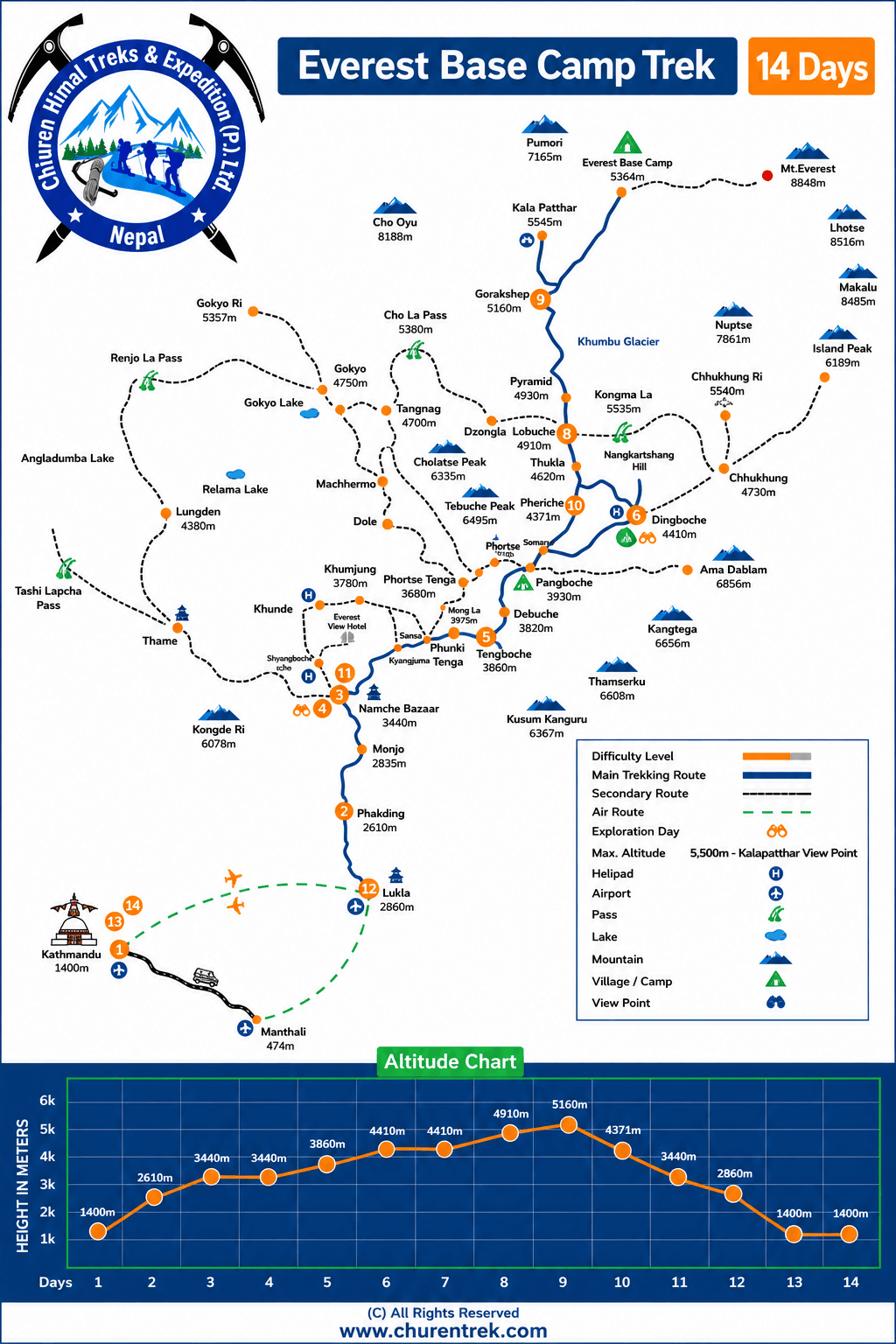
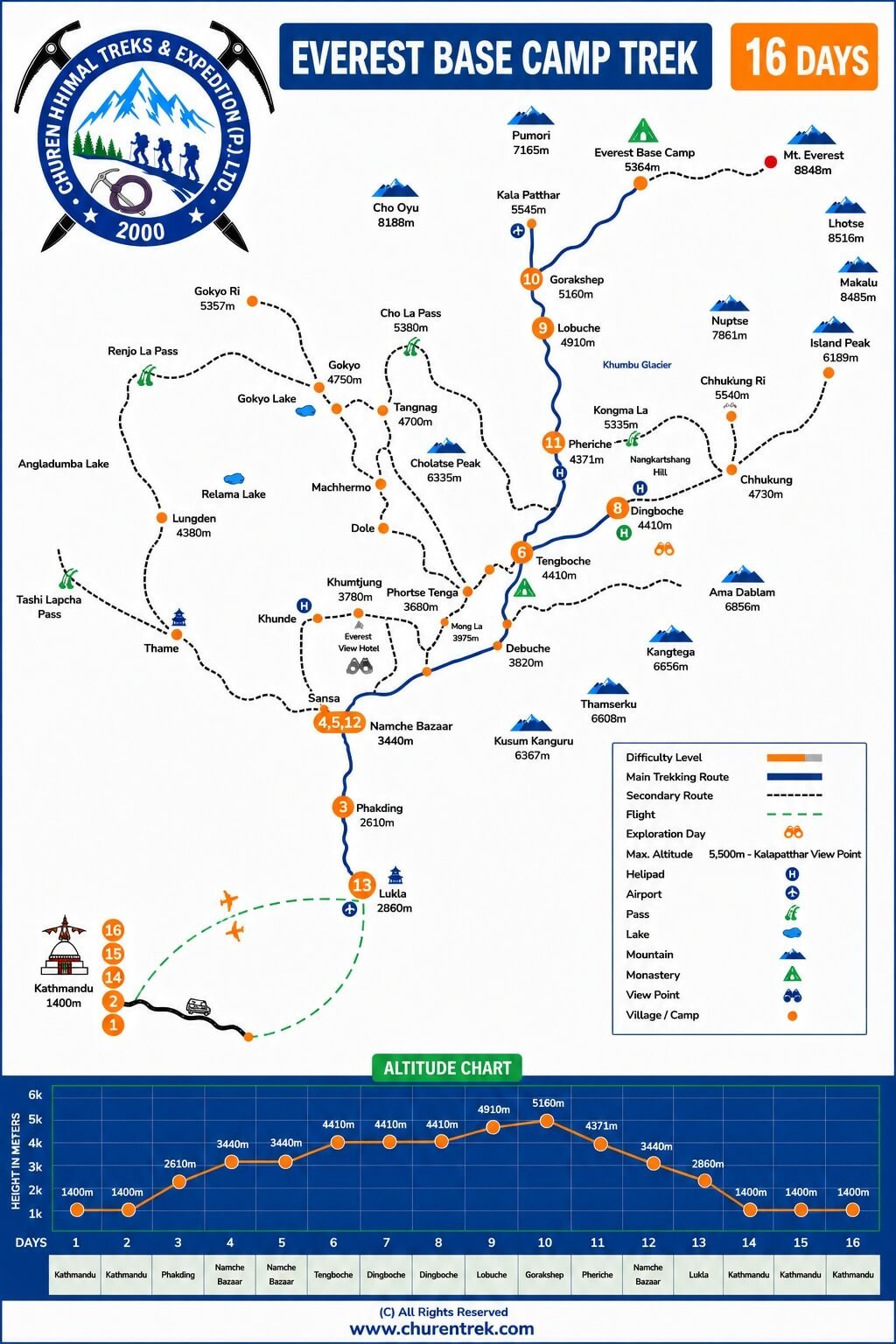
Everest Base Camp Trek Route Map
Annapurna Base Camp Trek 15 Days route map
Everest Base Camp Trek Route Map Full Zoom View
Link copied to clipboard!

Annapurna Base Camp Trek Highlights

  • Reach Annapurna Base Camp at 4,130m, the principal destination of the trek.
  • Experience Poon Hill at 3,223m, included on the route between Ghorepani and Tadapani.
  • See the dramatic Annapurna mountain panorama from different elevations.
  • Enjoy views toward Machhapuchhre (Fishtail), one of the region's most recognizable peaks.
  • Trek through landscapes associated with Annapurna South and Hiunchuli.
  • Enter the spectacular Annapurna Sanctuary, surrounded by high Himalayan peaks.
  • Walk through rhododendron and bamboo forests as the landscape changes with elevation.
  • Experience traditional mountain settlements including Ghorepani, Tadapani and Chhomrong.
  • Stay in the region's traditional teahouse and lodge environment, subject to availability.
  • Visit Jhinu, with an opportunity to experience its natural hot springs.
  • Experience the transition from Nepal's lower hills and valleys to high alpine terrain.
  • Combine the Himalayan trek with time in Kathmandu and Pokhara.

Annapurna Base Camp Trek – 15 Days Overview

The Annapurna Base Camp Trek – 15 Days is a Himalayan trekking itinerary that combines Kathmandu, Pokhara, traditional mountain villages, Poon Hill and the Annapurna Sanctuary before reaching Annapurna Base Camp at 4,130m. The supplied itinerary begins in Kathmandu, travels to Pokhara, enters the trekking region through Birethanti and Ulleri, and reaches ABC through Ghorepani, Tadapani, Chhomrong, Dovan and Deurali.

A 15-day schedule gives travelers time to experience both the cultural and natural sides of the journey. Along the route, trekkers encounter forested trails, Himalayan villages, changing landscapes, mountain views and the high-altitude environment of the Annapurna Sanctuary.

The itinerary also includes Poon Hill at 3,223m, the traditional villages of the Annapurna region, and a return through Bamboo and Jhinu before traveling back to Pokhara and Kathmandu.

Churen Himal Treks and Expedition Pvt. Ltd. offers this itinerary for travelers looking to explore the Annapurna region with a structured route and local trekking support.

Annapurna Base Camp Trek – 15 Days Details Itinerary

  • Day 01: Arrival in Kathmandu (1,350m)
    +

    Arrive at Tribhuvan International Airport in Kathmandu at 1,350m, where a Churen Himal representative welcomes you and arranges the transfer to your hotel. Airport transportation can be arranged by private car, van or bus according to group size.

    After check-in, take time to rest and settle in. In the evening, enjoy a welcome dinner at an authentic Nepalese restaurant accompanied by a traditional cultural performance, providing a warm introduction to Nepalese hospitality before the Annapurna journey begins.

    Duration & Distance: Arrival and transfer to hotel
    Height Difference (+/-): Not specified
    Meal: Welcome dinner with cultural performance
    Accommodation: 3-star hotel in Kathmandu
    Note: Welcome to Nepal and prepare for your Annapurna Base Camp adventure.
  • Day 02: Full-Day Kathmandu Valley Sightseeing
    +

    After breakfast, explore the cultural and religious heritage of Kathmandu Valley. Visit Swayambhunath Temple, Kathmandu Durbar Square, Pashupatinath Temple, and Boudhanath Stupa, four of Nepal's most important heritage landmarks.

    Discover historic temples, stupas, palace courtyards and traditional architecture while learning about Nepal's Hindu and Buddhist traditions. Return to the hotel after the sightseeing tour and prepare for the journey toward Pokhara.

    Duration & Distance: Full day
    Height Difference (+/-): Not specified
    Meal: Breakfast
    Accommodation: 3-star hotel in Kathmandu
    Note: Explore Kathmandu's cultural heritage before heading to the Annapurna region.
  • Day 03: Drive from Kathmandu to Pokhara (900m)
    +

    After breakfast, travel from Kathmandu to Pokhara by tourist bus. The scenic journey follows Nepal's middle hills and river valleys, passing rural settlements, terraced farmland and changing landscapes.

    On arrival in Pokhara, check in at the hotel and take time to relax beside the lakeside area. Prepare your trekking gear for the first walking day in the Annapurna region.

    Duration & Distance: 6–8 hours / 200 km
    Height Difference (+/-): -450 m
    Meal: Breakfast and Lunch
    Accommodation: 3-star hotel in Pokhara
    Note: Enjoy the scenic road journey from Kathmandu to the beautiful lakeside city of Pokhara.
  • Day 04: Drive from Pokhara to Birethanti and Trek to Ulleri (2,070m)
    +

    After breakfast, drive from Pokhara to Birethanti at approximately 1,039m. After completing the necessary trail formalities, begin trekking toward Ulleri.

    The trail passes through traditional villages, terraced farmland, forests and the famous stone steps leading uphill to Ulleri. The day introduces you to the walking rhythm and terrain of the Annapurna trekking route.

    Duration & Distance: 4–5 hours / 8 km
    Height Difference (+/-): +1,025 m / -100 m
    Meal: Breakfast, Lunch and Dinner
    Accommodation: Guest house / lodge
    Note: The first trekking day combines a scenic drive with a rewarding climb through villages and forests.
  • Day 05: Trek from Ulleri to Ghorepani (2,874m)
    +

    Continue trekking from Ulleri toward Ghorepani through beautiful rhododendron and mixed forests. The trail gradually gains altitude with a series of stone steps and forested sections.

    Arrive at Ghorepani, a popular mountain settlement and the overnight base for the early-morning excursion to Poon Hill. Enjoy the mountain atmosphere and prepare for the next day's sunrise experience.

    Duration & Distance: 4–5 hours / 10 km
    Height Difference (+/-): +1,000 m / -250 m
    Meal: Breakfast, Lunch and Dinner
    Accommodation: Guest house / lodge
    Note: Ghorepani is the gateway to the famous Poon Hill sunrise viewpoint.
  • Day 06: Trek from Ghorepani to Tadapani (2,610m) via Poon Hill (3,210m)
    +

    Start before sunrise and hike to Poon Hill at approximately 3,210m. From the viewpoint, enjoy spectacular sunrise views over the Annapurna and Dhaulagiri mountain ranges when weather and visibility are favorable.

    After spending time at Poon Hill, return toward Ghorepani and continue through rhododendron forests to Tadapani. The combination of Himalayan views, forest trails and mountain villages makes this a memorable day.

    Duration & Distance: 6–7 hours / 11 km
    Height Difference (+/-): +550 m / -750 m
    Meal: Breakfast, Lunch and Dinner
    Accommodation: Guest house / lodge
    Note: Poon Hill sunrise is one of the most scenic highlights of the Annapurna Base Camp Trek.
  • Day 07: Trek from Tadapani to Chhomrong (2,140m)
    +

    Leave Tadapani and descend through forested trails toward the Kimrung Khola area before climbing through traditional mountain settlements. As the trail progresses, views of Annapurna South and surrounding peaks become increasingly impressive.

    Continue toward Chhomrong, an important Gurung village and major gateway to the Annapurna Sanctuary. Enjoy the mountain scenery and local village atmosphere before entering the higher section of the trek.

    Duration & Distance: 6–7 hours / 11 km
    Height Difference (+/-): +400 m / -850 m
    Meal: Breakfast, Lunch and Dinner
    Accommodation: Guest house / lodge
    Note: Chhomrong is a key gateway to the Annapurna Sanctuary and offers beautiful mountain views.
  • Day 08: Trek from Chhomrong to Dovan (2,600m)
    +

    From Chhomrong, descend toward the Chhomrong Khola and cross the river before climbing through forests toward Sinuwa and onward to the Modi Khola valley.

    Continue through lush woodland, passing small settlements, bridges and waterfalls as the trail enters the Annapurna Sanctuary approach. The landscape becomes increasingly dramatic as you gain altitude toward Dovan.

    Duration & Distance: 5–6 hours / 11 km
    Height Difference (+/-): +850 m / -450 m
    Meal: Breakfast, Lunch and Dinner
    Accommodation: Guest house / lodge
    Note: Walk deeper into the Modi Khola valley through forests, bridges and waterfalls.
  • Day 09: Trek from Dovan to Deurali (3,200m)
    +

    Today's trek continues upward from Dovan toward Deurali. The trail follows the Modi Khola valley through increasingly alpine surroundings, with forests gradually becoming thinner as altitude increases.

    Although the walking distance is relatively short, the rising elevation makes this an important preparation day for Annapurna Base Camp. Maintain a steady pace, drink plenty of water and allow your body time to adjust.

    Duration & Distance: 3–4 hours / 6 km
    Height Difference (+/-): +700 m / -100 m
    Meal: Breakfast, Lunch and Dinner
    Accommodation: Guest house / lodge
    Note: A shorter high-altitude walking day helps prepare you for the ascent to Annapurna Base Camp.
  • Day 10: Trek from Deurali to Annapurna Base Camp (4,130m)
    +

    Today is the major objective of the trek. From Deurali, continue through the Annapurna Sanctuary toward Machhapuchhre Base Camp and onward to Annapurna Base Camp at approximately 4,130m.

    As you enter the natural mountain amphitheater, towering Himalayan peaks surround the trail. After reaching base camp, enjoy the spectacular mountain panorama and celebrate the achievement of completing the highest point of the itinerary.

    Duration & Distance: 4–5 hours / 7 km
    Height Difference (+/-): +950 m / -150 m
    Meal: Breakfast, Lunch and Dinner
    Accommodation: Guest house / lodge
    Note: Reach Annapurna Base Camp and experience the spectacular Himalayan amphitheater.
  • Day 11: Trek from Annapurna Base Camp to Bamboo (2,345m)
    +

    After enjoying the morning mountain scenery at Annapurna Base Camp, begin the long descent toward Bamboo. Retrace the route through the Annapurna Sanctuary and gradually leave the high alpine environment behind.

    As you lose elevation, vegetation becomes greener and the trail returns to forested sections of the Modi Khola valley. Although mostly downhill, the long distance requires careful pacing and attention on uneven terrain.

    Duration & Distance: 6–7 hours / 14 km
    Height Difference (+/-): +200 m / -2,000 m
    Meal: Breakfast, Lunch and Dinner
    Accommodation: Guest house / lodge
    Note: A long descent brings you from the high alpine sanctuary back into lush Himalayan forests.
  • Day 12: Trek from Bamboo to Jhinu (1,780m)
    +

    Continue descending from Bamboo through dense forests and mountain settlements toward Jhinu. The trail includes both downhill and short uphill sections as it follows the lower Modi Khola valley.

    Jhinu is famous for its natural hot springs. After reaching the village and depending on local conditions and personal preference, relax in the warm spring water and enjoy a well-earned rest after the trek.

    Duration & Distance: 4–5 hours / 9 km
    Height Difference (+/-): +450 m / -950 m
    Meal: Breakfast, Lunch and Dinner
    Accommodation: Guest house / lodge
    Note: Relax in Jhinu's natural hot springs after completing the main trekking section.
  • Day 13: Drive from Jhinu to Pokhara (900m)
    +

    After breakfast, complete the journey from Jhinu to Pokhara by road. The drive passes through mountain settlements and changing landscapes as you leave the trekking region and return to the lakeside city.

    On arrival in Pokhara, check in to your hotel and enjoy time to rest after the trek. The evening can be spent relaxing around the lakeside area or exploring Pokhara at your own pace.

    Duration & Distance: 3–4 hours / 70 km
    Height Difference (+/-): +00 m / -980 m
    Meal: Breakfast and Lunch
    Accommodation: 3-star hotel in Pokhara
    Note: Return to Pokhara and enjoy a comfortable evening after completing the Annapurna trek.
  • Day 14: Drive from Pokhara to Kathmandu (1,350m)
    +

    After breakfast, travel by road from Pokhara to Kathmandu. The journey takes approximately 6–7 hours and follows Nepal's middle hills, river valleys and rural landscapes.

    After arriving in Kathmandu, check in to your hotel and spend the remaining time resting, shopping for souvenirs or enjoying a farewell evening. This is your final night in Nepal unless you extend your stay.

    Duration & Distance: 6–7 hours / 210 km
    Height Difference (+/-): +550 m / -00 m
    Meal: Breakfast and Lunch
    Accommodation: 3-star hotel in Kathmandu
    Note: Return to Kathmandu and enjoy your final evening after the Annapurna adventure.
  • Day 15: Final Departure
    +

    Your Annapurna Base Camp Trek – 15 Days concludes today. Depending on your flight schedule, a Churen Himal representative transfers you from the hotel to Tribhuvan International Airport by private car, van or bus according to group size.

    Allow sufficient time for airport check-in and international departure procedures. If you are staying longer in Nepal, additional tours, treks or travel services can be arranged according to your plans.

    Duration & Distance: Airport transfer
    Height Difference (+/-): Not applicable
    Meal: Breakfast
    Accommodation: Not specified
    Note: Allow enough time for airport procedures and enjoy a safe journey home.

Cost Includes

  • AIRPORT PICK-UP & DROP : Airport - Hotel transfers – Airport (Pick Up and Drop) by private Car/Van/Bus as per group size.
  • ACCOMMODATION IN KATHMANDU : 3 nights hotel (3-star category) in Kathmandu – Sharing twin Bedroom on BB Plan.
  • ACCOMMODATION IN POKHARA : 2 nights hotel (3-star category) in Pokhara – Sharing twin Bedroom on BB Plan.
  • WELCOME DINNER : 1 complimentary Welcome dinner in a typical Nepali restaurant with a cultural program in Kathmandu.
  • PERMITS : All necessary paper works: Annapurna Conservation area permit, TIMS Card & conservation entry fee.
  • INSURANCE : Insurance for all involved Nepalese staff during the trek (Guide, Assistance guide, porter & driver).
  • MAP : Annapurna Region Trekking map.
  • MEMBER TRANSPORTATION : Land Transportation: Drive from Kathmandu to Pokhara and while returning Pokhara to Kathmandu (by tourist vehicles). Drive-by private/tourist vehicle: Pokhara – Birethanti & Jhinu – Pokhara.
  • MEMBER LUGGAGE : Up to 13 Kg per member for personal baggage during the trek carrying by porters.
  • FOODS & LODGING : Food 3 meals a day (BLD; including tea and coffee) along with accessible accommodation at tea houses/lodges during the trek.
  • GUIDE : Local government-licensed Guide (English speaking) during the trek and sight-seeing in Kathmandu valley.
  • PORTER : A Strong helpful porter with proper equipment (2 trekkers: 1 porter) during the trek.
  • STAFF SALARY & ALLOWANCE : All Nepalese staff & porter’s daily wages, salary, equipment, food & clothing.
  • VALLEY SIGHTSEEING : Sightseeing in Kathmandu Valley [Swoyambu (Monkey temple), Boudhanath stupa, Pasupatinath Temple and Kathmandu Durbar Square] by a professional guide.
  • MEDICAL KIT : Comprehensive Medical kit.
  • CERTIFICATE : Adventure certificate & Token of Love after successful trekking
  • COMPLIMENTARY SERVICES FROM CHUREN HIMAL : Oximeter to check your pulse, oxygen saturation, and heart rate, Daily seasonal fruits for dessert, Churen Himal Duffle Bag for the Trek, Churen Himal Trekking T-Shirt or Cap, oxygen bottle on hand in an emergency (in group) Satellite phone for emergency.

Cost Excludes

  • International Airfare : International flight airfare (to and from Kathmandu).
  • Nepal Visa Fees : 15 Days – 30 USD, 30 Days – 50 USD & 90 Days – 125 USD.
  • Lunch & Dinner : Lunch and dinner during the stay in Kathmandu and Pokhara, including in case of an early return from trekking compared with the scheduled itinerary.
  • Extra Nights in Kathmandu & Pokhara : Extra nights’ accommodation in Kathmandu and Pokhara. This applies in case of early arrival, late departure, or early return from trekking for any reason.
  • Travel Insurance : Travel and high-altitude insurance, including accident, medical and emergency evacuation coverage.
  • Rescue Evacuation : Medical insurance and emergency rescue evacuation costs, if required (rescue, repatriation, medication, medical tests and hospitalization costs).
  • Personal Expenses : Telephone calls, internet, toiletries, battery recharge, hot showers, laundry, hot spring entrance fee at Jhinu, soft drinks, beer and alcoholic beverages.
  • Personal Equipment : Clothing, packing items or bags, personal medical kit, personal trekking gear and other personal equipment.
  • Toiletries : Soap, shampoo, toilet and tissue paper, toothpaste and other personal hygiene items.
  • Filming : Special filming, camera and drone permit fees.
  • Internet Service : Internet service during the trek is not included.
  • Extra Porter : USD 20 per extra porter per day, if an additional porter is requested.
  • Tips : Tipping is customary in Nepal and is expected by trekking staff, including guides, porters and drivers.
  • Extra : Any other services or activities not mentioned in the itinerary, or any other item not listed in the “Cost Includes” section.

Departure Dates

Starting Date End Date Availability Price

Trip Information

Why Choose a 15-Day Annapurna Base Camp Itinerary?

A 15-day itinerary allows the Annapurna Base Camp experience to include more than simply walking to and from the base camp.

Gradual progression: The trekking route progresses from lower elevations around Birethanti and Ulleri through Ghorepani, Tadapani and Chhomrong before reaching the higher Sanctuary environment.

Poon Hill experience: The itinerary includes Poon Hill at 3,223m, adding a major viewpoint experience before the route continues toward ABC.

Kathmandu and Pokhara: The schedule includes time in Kathmandu before traveling to Pokhara and later returning to the capital.

Cultural and village experiences: The route passes through established mountain settlements such as Ulleri, Ghorepani, Tadapani, Chhomrong, Dovan, Deurali, Bamboo and Jhinu.

Diverse landscapes: The journey moves through lower hills, villages, forests, river environments and high-altitude terrain.

Annapurna Sanctuary: The trek spends time approaching and entering the Annapurna Sanctuary before reaching the base camp.

Jhinu hot springs: The return route includes Jhinu, where travelers have an opportunity to experience the natural hot springs.

Annapurna Base Camp Trek Highlights

The route's main attractions feature scenic viewpoints, rich mountain culture, and iconic Himalayan landscapes.

  • Poon Hill Viewpoint: Panoramic sunrise views over the Annapurna and Dhaulagiri mountain ranges from 3,223m.
  • Annapurna Base Camp (4,130m): Standing inside the natural amphitheater of the Annapurna Sanctuary surrounded by 7,000m and 8,000m peaks.
  • Jhinu Danda Hot Springs: Relaxing natural hot springs located along the Modi Khola riverbank on the descent.
  • Cultural Villages: Experiencing Gurung and Magar heritage in iconic settlements like Ghorepani, Tadapani, and Chhomrong.
  • Lush Forest & Alpine Trails: Trekking through dense rhododendron and bamboo forests into dramatic river gorges.
  • Lakeside Pokhara: Relaxing by Phewa Lake before and after the mountain trek.

Trek Difficulty

The Annapurna Base Camp Trek 15 Days is categorized as a moderate to challenging high-altitude trek.

The principal difficulties are:

  • Steep climbs and long stone staircases (especially the famous ascent to Ulleri)
  • Daily walking durations ranging from 5 to 7 hours
  • Reaching maximum elevations of 4,130m at Annapurna Base Camp
  • Variable weather conditions in the high sanctuary zone

No technical climbing or previous mountaineering skills are required, but a good level of physical fitness and preparation is recommended.

Acclimatization

Acclimatization is built naturally into this 15-day itinerary through gradual altitude gain, allowing your body to adjust as you move from lower valley terrain to higher alpine elevations.

Practical altitude habits:

  • Maintain a steady, slow pace ("bistari, bistari") throughout the trek.
  • Drink plenty of water daily to stay well hydrated.
  • Notify your guide immediately if you notice symptoms like headache or nausea.
  • Get adequate rest each evening in the teahouses.

Best Time to Trek

  • Spring (March to May): Clear mornings, comfortable walking weather, and spectacular blooming rhododendron forests along the trails.
  • Autumn (September to November): The most popular season, offering stable weather, dry trails, and crystal-clear mountain views.
  • Winter & Monsoon: Winter brings cold temperatures and snow at higher altitudes, while monsoon brings heavy rain and leeches; both seasons require extra preparation.

Permits

Trekking to Annapurna Base Camp requires standard conservation area permits and documentation:

  • Annapurna Conservation Area Project (ACAP) Entry Permit
  • Trekkers' Information Management System (TIMS) Card

Permits are checked at official checkpoints along the trail, including Birethanti and Chhomrong.

Accommodation

Accommodations include hotel stays in Kathmandu and Pokhara, and teahouses/guesthouses along the trekking route:

  • Twin-sharing rooms in traditional family-run teahouses
  • Warm dining halls serving as central gathering spots in the evening
  • Shared bathroom facilities that become simpler at higher elevations
  • Charging services and Wi-Fi available at most teahouses for an additional fee

Food and Drinks

Teahouses along the Annapurna sanctuary route offer extensive menus featuring traditional Dal Bhat, momos, noodle soups, pasta, porridge, and pancakes. Safe drinking water is available via boiled water, safe drinking water stations, or filtered/treated supplies.

Guides, Porters and Support Staff

An experienced licensed guide will lead your trek, providing navigation, safety oversight, and cultural background. Porters are available to carry main duffel bags, enabling you to walk comfortably with only a small daypack.

Packing List

  • Essential Gear: Sturdy trekking boots, moisture-wicking layers, fleece jacket, down jacket, rain jacket/pants, sun hat, and warm gloves.
  • On-Trail Items: Sleeping bag rated for low temperatures, trekking poles, headlamp, reusable water bottles, and a basic personal medical kit.
  • Documents & Electronics: Passport, permit copies, cash (NPR), camera, and power bank.

Safety & Acclimatization

Stay hydrated, listen to daily briefing advice from your guide, and wear appropriate layered clothing to protect against sudden mountain weather shifts as you enter the high Sanctuary.

Transportation

Transportation includes tourist bus or private vehicle transfers between Kathmandu and Pokhara, followed by short drive connections between Pokhara and the trailhead at Birethanti/Nayapul or Jhinu.

Cost, Inclusions & Exclusions

What's Included: Required ACAP and TIMS permits, licensed guide and porter services, ground transportation, teahouse accommodation, and specified meals during the trek.

What's Not Included: International flights, travel insurance, personal gear, tips, soft/alcoholic drinks, hot showers, device charging, and personal expenses.

Contact Churen Himal Treks and Expedition Pvt. Ltd. directly for updated package details and pricing.

Responsible Trekking & Sustainability

Carry out disposable trash, use refillable water bottles to reduce plastic waste, respect local Gurung traditions and holy sites, and support local mountain communities.

Why Trek with Churen Himal Treks and Expedition Pvt. Ltd.?

Churen Himal Treks and Expedition Pvt. Ltd. provides expert trekking guidance and logistics across Nepal via [www.churentrek.com](https://www.churentrek.com).

Booking Your Annapurna Base Camp Trek - 15 Days

Ready to experience the Annapurna Base Camp and Poon Hill route? Reach out to Churen Himal Treks and Expedition Pvt. Ltd. to confirm itinerary details, check availability, and reserve your trip.

Price starts US$ 1720
1390 US$

We offer group discount

1 personUS$ 1590
2 peopleUS$ 1390
3 - 6 peopleUS$ 1350
7 - 10 peopleUS$ 1290
11 + peopleUS$ 1190
  • Best price guarantee
  • Secure & easy online booking
  • Flexible booking dates

Speak to an Expert

Sujan
Nepal 🇳🇵
WhatsApp +9779851233710

ℹ️ General

+
➔
What is the Manaslu Circuit Trek via Barpak and Laprak?
The Manaslu Circuit Trek via Barpak and Laprak is a 19-day Himalayan adventure combining authentic Gurung villages, remote mountain settlements, dramatic landscapes and the classic Manaslu Circuit, including the challenging Larkya La Pass.
➔
How difficult is the Manaslu Circuit Trek via Barpak and Laprak?
It is a challenging trek requiring good physical fitness and preparation. The route includes long walking days, significant elevation changes and a high-altitude crossing of Larkya La Pass at approximately 5,106m.
➔
How many days does the Manaslu Circuit Trek via Barpak and Laprak take?
The complete itinerary takes 19 days, including arrival and departure, Kathmandu sightseeing, transportation, trekking and acclimatization.
➔
Is previous high-altitude trekking experience necessary?
Previous experience is helpful but not essential. Proper preparation, gradual acclimatization, a suitable pace and guidance from experienced trekking staff are important.
➔
Can solo travelers join the Manaslu Circuit Trek?
Yes, solo travelers can join an organized departure or arrange a private trek with a dedicated guide, subject to the applicable trekking and permit requirements.

🏋️ Preparation & Fitness

+
➔
Is the Manaslu Circuit Trek physically challenging?
Yes. The trek involves consecutive days of walking, steep ascents and descents, substantial elevation changes and a demanding crossing of Larkya La Pass.
➔
Do I need to train before the Manaslu Circuit Trek?
Yes. Regular walking, hiking, stair climbing and cardiovascular exercise can improve endurance and make the trek more comfortable.
➔
How long should I train before the Manaslu Circuit Trek?
A structured fitness program several weeks before departure is recommended, with emphasis on cardiovascular endurance, leg strength and walking with a daypack.
➔
What is the best way to prepare for the Manaslu Circuit Trek?
Combine aerobic exercise, hill walking, stair climbing and strength training. Gradually increase your walking distance and practice on varied terrain.
➔
How can I acclimatize safely during the trek?
Acclimatize gradually, maintain a steady pace, stay hydrated, avoid alcohol and follow the planned acclimatization schedule. Do not rush the ascent.
➔
How many hours will I walk each day?
Walking hours vary by itinerary and terrain, with several hours of trekking on most days. Some days are longer because of elevation gain and the Larkya La crossing.
➔
Can first-time trekkers do the Manaslu Circuit Trek?
Fit and well-prepared first-time trekkers may join, but this is a demanding Himalayan trek and requires serious preparation for altitude and long walking days.

🪪 Permits

+
➔
What permits are required for the Manaslu Circuit Trek via Barpak and Laprak?
The itinerary requires the Manaslu Conservation Area Project (MCAP), Annapurna Conservation Area Project (ACAP), Special Restricted Area Permit and Tsum Nubri Rural Municipality Entry Permit.
➔
Does Churen Himal Treks arrange the required permits?
Yes. The trekking agency arranges the required trekking permits and entry documentation included in the package.

🛂 Insurance & Visa

+
➔
Do I need travel insurance for the Manaslu Circuit Trek?
Yes. Comprehensive travel insurance covering high-altitude trekking, accidents, medical treatment and emergency evacuation is strongly required.
➔
How do I get a tourist visa for Nepal?
Most foreign visitors can obtain a Nepal tourist visa through the applicable visa process, including visa on arrival for eligible nationalities.
➔
Can I get a Nepal visa on arrival?
Visa on arrival is available at Tribhuvan International Airport for most eligible nationalities. Check the latest Nepal immigration requirements before travel.
➔
What should my trekking insurance cover?
Your policy should cover high-altitude trekking, emergency medical treatment, evacuation and repatriation. Confirm that the altitude limit and activities in your itinerary are covered.

💂 Guides & Support Staff

+
➔
Will I have a guide and porter during the trek?
Yes. The package includes a local government-licensed English-speaking guide and a properly equipped porter at a ratio of one porter for every two trekkers.
➔
Are the trekking guides licensed?
The package includes a local government-licensed guide with experience supporting trekkers in the Himalayan environment.
➔
Do the guides speak English?
Yes. The trekking package includes an English-speaking guide to support communication throughout the trek.
➔
Will porters carry my luggage during the trek?
Yes. Porters carry the included trekking baggage, with a limit of 15 kg per member. Trekkers normally carry a lighter daypack.
➔
Is tipping guides and porters expected?
Tipping is customary in Nepal and is generally given as a gesture of appreciation for guides, porters and drivers. Tips are not included in the package.
➔
Can I trek the Manaslu Circuit without a guide?
The Manaslu route includes restricted-area permits and is operated with organized trekking support. The package is designed with a licensed guide and porter service.

🛏️ Accommodation and Facilities

+
➔
What kind of accommodation is provided during the trek?
Accommodation is provided in local hotels, lodges and tea houses according to availability at each destination along the route.
➔
Are hot showers and internet available along the trail?
Facilities vary by destination. Hot showers and internet may be available at some lodges for an additional charge, while internet service is not included in the package.
➔
Will I get a private room or have to share?
Accommodation generally follows local tea-house and lodge availability. Room arrangements can vary according to the destination and season.
➔
Can I charge my phone and devices during the trek?
Charging facilities may be available at some lodges for an additional fee. Availability can become more limited in remote and high-altitude areas.
➔
Are toilets available throughout the trek?
Tea houses and lodges provide toilet facilities, although standards and availability vary between lower villages and remote high-altitude settlements.

🍲 Food and Drinks

+
➔
What kind of food is available during the trek?
Tea houses generally serve a variety of local and common trekking meals. The package includes breakfast, lunch and dinner, along with tea and coffee.
➔
Are vegetarian meals available during the trek?
Vegetarian meals are generally available at tea houses. Meal choices can become more limited in remote areas depending on supplies.
➔
How can I get safe drinking water during the trek?
Use treated, boiled or properly purified water during the trek. Carry a reusable water bottle and appropriate water-purification supplies.
➔
Can I buy snacks and drinks along the trail?
Basic snacks and drinks may be available at local shops and tea houses, although choices can become limited as the route becomes more remote.

🌤️ Weather & Seasons

+
➔
What is the best time to do the Manaslu Circuit Trek?
Spring and autumn are generally the most favorable trekking seasons, with good mountain visibility and suitable trail conditions.
➔
Can I trek during monsoon or winter?
Trekking may be possible in winter or during other less favorable periods, but snow, rain, cold temperatures and changing trail conditions can make the journey more difficult, especially around Larkya La.
➔
What kind of weather can I expect during the trek?
Weather changes with altitude. Lower areas can be milder, while higher sections may be cold, windy and snowy, particularly near Larkya La Pass.

🩺 Health & Safety

+
➔
What happens if I get sick or injured during the trek?
The trekking team can provide basic first aid, assess the situation and help arrange an appropriate descent or emergency evacuation when necessary. Rescue and medical costs are excluded and should be covered by insurance.
➔
How do you manage altitude sickness?
The itinerary includes acclimatization at Samagaon and a gradual ascent. Trekkers should report symptoms promptly, maintain hydration and follow the guide's safety instructions.
➔
Are there medical facilities along the route?
Medical facilities are limited in remote mountain areas. Trekkers should carry personal medicines and a basic personal medical kit while relying on the group medical kit for general first aid.
➔
Is the trek suitable for solo female travelers?
Solo female travelers can participate with appropriate preparation and organized trekking support. A licensed guide and porter provide assistance throughout the itinerary.
➔
Should I bring personal medicines?
Yes. Bring any regular prescription medicines and essential personal medical supplies. Consult a qualified medical professional about medicines for altitude before the trek.

🎒 Packing & Gear

+
➔
What should I pack for the Manaslu Circuit Trek?
Pack warm layered clothing, waterproof outerwear, sturdy trekking boots, warm gloves and hat, sleeping gear, sunglasses, a water bottle, headlamp, personal medicines and appropriate high-altitude trekking equipment.
➔
Do I need a sleeping bag?
A suitable warm sleeping bag is recommended for cold nights, particularly at higher elevations where tea-house rooms may be unheated.
➔
Where can I keep my extra luggage during the trek?
Ask your Kathmandu hotel or trekking agency about storage for non-trekking luggage before departure. Only the baggage included in the trekking arrangement is carried by porters.
➔
What is the luggage allowance for this trek?
The trekking package includes 15 kg of baggage per member to be carried by porters. International and domestic airline baggage allowances are separate and depend on the airline.
➔
How much luggage can a porter carry?
The package provides one porter for every two trekkers and includes up to 15 kg of baggage per member.
➔
Where can I buy trekking clothes and gear in Kathmandu?
Trekking clothing and equipment can be purchased or rented in Kathmandu before departure. Your trekking agency can advise you on essential items.

💳 Booking & Payment

+
➔
How can I book the Manaslu Circuit Trek?
You can book through Churen Himal Treks and Expedition Pvt. Ltd. by providing the required traveler and trip information and completing the company's booking and payment requirements.
➔
Is there a cancellation or refund policy?
Cancellation and refund conditions depend on the company's booking terms. Review the applicable terms and conditions before confirming your trek.
➔
What currency should I carry for expenses during the trek?
Nepali Rupees (NPR) are recommended for personal expenses along the trekking route, where card and foreign-currency acceptance may be limited.
➔
Can I use ATMs or credit cards during the trek?
Payment facilities are limited in remote mountain areas. Carry sufficient Nepali Rupees in cash for personal expenses.
➔
Can I exchange money during the Manaslu trek?
Money exchange facilities are limited along the remote Manaslu route, so it is advisable to arrange sufficient local currency in Kathmandu before starting the trek.
➔
How much extra money should I budget during the trek?
Your extra budget depends on personal spending such as hot showers, internet, charging, snacks and drinks. These expenses are not included in the trekking package.
➔
Can children join the Manaslu Circuit Trek?
Children may join only when they are physically prepared for the demanding terrain and altitude. A customized itinerary and professional assessment may be appropriate for younger trekkers.
➔
Should I book the Manaslu Circuit Trek in advance?
Advance booking is recommended, particularly during peak trekking seasons, to help secure permits, accommodation, transportation and guide and porter arrangements.

🛫 Transportation & Flight

+
➔
Do you provide airport pick-up and drop-off services?
Yes. Airport–hotel–airport transfers by private car, van or bus according to group size are included.
➔
How do I travel from Kathmandu to the starting point?
The itinerary begins with transportation from Kathmandu to Barpak by local bus. The route then continues on foot through Barpak and Laprak before joining the Manaslu Circuit.
➔
Is a flight required for the Manaslu Circuit Trek?
No. This itinerary does not require a Lukla flight. Transportation is provided by road, including local bus and Jeep services.
➔
What happens if road transportation is delayed?
Road travel can be affected by traffic, weather, road conditions and local disruptions. The itinerary should allow reasonable flexibility for changes when necessary.
➔
How do I return to Kathmandu after completing the trek?
After completing the trekking section, the itinerary includes a local Jeep from Tilche to Besisahar followed by a local bus from Besisahar to Kathmandu.
💬

Reviews on Everest Base Camp Trek – 14 Days

🟢 225+ Tripadvisor Reviews 🟢🟢🟢🟢🟢
🌐 118+ Excellent Google Reviews ★★★★★
⭐ Based on 45 Reviews ★★★★★
Verified by Trustindex ⓘ
▶

Video Testimonials

Video Testimonial 1
▶
Video Testimonial 2
▶
🏔️ Glorious Eco Trek
▶
Video Testimonial 4
▶