Churen Trek

Confirmed Booked Group, You Can Join for 2026 & 2027 Know More

Annapurna Base Camp Trek – 10 Days

Duration

09 Days

Trip Difficulty

Easy

Start/End Point

Kathmandu

Meals

Breakfast, Lunch, & Dinner

Max Altitude:

3,210m

Group Size

2-15+ People

Best Season

Mar, Apri, May, Sep, Oct, Nov & Dec

Accommodation

3 Star Hotel in KTM / Lodge / Tea House during the Trek
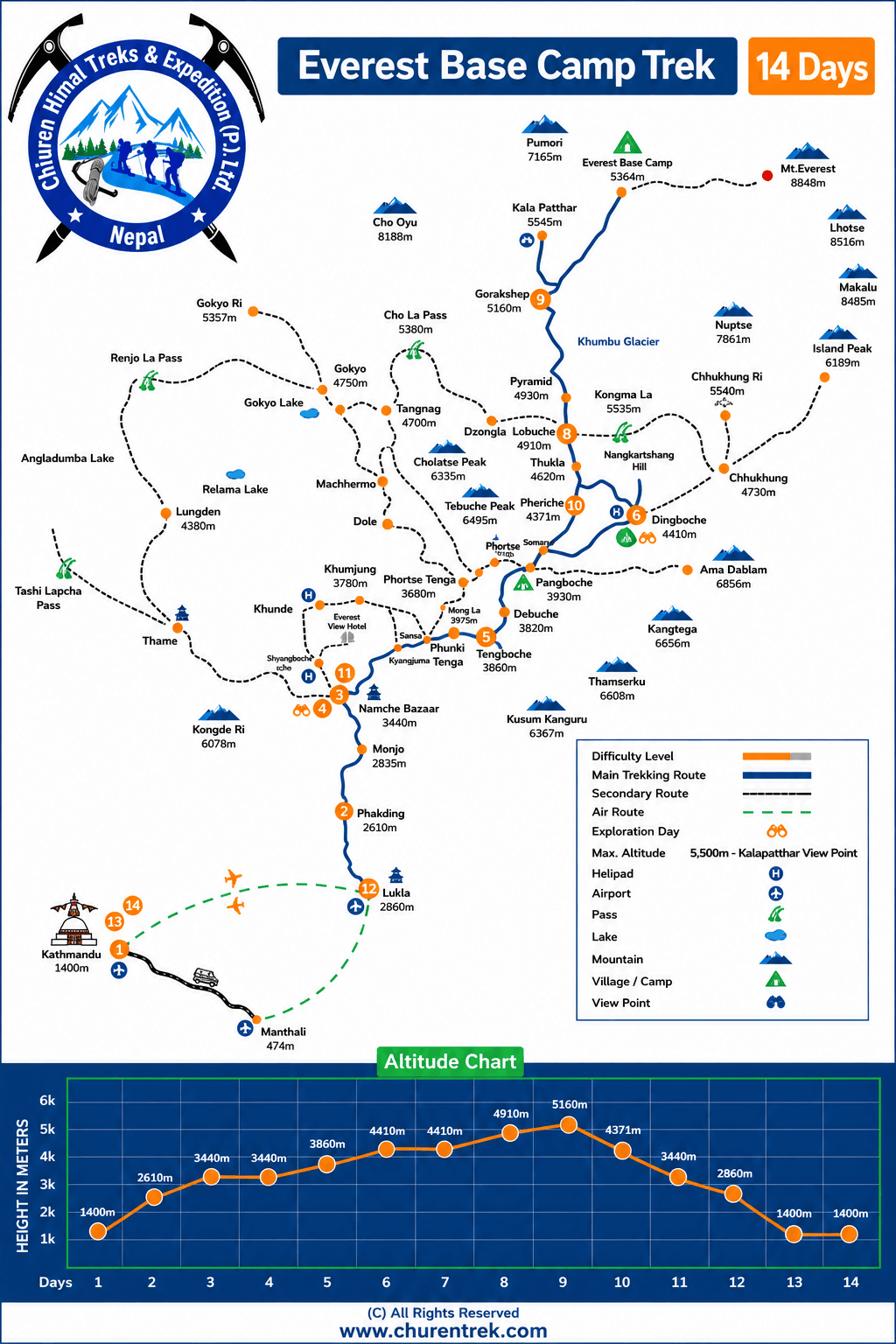
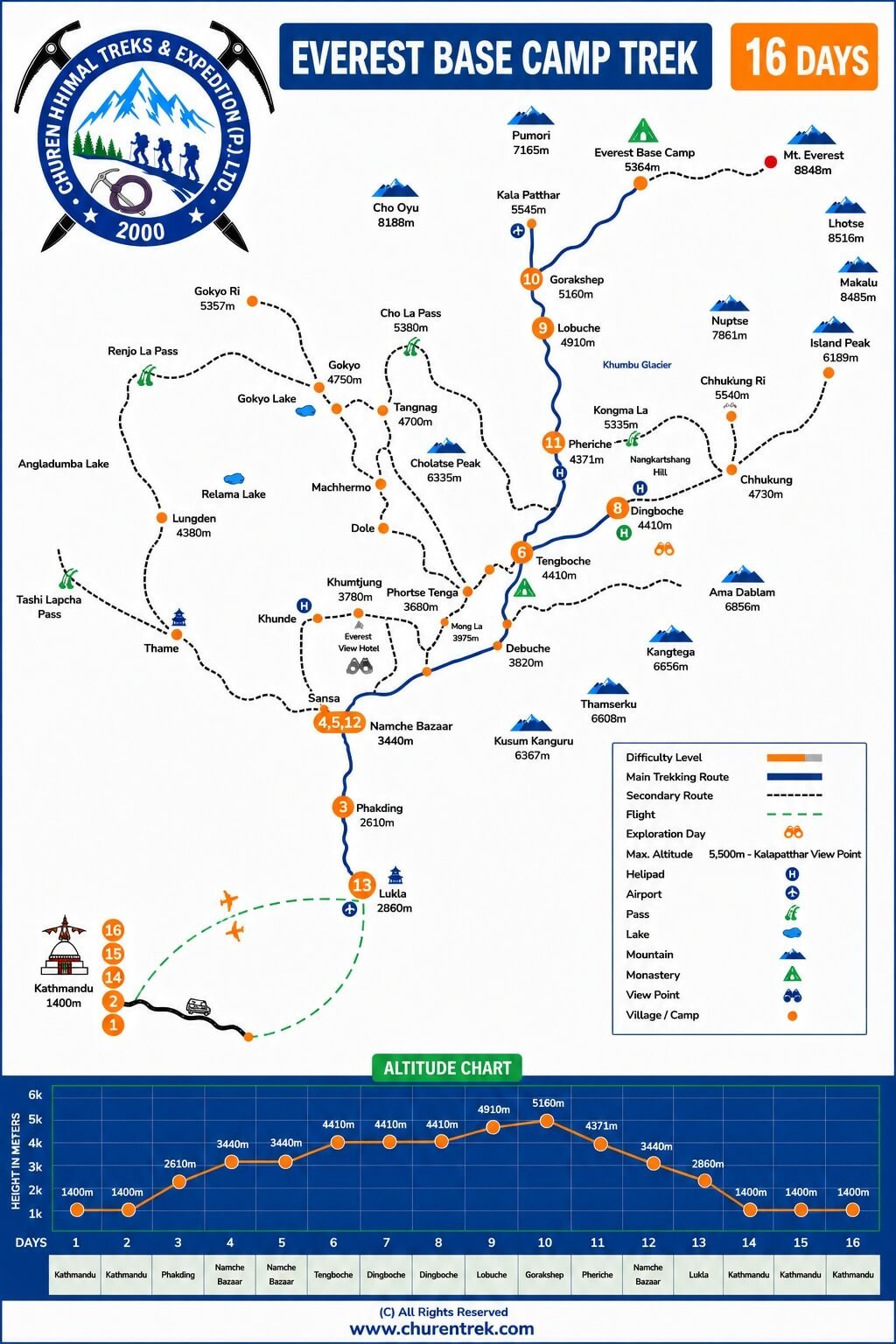
Everest Base Camp Trek Route Map
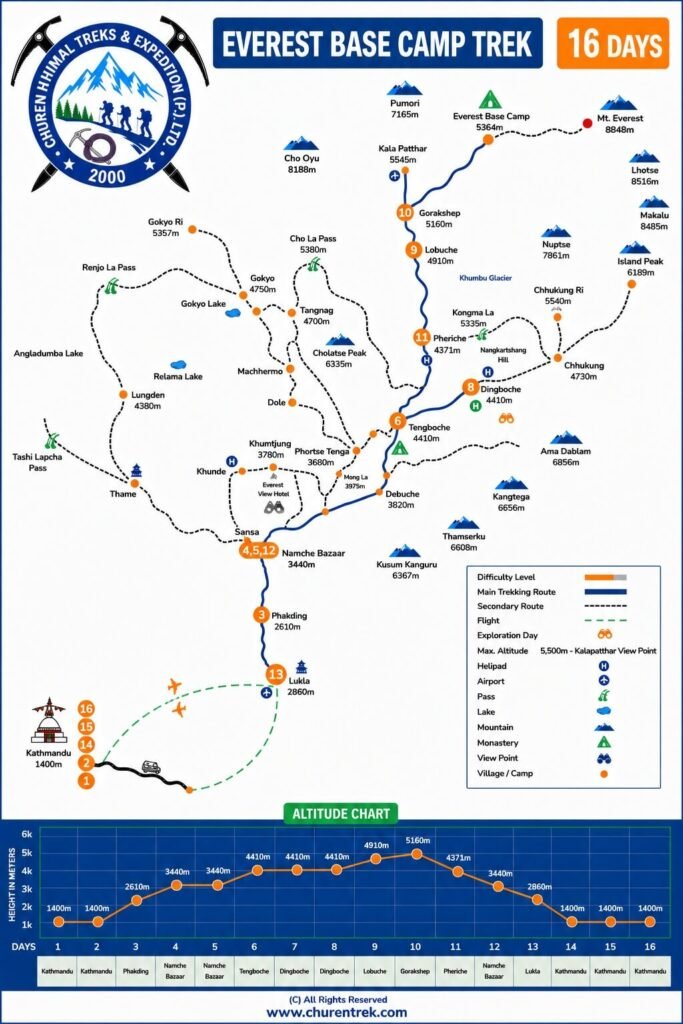
Everest Base Camp Trek – 16 Days route map
Everest Base Camp Trek Route Map Full Zoom View
Link copied to clipboard!
Price starts US$ 1720
1390 US$

We offer group discount

1 personUS$ 1590
2 peopleUS$ 1390
3 - 6 peopleUS$ 1350
7 - 10 peopleUS$ 1290
11 + peopleUS$ 1190
  • Best price guarantee
  • Secure & easy online booking
  • Flexible booking dates

Speak to an Expert

Sujan
Nepal 🇳🇵
WhatsApp +9779851233710

Ghorepani Poon Hill Trek – 9 Days Highlights

  • Sunrise from Poon Hill at approximately 3,210m: Witness breathtaking sunrises from the famous Poon Hill viewpoint overlooking major Himalayan ranges.
  • Panoramic Mountain Views: Enjoy spectacular vistas of the Annapurna and Dhaulagiri mountain ranges.
  • Views Toward Iconic Peaks: Take in stunning sights toward Machhapuchhre (Fishtail), Nilgiri and surrounding Himalayan peaks.
  • Trek Through Rhododendron Forests: Journey along scenic paths lined with beautiful rhododendron and dense mountain forests.
  • Explore Ghorepani: Discover the traditional and vibrant mountain settlement of Ghorepani.
  • Experience Gurung Culture in Ghandruk: Immerse yourself in the distinctive Gurung culture and heritage of Ghandruk village.
  • Walk Through Terraced Hillsides: Traverse picturesque terraced hillsides, lush forests and scenic Himalayan foothills.
  • Classic Tea-House Trekking: Stay overnight in local guesthouses and experience authentic hospitality unique to Nepal's trekking routes.
  • Scenic Road Journey: Travel through picturesque landscapes via road connections between Kathmandu and Pokhara.
  • Combine Sightseeing and Trekking: Blend cultural sightseeing in Kathmandu with incredible trekking adventures in the Annapurna region.
  • Shorter Himalayan Adventure: Ideal for travelers looking for a shorter yet deeply rewarding Himalayan trekking experience.
  • Photography and Nature Observation: Excellent opportunities for mountain photography, nature observation and authentic village experiences.

Ghorepani Poon Hill Trek – 9 Days Overview

The Ghorepani Poon Hill Trek – 9 Days is a scenic Himalayan journey through the Annapurna region of Nepal, designed for travelers who want spectacular mountain views, traditional villages and a rewarding trekking experience within a relatively short itinerary.

The trek combines the cultural attractions of Kathmandu and Pokhara with several days of walking through the foothills of the Annapurna Himalaya.

One of the major highlights is the early-morning climb to Poon Hill at approximately 3,210 meters, where clear-weather conditions can reveal an impressive panorama of Annapurna, Dhaulagiri, Machhapuchhre (Fishtail), Nilgiri and surrounding peaks. The route also passes through rhododendron forests, terraced hillsides and traditional Gurung settlements, including picturesque Ghandruk.

The itinerary reaches a maximum altitude of approximately 3,210 m and involves moderate daily walking, including stone steps and uphill and downhill sections. It is a good choice for travelers seeking a shorter Himalayan trek without committing to a high-altitude expedition.

Churen Himal Treks and Expedition Pvt. Ltd. can arrange the trekking logistics, local support, transportation and itinerary according to the selected package. Travelers can contact the company to request current availability, pricing and customization.

Ghorepani Poon Hill Trek – 9 Days Itinerary

  • Day 01: Arrival in Kathmandu and Welcome Dinner
    +

    Arrive at Tribhuvan International Airport in Kathmandu, where a Churen Himal Treks representative can meet you and arrange your transfer to the hotel. After check-in and time to rest, you can explore the surrounding area or relax after your international journey.

    In the evening, enjoy a welcome dinner featuring Nepalese cuisine and, where arranged, a traditional cultural performance. Your trekking team can also provide an itinerary briefing and answer practical questions before the journey to the Annapurna region.

    Starting Point: Tribhuvan International Airport, Kathmandu
    Elevation: Approximately 1,400 m
    Transportation: Private vehicle
    Walking: Minimal
    Accommodation: 3-star hotel in Kathmandu
    Meals: Welcome dinner, according to package arrangement
    Note: Arrive at Tribhuvan International Airport in Kathmandu, where a Churen Himal Treks representative can meet you and arrange your transfer to the hotel. After check-in and time to rest, you can explore the surrounding area or relax after your international journey.
  • Day 02: Kathmandu Valley Cultural Sightseeing
    +

    Today is dedicated to exploring some of the Kathmandu Valley's best-known cultural and religious landmarks.

    Visit Swayambhunath Stupa, also known as the Monkey Temple, followed by Pashupatinath Temple, one of Nepal's most important Hindu pilgrimage sites. Continue to Boudhanath Stupa, a major center of Tibetan Buddhist culture, and Kathmandu Durbar Square, known for its historic palaces, temples and traditional architecture.

    The sightseeing program provides a cultural introduction to Nepal before you travel toward Pokhara and the Annapurna mountains.

    Starting Point: Kathmandu
    Elevation: Approximately 1,400 m
    Transportation: Private sightseeing vehicle
    Walking: Moderate sightseeing walks
    Accommodation: 3-star hotel in Kathmandu
    Meals: Breakfast
    Note: Today is dedicated to exploring some of the Kathmandu Valley's best-known cultural and religious landmarks.
  • Day 03: Drive from Kathmandu to Pokhara
    +

    Leave Kathmandu and travel west toward Pokhara, following Nepal's hill highways through changing landscapes. The journey passes rivers, agricultural areas, villages, bridges and rolling hills.

    Road travel times in Nepal can vary significantly because of traffic, weather, construction and road conditions, so the stated duration should be considered an estimate rather than a fixed arrival time. After reaching Pokhara, check into your hotel and enjoy the evening around the lakeside area.

    Starting Point: Kathmandu
    Destination: Pokhara
    Pokhara Elevation: Approximately 800 m
    Transportation: Tourist bus or private vehicle
    Driving Time: Approximately 6–8 hours, depending on traffic and road conditions
    Accommodation: 3-star hotel in Pokhara
    Meals: Breakfast
    Note: Leave Kathmandu and travel west toward Pokhara, following Nepal's hill highways through changing landscapes. The journey passes rivers, agricultural areas, villages, bridges and rolling hills.
  • Day 04: Drive from Pokhara to Birethanti and Trek to Ulleri
    +

    After breakfast, drive from Pokhara toward the Annapurna trekking area. Because road access changes with local conditions, the practical starting point may be around Hile/Tikhedhunga or another accessible roadhead rather than assuming a single fixed departure point.

    Begin walking through terraced farmland and mountain settlements toward Ulleri. The trail includes stone steps and uphill sections, with views of the surrounding hills and traditional village landscapes. Ulleri provides the first substantial mountain-night experience of the trek.

    Starting Point: Pokhara
    Destination: Ulleri
    Ulleri Elevation: Approximately 2,000–2,100 m
    Transportation: Private/local vehicle to the roadhead
    Walking: Approximately 3–4 hours, depending on the roadhead
    Distance: Approximately 6–8 km trekking
    Accommodation: Tea house/guesthouse
    Meals: Breakfast, Lunch and Dinner
    Note: After breakfast, drive from Pokhara toward the Annapurna trekking area. Because road access changes with local conditions, the practical starting point may be around Hile/Tikhedhunga or another accessible roadhead rather than assuming a single fixed departure point.
  • Day 05: Trek from Ulleri to Ghorepani
    +

    Today's trail climbs through forests and mountain villages toward Ghorepani. The route is particularly attractive in spring, when rhododendrons can add color to the forested landscape.

    As you gain elevation, the scenery becomes increasingly Himalayan. Continue toward Ghorepani, a well-known settlement on the Poon Hill trekking route. After arriving, settle into your tea house and prepare for an early start the following morning.

    Starting Point: Ulleri
    Destination: Ghorepani
    Ghorepani Elevation: Approximately 2,850–2,900 m
    Walking Time: Approximately 5–6 hours
    Distance: Approximately 8–10 km
    Accommodation: Tea house/guesthouse
    Meals: Breakfast, Lunch and Dinner
    Note: Today's trail climbs through forests and mountain villages toward Ghorepani. The route is particularly attractive in spring, when rhododendrons can add color to the forested landscape.
  • Day 06: Poon Hill Sunrise and Trek to Ghandruk
    +

    Wake before sunrise for the climb to Poon Hill, the major viewpoint of the trek. At approximately 3,210 m, the viewpoint can provide impressive sunrise views over the Annapurna and Dhaulagiri ranges when weather and visibility cooperate. Peaks commonly visible from the area include Annapurna South, Annapurna I, Dhaulagiri, Machhapuchhre and Nilgiri.

    Return toward Ghorepani for breakfast before continuing through forested mountain trails toward Ghandruk. The trail includes both descents and additional uphill sections, so the day can feel demanding despite the relatively modest maximum altitude. Ghandruk is a culturally rich Gurung settlement with traditional architecture and broad mountain views.

    Starting Point: Ghorepani
    Destination: Ghandruk
    Maximum Altitude: Approximately 3,210 m at Poon Hill
    Walking Time: Approximately 7–9 hours including Poon Hill
    Distance: Approximately 13–16 km, depending on the route
    Accommodation: Tea house/guesthouse
    Meals: Breakfast, Lunch and Dinner
    Note: Wake before sunrise for the climb to Poon Hill, the major viewpoint of the trek. At approximately 3,210 m, the viewpoint can provide impressive sunrise views over the Annapurna and Dhaulagiri ranges when weather and visibility cooperate. Peaks commonly visible from the area include Annapurna South, Annapurna I, Dhaulagiri, Machhapuchhre and Nilgiri.
  • Day 07: Drive from Ghandruk to Pokhara
    +

    After breakfast, leave Ghandruk and travel toward Pokhara by road. The road journey follows the mountain landscape and gradually leaves the higher trekking area.

    Because local road conditions and vehicle access can change, the exact pickup point and journey duration should be confirmed by the trekking operator before departure. After reaching Pokhara, enjoy a relaxed afternoon around Phewa Lake or the Lakeside area.

    Starting Point: Ghandruk
    Destination: Pokhara
    Transportation: Jeep/private vehicle, depending on road conditions
    Travel Time: Approximately 2–4 hours by road after reaching the roadhead
    Walking: Short local walking or optional trail section
    Accommodation: 3-star hotel in Pokhara
    Meals: Breakfast
    Note: After breakfast, leave Ghandruk and travel toward Pokhara by road. The road journey follows the mountain landscape and gradually leaves the higher trekking area.
  • Day 08: Drive from Pokhara to Kathmandu
    +

    Return to Kathmandu by road, following the hill highways and river valleys of central Nepal. The journey is scenic but can be affected by traffic, road construction, weather and seasonal conditions.

    After arriving in Kathmandu, check into your hotel and use the remaining time for shopping, relaxation or preparing for your international departure.

    Starting Point: Pokhara
    Destination: Kathmandu
    Transportation: Tourist bus or private vehicle
    Driving Time: Approximately 6–8+ hours depending on conditions
    Accommodation: 3-star hotel in Kathmandu
    Meals: Breakfast
    Note: Return to Kathmandu by road, following the hill highways and river valleys of central Nepal. The journey is scenic but can be affected by traffic, road construction, weather and seasonal conditions.
  • Day 09: Final Departure from Kathmandu
    +

    Your Ghorepani Poon Hill Trek – 9 Days comes to an end today. According to your international flight schedule, a company representative can arrange your transfer to Tribhuvan International Airport.

    If your flight is later in the day, you may have time for last-minute shopping or relaxation before leaving Nepal.

    Starting Point: Kathmandu
    Destination: Tribhuvan International Airport
    Transportation: Private airport transfer
    Meals: Breakfast, according to flight schedule
    Note: Your Ghorepani Poon Hill Trek – 9 Days comes to an end today. According to your international flight schedule, a company representative can arrange your transfer to Tribhuvan International Airport.

Cost Includes

  • Airport Pick-Up & Drop : Pick up & drop off from the airport by private Car/Van/Bus as per group size.
  • Accommodation in Kathmandu : 3-night hotel in Kathmandu on a bed and breakfast basis.
  • Accommodation in Pokhara : 2-night hotel in Pokhara on a bed and breakfast basis.
  • Local Transportation : By private Car/Jeep/Bus as per group size from Pokhara - Birethanti and Ghandruk - Pokhara.
  • Tourist Bus : Tourist Bus from Kathmandu - Pokhara - Kathmandu.
  • Porter : A Strong, helpful porter with proper equipment (one porter for two people).
  • Meals & Tea Houses : Three meals a day, including tea and coffee during the trek (breakfast, lunch, and dinner), as well as fresh fruits in the evening.
  • Accommodation in Tea Houses : Accommodation in tea houses/lodges along the trek as per the itinerary.
  • Permits : Annapurna Conservation Area Project (ACAP) entrance permits.
  • TIMS Card : Trekkers Information Management System (TIMS) registration card.
  • Guide : Experienced, English-speaking, government-licensed, and Ministry of Tourism-trained trekking guide with meals, accommodation, salary, and insurance.
  • Assistant Guide : An assistant trekking guide for groups of over 6 people with meals, accommodation, salary, and insurance.
  • Duffel Bags : Duffel bags for the trek (duffel bags are to be returned after the completion of the trip).
  • Fresh Fruits : Daily seasonal fresh fruits as per availability.
  • Medical Kit & Oximeter : A first aid kit is carried by the guide. Oximeter to check your pulse, oxygen saturation, and heart rate (Very useful to check Altitude sickness symptoms).
  • Paperwork & Taxes : Necessary paperwork, all government and local taxes.
  • Rescue Assistance : In a worst-case scenario, rescue and medical evacuation assistance (costs to be paid by the client).
  • Welcome Dinner : 1 complementary Welcome dinner in a typical Nepali restaurant with a cultural program in Kathmandu.

Cost Excludes

  • Nepal Visa Fees : Nepal entry visa fees $50 USD for 30 days visa on arrival.
  • International Airfare & Insurance : International airfare, Nepal visa fees (two passport photographs required) and travel and medical insurance for emergency evacuation.
  • Entrance Fees : Entrance fees for sightseeing/monument visit as per the itinerary.
  • Lunch and Dinner : Lunch and dinner during your stay in Kathmandu and Pokhara (except Welcome dinner).
  • Personal Expenses : Expenses of a personal nature (bars and beverage bills, dessert and snacks, hot shower, drinking water, telephone, internet, laundry, titbits, etc).
  • Uncontrollable Costs : Costs arising from natural calamities, mishaps or anything beyond our control. Costs are non-refundable and non-transferable if you leave the trek voluntarily.
  • Early Returns / Late Departures : Meals and accommodation in Kathmandu in cases of early returns and late departures.
  • Optional Services : Services not mentioned in the 'What's Included' section and referred to as 'optional'.
  • Extra Porters : Porters available at an extra cost.
  • Tips : Tipping is a culture in Nepal and is expected by your staff (guides, porters, drivers).
  • Calamities & Disruptions : In case of natural calamities i.e. political unrest, cancellation of flight due to weather, landslides etc the extra charge should be born by themselves.
  • Other Services : Any other services or activities, which are not mentioned in the itinerary and other items not listed in the “Cost Includes” section.

Departure Dates

Starting Date End Date Availability Price

Trip Information

Ghorepani Poon Hill Trek Difficulty

The Ghorepani Poon Hill Trek is generally considered a moderate Himalayan trek. It does not reach the extreme elevations associated with high-altitude trekking routes, but travelers should still expect sustained uphill and downhill walking.

What makes the trek moderately challenging?

  • Repeated uphill sections
  • Long stone staircases
  • Uneven mountain trails
  • Downhill sections that can be demanding on the knees
  • A long trekking day from Ghorepani through Poon Hill toward Ghandruk
  • Early-morning walking to reach Poon Hill for sunrise
  • Changing weather and trail conditions

Is it suitable for beginners?

Yes, reasonably fit beginners can complete the trek with appropriate preparation and pacing. Previous Himalayan trekking experience is not essential.

However, beginners should not underestimate the stairs and elevation gain. Regular walking, hill training and cardiovascular exercise before the trip can make the experience substantially more comfortable.

Fitness preparation

For 4–8 weeks before departure, consider:

  • Regular walking
  • Stair climbing
  • Hill walking
  • Cardiovascular exercise
  • Leg-strengthening exercises
  • Longer weekend walks

The goal is not speed. Consistent pacing and endurance are more valuable than walking quickly.

Best Time to Trek

The Ghorepani Poon Hill Trek can be undertaken during different seasons, but conditions vary considerably.

  • Spring: March to May: Spring is one of the most attractive periods for the trek.
    Advantages include:
    • Warmer daytime conditions
    • Increasingly clear mountain views
    • Rhododendron blossoms
    • Green forests
    • Pleasant trekking temperatures
    Late spring can become warmer at lower elevations, while weather can change at higher points.
  • Autumn: September to November: Autumn is traditionally one of Nepal's strongest trekking seasons.
    Typical advantages include:
    • Good mountain visibility
    • Comfortable daytime temperatures
    • Generally drier trails
    • Clearer Himalayan scenery
    October and November are particularly popular, so accommodation and transportation should be planned ahead.
  • Winter: December to February: Winter trekking is possible, especially because Poon Hill is lower than many high-altitude Himalayan passes.
    Travelers should nevertheless prepare for:
    • Cold mornings
    • Cold nights
    • Possible frost or snow at higher points
    • Shorter daylight
    • Changing mountain weather
    The early-morning Poon Hill climb can feel particularly cold.
  • Monsoon: June to August: The monsoon season brings increased rainfall to much of Nepal.
    Possible challenges include:
    • Wet and slippery trails
    • Cloud and reduced mountain visibility
    • Leeches in some forest areas
    • Landslides or road disruptions
    • Delays on mountain roads
    Some travelers still trek during monsoon because the landscapes can be lush and green, but conditions are less predictable.

Permits

Permit and registration requirements can change, so the exact requirements should be confirmed immediately before departure.

For the Annapurna-side route, travelers should generally expect requirements associated with the Annapurna Conservation Area and trekking registration.

Annapurna Conservation Area Permit

The route passes through the Annapurna Conservation Area, so an Annapurna Conservation Area Permit (ACAP) is generally required for the relevant trekking route.

TIMS / Trekker registration

The rules governing the Trekkers' Information Management System (TIMS) have changed over time. Current requirements should be checked before the trek, particularly because Nepal's trekking regulations can distinguish between independent trekkers and travelers using registered trekking agencies and guides.

For an organized trek, Churen Himal Treks can confirm the applicable documentation and arrange permits/registrations that are included in the confirmed package.

Do not rely on an old blog post or outdated permit list. Confirm the requirements with the trekking company or relevant Nepal authorities before departure.

Accommodation

  • Kathmandu: The itinerary uses a 3-star hotel in Kathmandu, subject to the confirmed package.
    Typical facilities may include:
    • Private room
    • Private bathroom
    • Wi-Fi
    • Restaurant or breakfast service
    • Hot water
    Facilities vary between individual properties.
  • Pokhara: Accommodation is planned at a 3-star hotel in Pokhara.
    Pokhara hotels generally provide more extensive facilities than mountain tea houses, although the exact amenities depend on the selected property.
  • Trekking Route: During the trek, accommodation is generally provided in tea houses or mountain guesthouses.
    Typical facilities can include:
    • Simple private or shared rooms
    • Dining room
    • Basic bedding
    • Electricity in many locations
    • Charging facilities, sometimes for an additional fee
    • Wi-Fi in some lodges
    • Hot shower availability in some locations, usually for an additional charge
    Mountain facilities should not be compared directly with city hotels. Availability can vary according to location, weather, electricity supply and seasonal demand.

Food and Drinks

Food on the Ghorepani Poon Hill route is designed around the needs of trekkers.

Common meals include:

  • Dal Bhat
  • Rice
  • Vegetable curry
  • Noodles
  • Fried rice
  • Pasta
  • Soups
  • Tibetan-style bread
  • Momos
  • Eggs
  • Pancakes
  • Toast
  • Porridge

Dal Bhat

Dal Bhat—rice, lentil soup and accompanying vegetables or curry—is one of Nepal's most common trekking meals. It is popular with trekkers because it provides a substantial and familiar source of carbohydrates and protein.

Drinks

Tea, coffee, hot chocolate and other hot drinks are commonly available at tea houses.

Drink plenty of safe water throughout the trek. Travelers should use treated, filtered or otherwise reliably safe drinking water rather than assuming that untreated mountain water is safe.

If you have food allergies or dietary restrictions, inform your trekking company before departure.

Packing List

  • Clothing:
    • Moisture-wicking base layers
    • Trekking shirts
    • Warm fleece or mid-layer
    • Insulated jacket
    • Waterproof/windproof outer layer
    • Trekking trousers
    • Warm hat
    • Gloves
    • Warm socks
    • Lightweight thermal layers
  • Footwear:
    • Comfortable trekking boots with good grip
    • Lightweight camp shoes or sandals
    • Spare trekking socks
  • Sleeping Equipment:
    • Sleeping bag suitable for the expected season
    • Sleeping bag liner, if preferred
    Even when accommodation provides bedding, a suitable sleeping bag can improve comfort during colder periods.
  • Daypack:
    • 20–30 liter daypack
    • Rain cover
    • Water bottle or hydration system
    • Small personal items
  • Water and Hydration:
    • Reusable water bottles
    • Hydration bladder
    • Water purification tablets/filter if required
    • Electrolyte solution, if useful for you
  • Personal Hygiene:
    • Toothbrush and toothpaste
    • Biodegradable soap
    • Hand sanitizer
    • Small towel
    • Toilet paper/tissues
    • Personal hygiene products
  • First Aid:
    • Personal medication
    • Basic first-aid supplies
    • Blister treatment
    • Sunscreen
    • Lip balm
    • Any prescribed medication
  • Documents:
    • Passport
    • Nepal visa documentation, where applicable
    • Travel insurance details
    • Permit/trekking documents
    • Emergency contact information
    • Copies of important documents
  • Electronics:
    • Phone
    • Camera
    • Power bank
    • Charging cables
    • Universal adapter
  • Sun Protection:
    • Sunglasses
    • Sunscreen
    • Sun hat/cap
    • Lip protection
  • Trekking Accessories:
    • Trekking poles
    • Headlamp
    • Lightweight rain gear
    • Small dry bags
    • Quick-drying towel
    • Personal snacks

Safety and Altitude

Although Poon Hill is not an extreme high-altitude destination, responsible altitude awareness is still important.

  • Pace yourself: Do not try to race other trekkers. A steady pace helps conserve energy, particularly on stair-heavy sections.
  • Stay hydrated: Drink regularly throughout the day. Dehydration can make trekking feel significantly harder.
  • Watch the weather: Mountain weather can change quickly. Carry suitable rain and warm-weather layers even when the morning forecast appears favorable.
  • Follow guide advice: A professional local guide can help with route decisions, weather changes, accommodation, pace, local conditions, and emergency communication.
  • Recognize when you need help: If you feel unusually unwell, dizzy, severely fatigued or develop concerning symptoms, tell your guide promptly rather than trying to continue silently.

In an emergency, the trekking team should coordinate the appropriate response based on the circumstances, location and available transportation.

Travel Insurance

Travel insurance is strongly recommended for the Ghorepani Poon Hill Trek.

Before traveling, check that your policy covers:

  • Trekking in Nepal
  • The maximum altitude of your itinerary
  • Medical treatment
  • Emergency evacuation, where applicable
  • Trip interruption or cancellation
  • Lost or delayed baggage

Do not assume that a standard travel policy automatically covers trekking activities. Read the policy's altitude and adventure-activity conditions carefully.

Churen Himal Treks and Expedition Pvt. Ltd. should not be presented as an insurance provider unless this is specifically confirmed in the package terms.

Who Is This Trek For?

  • First-Time Trekkers: The route is a practical introduction to Himalayan trekking for travelers who are reasonably fit and prepared for uphill and downhill walking.
  • Couples: Couples can combine mountain scenery, village experiences and sunrise views with comfortable hotel stays before and after the trek.
  • Solo Travelers: Solo travelers can join an organized trek with guide and porter support according to the selected package.
  • Families: Families with older children and appropriate fitness may consider the trek, but parents should assess walking endurance, stair sections and weather tolerance individually.
  • Friends and Groups: The route works well for small groups because the daily walking schedule can combine shared trekking experiences with cultural and scenic stops.
  • Experienced Trekkers: Experienced trekkers may choose Poon Hill as a shorter Himalayan itinerary or as an introduction to the Annapurna region.

Why Trek with Churen Himal Treks?

Churen Himal Treks and Expedition Pvt. Ltd.

Choosing a trekking company is not only about selecting an itinerary. It is also about having reliable local coordination before and during the trek.

Churen Himal Treks and Expedition Pvt. Ltd. can assist travelers with the practical elements of a Ghorepani Poon Hill journey, including itinerary planning, local trekking support, transportation coordination and trip logistics.

  • Local trekking knowledge: A Nepal-based trekking operator can provide practical information about local trail conditions, villages, transportation and seasonal considerations.
  • Professional trekking support: Depending on the confirmed package, travelers can receive support from trekking guides and porters throughout the walking portion of the journey.
  • Personalized itineraries: The 9-day itinerary can be discussed with the trekking team if travelers require changes to transportation, accommodation, walking days or trip duration.
  • Safety-conscious planning: Good trekking planning considers weather, route conditions, daily walking requirements, accommodation availability and emergency procedures.
  • Local cultural understanding: The route passes through communities with strong Gurung cultural traditions. Responsible interaction with local communities adds an important cultural dimension to the trek.

Request your itinerary

Travelers can contact Churen Himal Treks to confirm:

  • Current departure availability
  • Package cost
  • Group size
  • Guide and porter arrangements
  • Accommodation category
  • Transportation
  • Permit arrangements
  • Customization options

Churen Himal Treks and Expedition Pvt. Ltd.
Website: https://www.churentrek.com
Email: info@churentrek.com

Price starts US$ 1720
1390 US$

We offer group discount

1 personUS$ 1590
2 peopleUS$ 1390
3 - 6 peopleUS$ 1350
7 - 10 peopleUS$ 1290
11 + peopleUS$ 1190
  • Best price guarantee
  • Secure & easy online booking
  • Flexible booking dates

Speak to an Expert

Sujan
Nepal 🇳🇵
WhatsApp +9779851233710

FAQs for Everest Base Camp Trek – 16 Days

FAQs for Everest Base Camp Trek – 16 Days

ℹ️ General

+
➔
What is the Everest Base Camp Trek and why is it popular?
It is a world-famous 14-day Himalayan adventure taking you to the base of Mt. Everest through ancient Sherpa villages and stunning landscapes.
➔
How difficult is the Everest Base Camp Trek?
The trek is moderately challenging, requiring good physical stamina for multi-day walking but no technical climbing skills.
➔
How many days does the trek take in total?
The standard Everest Base Camp Trek itinerary offered by Glorious Eco Trek Nepal takes 14 days in total.
➔
Is prior trekking experience necessary for this trip?
No prior trekking experience is mandatory as long as you are healthy, motivated, and in good physical condition.
➔
Can solo travelers join a group trek?
Yes, solo travelers can join our organized group departures or trek with a dedicated personal guide.

🏋️ Preparation & Fitness

+
➔
Is the Everest Base Camp Trek physically challenging?
Yes, walking 5 to 7 hours daily over steep mountain terrain at high altitudes tests your endurance.
➔
Do I need to train before doing the Everest Base Camp Trek?
Yes, pre-trip physical conditioning makes the journey significantly more comfortable and enjoyable.
➔
How many weeks should I train before the EBC trek?
We recommend beginning cardiovascular and endurance training at least 8 to 12 weeks before your trip.
➔
What is the best way to prepare for the Everest Base Camp Trek?
Focus on aerobic workouts like running and swimming alongside stair-climbing with a weighted daypack.
➔
How can I acclimatize to high altitude faster?
Walk at a steady, slow pace, drink 3-4 liters of water daily, avoid alcohol, and strictly follow our rest day schedules.
➔
How many hours will I walk each day during the EBC trek?
You will walk an average of 5 to 7 hours each day depending on the distance between teahouses.
➔
Can first-time trekkers do the Everest Base Camp Trek?
Yes, motivated first-time trekkers with a basic fitness foundation successfully complete the trek every year.

🪪 Permits

+
➔
What permits are required for the Everest Base Camp Trek?
You need the Sagarmatha National Park Entry Permit and the Khumbu Pasang Lhamu Rural Municipality Permit.
➔
Will Glorious Eco Trek Nepal arrange all the necessary permits?
Yes, our team handles all paperwork and arranges all required permits for you.

🛂 Insurance & Visa

+
➔
Do I need travel insurance for the Everest Base Camp Trek?
Yes, travel insurance is strictly mandatory for all trekkers on this expedition.
➔
How do I get a tourist visa for Nepal?
You can fill out the online pre-visa form or apply directly upon arrival at Kathmandu Airport.
➔
Can I get a visa on arrival at the airport?
Yes, tourist visas on arrival are available at Tribhuvan International Airport for most nationalities.
➔
What should the insurance cover for trekking in Nepal?
Your policy must specifically cover high-altitude medical treatment and emergency helicopter evacuation up to 6,000 meters.

💂 Guides & Support Staff

+
➔
Will I have a guide and porter during the trek?
Yes, our standard trip package includes a licensed local guide and helpful porters.
➔
What are the qualifications of your trekking guides?
Our guides are government-certified professionals trained in wilderness first aid and emergency response.
➔
Do the guides speak English?
Yes, all of our guides speak fluent English to ensure seamless communication.
➔
Will porters carry my luggage during the trek?
Yes, porters carry your main heavy duffel bag so you only carry a small, light daypack.
➔
Is tipping guides and porters expected?
Tipping is a traditional way in Nepal to express gratitude to support staff for their hard work.
➔
Can I trek to Everest Base Camp without a guide?
No, current government regulations mandate that all foreign trekkers must be accompanied by a licensed guide.

🛏️ Accommodation and Facilities

+
➔
What kind of accommodation is provided during the trek?
You will stay in traditional, cozy mountain teahouses featuring twin-share bedrooms and a central heated dining room.
➔
Are hot showers and Wi-Fi available along the trail?
Yes, hot showers and Wi-Fi access cards are available at most teahouses for a small extra fee.
➔
Will I get a private room or have to share?
Rooms are structured as twin-sharing for two travelers, though private single rooms can be arranged upon request when available.
➔
Can I charge my phone and devices during the trek?
Yes, charging stations are available in teahouse dining rooms for a nominal hourly rate.
➔
Are toilets available throughout the trek?
Shared indoor toilets are provided in teahouses, ranging from standard Western seats to traditional squat toilets.

🍲 Food and Drinks

+
➔
What kind of food is available during the trek?
Teahouse menus offer fresh meals like traditional Nepali Dal Bhat, soups, fried rice, noodles, eggs, and pasta.
➔
Are vegetarian or vegan meals available?
Yes, vegetarian and vegan choices are widely available and recommended for optimal health at altitude.
➔
Is it safe to drink the water during the trek?
Untreated tap water is unsafe; always drink boiled teahouse water or use purification tablets/UV filters.
➔
Can I buy snacks and drinks along the way?
Yes, small village shops along the path sell bottled drinks, snacks, and chocolate bars.

🌤️ Weather & Seasons

+
➔
What is the best time to do the Everest Base Camp Trek?
Spring (March to May) and Autumn (September to November) offer clear skies and ideal temperatures.
➔
Can I trek during the monsoon or winter season?
Trekking is possible in winter or monsoon, but involves colder conditions, snow, or rain and potential flight delays.
➔
What kind of weather can I expect during the trek?
Daytime walking weather is typically pleasant, but night temperatures drop below freezing at high altitudes.

🩺 Health & Safety

+
➔
What happens if I get sick or injured during the trek?
Your guide will provide immediate first aid, arrange descent if needed, or summon a rescue helicopter for emergency transport.
➔
How do you handle altitude sickness?
We monitor oxygen levels daily, carry emergency first-aid supplies, and enforce immediate descent if severe symptoms appear.
➔
Are there health posts or clinics along the route?
Yes, basic medical posts operate at Namche Bazaar and Pheriche to assist ill or injured trekkers.
➔
Is the trek safe for solo female travelers?
Yes, Nepal is very welcoming, and trekking with our vetted licensed guides guarantees safety and security.
➔
Do I need to bring medicines for the Everest Base Camp Trek?
Yes, pack personal items like Diamox (for altitude), pain relievers, rehydration salts, and blister treatments.

🎒 Packing & Gear

+
➔
What should I pack for the Everest Base Camp Trek?
Key items include thermal clothing layers, a heavy down jacket, broken-in trekking boots, gloves, and a sleeping bag.
➔
Is a sleeping bag necessary?
Yes, a sub-zero rated sleeping bag (-10°C to -15°C) is essential as teahouse rooms are unheated at night.
➔
Where can I keep my extra luggage during the trek?
You can store non-trekking travel luggage for free at your hotel in Kathmandu before heading out.
➔
What is the luggage weight limit for the Lukla flight?
The domestic Lukla flight weight limit is 15 kg total (10 kg main bag + 5 kg hand carry).
➔
How much weight can a porter carry?
A single porter carries up to 25 kg total, usually splitting weight between two trekkers (12.5 kg per person).
➔
Where can I buy trekking clothes and gear?
You can easily buy or rent all essential gear at affordable prices in the Thamel district of Kathmandu.

💳 Booking & Payment

+
➔
What is the booking process and payment method for the Everest Base Camp Trek?
You can reserve online with an advance deposit via card or wire transfer, paying the remaining balance in Kathmandu.
➔
Is there a cancellation or refund policy?
Yes, we provide flexible cancellation policies clearly outlined in our booking agreement terms.
➔
What currency should I carry for expenses along the Everest Base Camp trek?
Carry local Nepali Rupees (NPR) cash for trail purchases as foreign currencies are rarely accepted.
➔
Can I use ATMs or credit cards during the trek?
ATMs on the trail are unreliable and cards are rarely accepted, so carrying cash from Kathmandu is mandatory.
➔
Are there money exchange services in the Everest Base Camp region?
Money exchange services are available in Namche Bazaar but offer lower rates than Kathmandu banks.
➔
How much extra money should I budget per day during the trek?
Budget roughly $15 to $25 per day for extra personal expenses like hot drinks, snacks, showers, and battery charging.
➔
Can I book the Everest Base Camp trek if I’m traveling with children?
Yes, healthy children can join provided you arrange a customized, slower-paced itinerary for safety.
➔
Should I book the trek well in advance?
Yes, booking 3 to 6 months in advance ensures guaranteed Lukla flight tickets and premium teahouse rooms.

🛫 Transportation & Flight

+
➔
Do you provide airport pick-up and drop-off services?
Yes, private airport pickup and drop-off transfers are included in our package.
➔
How do I get to the starting point of the trek?
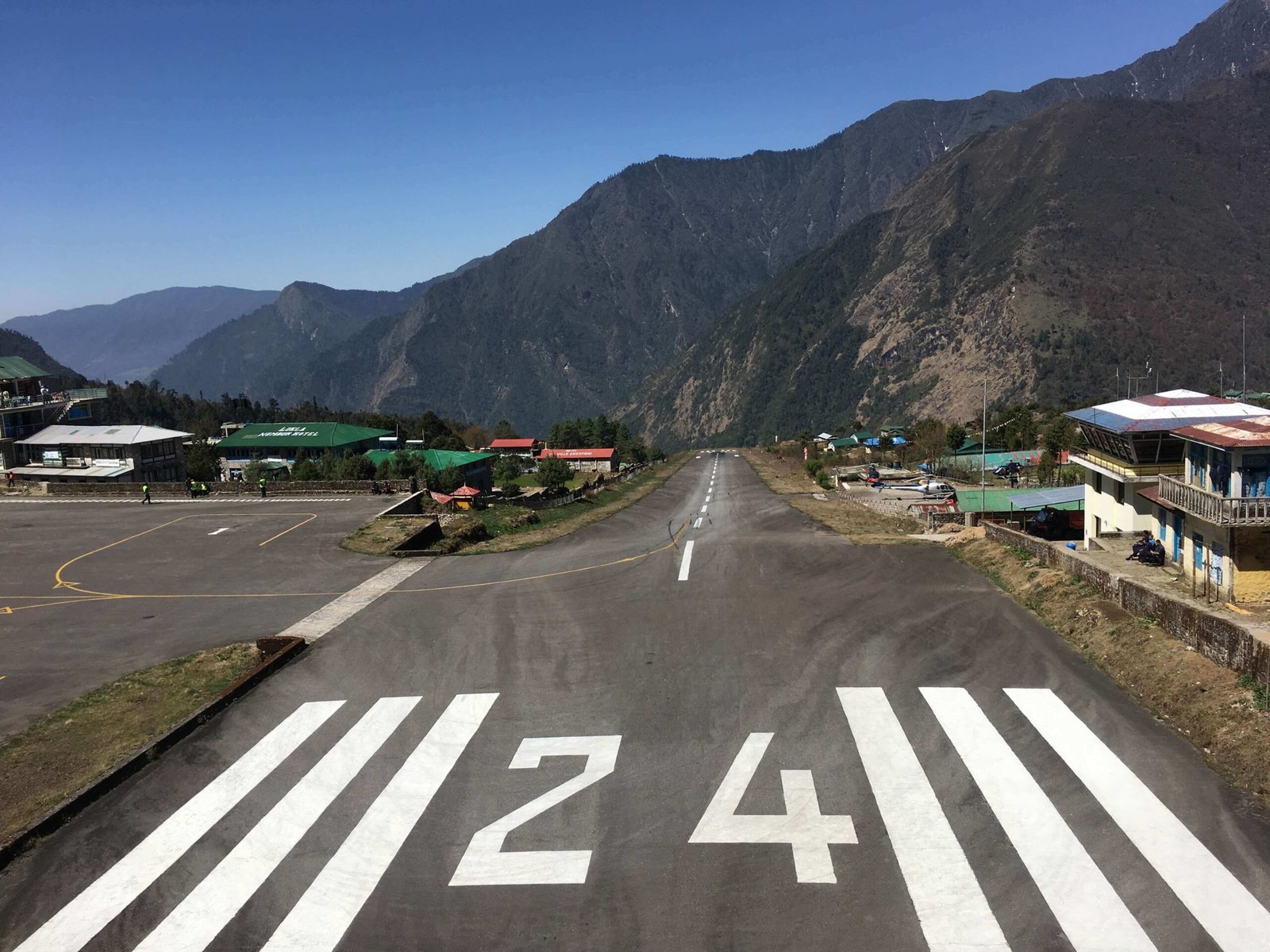
You reach the trail's starting point via a scenic mountain flight to Lukla Airport.
➔
Is the flight to Lukla safe?
Yes, Lukla flights are operated by highly experienced mountain pilots who fly only in clear, safe weather.
➔
What happens if my Lukla flight is delayed or canceled?
Flight schedules shift to the next clear day or alternative helicopter rides can be organized if requested.
➔
What is the mode of transportation to reach Everest Base Camp?
After landing in Lukla, the remaining journey to Base Camp and back is completed entirely on foot.
Churen Trek - Mobile FAQs

ℹ️ General

+
What is the Everest Base Camp Trek and why is it popular?
It is a world-famous 14-day Himalayan adventure taking you to the base of Mt. Everest through ancient Sherpa villages and stunning landscapes.
+
How difficult is the Everest Base Camp Trek?
The trek is moderately challenging, requiring good physical stamina for multi-day walking but no technical climbing skills.
+
How many days does the trek take in total?
The standard Everest Base Camp Trek itinerary offered by Glorious Eco Trek Nepal takes 14 days in total.
+
Is prior trekking experience necessary for this trip?
No prior trekking experience is mandatory as long as you are healthy, motivated, and in good physical condition.
+
Can solo travelers join a group trek?
Yes, solo travelers can join our organized group departures or trek with a dedicated personal guide.

🏋️ Preparation & Fitness

+
Is the Everest Base Camp Trek physically challenging?
Yes, walking 5 to 7 hours daily over steep mountain terrain at high altitudes tests your endurance.
+
Do I need to train before doing the Everest Base Camp Trek?
Yes, pre-trip physical conditioning makes the journey significantly more comfortable and enjoyable.
+
How many weeks should I train before the EBC trek?
We recommend beginning cardiovascular and endurance training at least 8 to 12 weeks before your trip.
+
What is the best way to prepare for the Everest Base Camp Trek?
Focus on aerobic workouts like running and swimming alongside stair-climbing with a weighted daypack.
+
How can I acclimatize to high altitude faster?
Walk at a steady, slow pace, drink 3-4 liters of water daily, avoid alcohol, and strictly follow our rest day schedules.
+
How many hours will I walk each day during the EBC trek?
You will walk an average of 5 to 7 hours each day depending on the distance between teahouses.
+
Can first-time trekkers do the Everest Base Camp Trek?
Yes, motivated first-time trekkers with a basic fitness foundation successfully complete the trek every year.

🪪 Permits

+
What permits are required for the Everest Base Camp Trek?
You need the Sagarmatha National Park Entry Permit and the Khumbu Pasang Lhamu Rural Municipality Permit.
+
Will Glorious Eco Trek Nepal arrange all the necessary permits?
Yes, our team handles all paperwork and arranges all required permits for you.

🛂 Insurance & Visa

+
Do I need travel insurance for the Everest Base Camp Trek?
Yes, travel insurance is strictly mandatory for all trekkers on this expedition.
+
How do I get a tourist visa for Nepal?
You can fill out the online pre-visa form or apply directly upon arrival at Kathmandu Airport.
+
Can I get a visa on arrival at the airport?
Yes, tourist visas on arrival are available at Tribhuvan International Airport for most nationalities.
+
What should the insurance cover for trekking in Nepal?
Your policy must specifically cover high-altitude medical treatment and emergency helicopter evacuation up to 6,000 meters.

💂 Guides & Support Staff

+
Will I have a guide and porter during the trek?
Yes, our standard trip package includes a licensed local guide and helpful porters.
+
What are the qualifications of your trekking guides?
Our guides are government-certified professionals trained in wilderness first aid and emergency response.
+
Do the guides speak English?
Yes, all of our guides speak fluent English to ensure seamless communication.
+
Will porters carry my luggage during the trek?
Yes, porters carry your main heavy duffel bag so you only carry a small, light daypack.
+
Is tipping guides and porters expected?
Tipping is a traditional way in Nepal to express gratitude to support staff for their hard work.
+
Can I trek to Everest Base Camp without a guide?
No, current government regulations mandate that all foreign trekkers must be accompanied by a licensed guide.

🛏️ Accommodation and Facilities

+
What kind of accommodation is provided during the trek?
You will stay in traditional, cozy mountain teahouses featuring twin-share bedrooms and a central heated dining room.
+
Are hot showers and Wi-Fi available along the trail?
Yes, hot showers and Wi-Fi access cards are available at most teahouses for a small extra fee.
+
Will I get a private room or have to share?
Rooms are structured as twin-sharing for two travelers, though private single rooms can be arranged upon request when available.
+
Can I charge my phone and devices during the trek?
Yes, charging stations are available in teahouse dining rooms for a nominal hourly rate.
+
Are toilets available throughout the trek?
Shared indoor toilets are provided in teahouses, ranging from standard Western seats to traditional squat toilets.

🍲 Food and Drinks

+
What kind of food is available during the trek?
Teahouse menus offer fresh meals like traditional Nepali Dal Bhat, soups, fried rice, noodles, eggs, and pasta.
+
Are vegetarian or vegan meals available?
Yes, vegetarian and vegan choices are widely available and recommended for optimal health at altitude.
+
Is it safe to drink the water during the trek?
Untreated tap water is unsafe; always drink boiled teahouse water or use purification tablets/UV filters.
+
Can I buy snacks and drinks along the way?
Yes, small village shops along the path sell bottled drinks, snacks, and chocolate bars.

🌤️ Weather & Seasons

+
What is the best time to do the Everest Base Camp Trek?
Spring (March to May) and Autumn (September to November) offer clear skies and ideal temperatures.
+
Can I trek during the monsoon or winter season?
Trekking is possible in winter or monsoon, but involves colder conditions, snow, or rain and potential flight delays.
+
What kind of weather can I expect during the trek?
Daytime walking weather is typically pleasant, but night temperatures drop below freezing at high altitudes.

🩺 Health & Safety

+
What happens if I get sick or injured during the trek?
Your guide will provide immediate first aid, arrange descent if needed, or summon a rescue helicopter for emergency transport.
+
How do you handle altitude sickness?
We monitor oxygen levels daily, carry emergency first-aid supplies, and enforce immediate descent if severe symptoms appear.
+
Are there health posts or clinics along the route?
Yes, basic medical posts operate at Namche Bazaar and Pheriche to assist ill or injured trekkers.
+
Is the trek safe for solo female travelers?
Yes, Nepal is very welcoming, and trekking with our vetted licensed guides guarantees safety and security.
+
Do I need to bring medicines for the Everest Base Camp Trek?
Yes, pack personal items like Diamox (for altitude), pain relievers, rehydration salts, and blister treatments.

🎒 Packing & Gear

+
What should I pack for the Everest Base Camp Trek?
Key items include thermal clothing layers, a heavy down jacket, broken-in trekking boots, gloves, and a sleeping bag.
+
Is a sleeping bag necessary?
Yes, a sub-zero rated sleeping bag (-10°C to -15°C) is essential as teahouse rooms are unheated at night.
+
Where can I keep my extra luggage during the trek?
You can store non-trekking travel luggage for free at your hotel in Kathmandu before heading out.
+
What is the luggage weight limit for the Lukla flight?
The domestic Lukla flight weight limit is 15 kg total (10 kg main bag + 5 kg hand carry).
+
How much weight can a porter carry?
A single porter carries up to 25 kg total, usually splitting weight between two trekkers (12.5 kg per person).
+
Where can I buy trekking clothes and gear?
You can easily buy or rent all essential gear at affordable prices in the Thamel district of Kathmandu.

💳 Booking & Payment

+
What is the booking process and payment method for the Everest Base Camp Trek?
You can reserve online with an advance deposit via card or wire transfer, paying the remaining balance in Kathmandu.
+
Is there a cancellation or refund policy?
Yes, we provide flexible cancellation policies clearly outlined in our booking agreement terms.
+
What currency should I carry for expenses along the Everest Base Camp trek?
Carry local Nepali Rupees (NPR) cash for trail purchases as foreign currencies are rarely accepted.
+
Can I use ATMs or credit cards during the trek?
ATMs on the trail are unreliable and cards are rarely accepted, so carrying cash from Kathmandu is mandatory.
+
Are there money exchange services in the Everest Base Camp region?
Money exchange services are available in Namche Bazaar but offer lower rates than Kathmandu banks.
+
How much extra money should I budget per day during the trek?
Budget roughly $15 to $25 per day for extra personal expenses like hot drinks, snacks, showers, and battery charging.
+
Can I book the Everest Base Camp trek if I’m traveling with children?
Yes, healthy children can join provided you arrange a customized, slower-paced itinerary for safety.
+
Should I book the trek well in advance?
Yes, booking 3 to 6 months in advance ensures guaranteed Lukla flight tickets and premium teahouse rooms.

🛫 Transportation & Flight

+
Do you provide airport pick-up and drop-off services?
Yes, private airport pickup and drop-off transfers are included in our package.
+
How do I get to the starting point of the trek?
You reach the trail's starting point via a scenic mountain flight to Lukla Airport.
+
Is the flight to Lukla safe?
Yes, Lukla flights are operated by highly experienced mountain pilots who fly only in clear, safe weather.
+
What happens if my Lukla flight is delayed or canceled?
Flight schedules shift to the next clear day or alternative helicopter rides can be organized if requested.
+
What is the mode of transportation to reach Everest Base Camp?
After landing in Lukla, the remaining journey to Base Camp and back is completed entirely on foot.
💬

Reviews on Everest Base Camp Trek – 14 Days

🟢 225+ Tripadvisor Reviews 🟢🟢🟢🟢🟢
🌐 118+ Excellent Google Reviews ★★★★★
⭐ Based on 45 Reviews ★★★★★
Verified by Trustindex ⓘ
▶

Video Testimonials

Video Testimonial 1
▶
Video Testimonial 2
▶
🏔️ Churen Trek
▶
Video Testimonial 4
▶
US$ 1390 Per Person